Tom Friedman turns in another stellar performance today with his New York Times column.
Reflecting on the innovative genius of Apple co-founder Steve Jobs, Friedman assures that other visionaries are toiling away in the private sector.
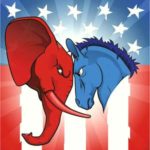
But in Washington, Friedman writes, the debates between Republicans and Democrats seem almost irrelevant in comparison to what America needs to remain globally competitive.
My favorite line: “The paucity of Obama’s audacity is striking.”
Here’s a portion of the column, which ran under the headline, “Where Have You Gone, Joe DiMaggio:”
“There are still thousands of U.S. innovators who embody Steve Jobs’s most important attribute: They didn’t get the word. They didn’t get the word that we’re down and out. They didn’t get the word that we’re in a recession. They didn’t get the word that Germany is going to eat our breakfast and that China is going to eat our lunch, so they just go out and invent stuff and make stuff and export stuff. Like Jobs, they just didn’t get the word — and thank God.
“But we’re not doing them justice because our political system is not providing these entrepreneurs what they need to thrive in the 21st century. Think of how cramped and uninspiring our national debate has become. It is all about cutting, filibustering, vetoing and blaming — or solving our problems by either untaxing or taxing millionaires alone.
“Neither party is saying: Here is the world we are living in; here are the big trends; here is our long-term plan for rolling up our sleeves to ensure that America thrives in this world because it is not going to come easy; nothing important ever does.
“What is John Boehner’s vision? I laugh just thinking about the question. What is President Obama’s vision? I cry just thinking about the question. The Republican Party has been taken over by an anti-tax cult, and Obama just seems lost. Obama supporters complain that the GOP has tried to block him at every turn. That is true. But why have they gotten away with it? It’s because Obama never persuaded people that he had a Grand Bargain tied to a vision worth fighting for.
“We cannot bail or tax-cut our way to prosperity. We can only, as Jobs understood, invent our way there. That is why America needs to be for the world in the 21st century what Cape Canaveral was to America in the 1960s: the place where everyone everywhere should want to come to start up and make something — something that makes people’s lives more productive, healthy, comfortable, entertained, educated or secure.
To do that, we need to reinvigorate our traditional formula for success — quality education and infrastructure, open immigration, the right rules to incentivize risk-taking and government-financed scientific research. But to do all that in a recession means we have to cut spending, raise tax revenues and invest in this formula. And to do that, we need a Grand Bargain that involves upfront spending plus credible, long-term fiscal reform that is at the true scale of our debt problem.
“Obama has given the spending plan, but he has not produced a credible, this-really-hurts fiscal plan — and many Americans know it. The paucity of Obama’s audacity is striking.
“Sometimes the news is in the noise, like the Wall Street protests or the tea party. But sometimes the news is also in the silence. To me, the biggest protest in the country today is that when the tea party insanely blocked any GOP participation in a Grand Bargain that involved taxes, most Americans were silent. Why? Because they didn’t think Obama was offering a big plan from his side, either — one that rose to the true scale of our problems and aspirations, one that would push us out of our comfort zone and make us great.
“’The country has been way ahead of the politicians,’” argues Stan Greenberg, a Democratic pollster. ‘They are impatient with the small and the short term. Voters totally understand the scale of the problem facing the country, and they are looking for leaders who are ready to step up and offer a big vision — and don’t try to fool them with things that don’t address the long-term challenges.’