

Congressman Sandy Levin delivered a sobering, meaty speech on tax reform the other day in which he warned his Republican colleagues not to engage in “glittering generalities” and unattainable goals.
The veteran Democrat recalled the days leading up to Ronald Reagan putting his signature on the Tax Reform Act of 1986, which was one of the stand-out bipartisan achievements on Capitol Hill in recent decades. Levin noted that the powerful House Ways and Means Committee held 30 days of committee hearings on tax reform in 1985, followed by 26 days of “mark-up” on the bill.
Now, with Levin as ranking member on Ways and Means, he urges House members to take a slow, methodical approach to stripping down the tax code for individuals and corporations.
In their zeal to overhaul tax law, GOP lawmakers seem willing to reduce or eliminate basic deductions, such as those for home mortgage costs or college tuition.
Levin cautioned that federal statistics show that a solid majority of those Americans who benefit from these tax breaks are middle-class families, not the wealthy.
“There is a growing assumption that tax benefits, and itemized deductions in particular, primarily benefit the wealthy and that their elimination, in conjunction with lower rates, would benefit the middle class. I don’t believe this — my experience and, more importantly, the data support the reality that many of these provisions have helped support and build the middle class,” he said in his speech at the Center for American Progress in Washington.
“In my district outside Detroit, and all over this country, middle-class families bought their own homes, often for the first time, in part because of the mortgage interest deduction. They had employer pensions and employer-provided health care, again often for the first time, in part because of tax preferences. They sent their children to college, again a first for many of these families, in part because of tax preferences for education.”
More on the Levin speech later.




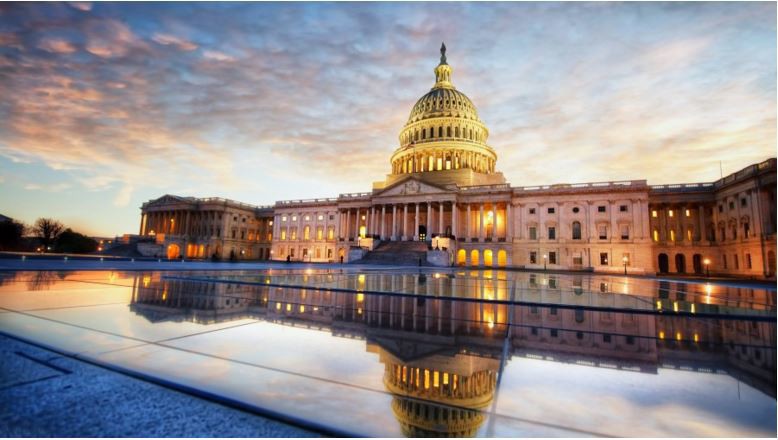
The 1986 tax code "reform" eliminated credit card interest deductions. Why did we have credit card interest deductions in the first place? Well the banks wanted it. It was used in order to convince people that buying on credit and carrying a balance was not that bad because you got to deduct the interest. Then the interest deduction was withdrawn as a "simplification." Now there is another drive to "simplify" the IRS Code. Watch out. Each time the bankers want something they float the canard that it will stimulate the economy and create job growth. Why do we have a mortgage interest deduction? Well, the banks wanted it. It was cheaper to buy, then to rent, and the interest wasn't that bad because you got to deduct it. The canard was floated that it stimulated the housing industry and created jobs. Is there a pattern developing here? Did you ever ask yourself, if it was not good, then why did we have it in the first place? We are being constantly led around by the nose, lied to and fooled each election cycle. Whether it is the 702 military bases worldwide, or the trillions of dollars for the bank bailouts, your government exists to benefit those special interests, not you, not me, and not the future generations. This is what we have become. Well, some say, that is what America is all about – greed and self interest. But if that were the case, then I suppose George Washington would have just made himself king. Read all about what our founding fathers said about bankers:
I believe that banking institutions are more dangerous to our liberties than standing armies. If the American people ever allow private banks to control the issue of their currency, first by inflation, then by deflation, the banks and corporations that will grow up around [the banks] will deprive the people of all property until their children wake-up homeless on the continent their fathers conquered. The issuing power should be taken from the banks and restored to the people, to whom it properly belongs.
Thomas Jefferson, (Attributed)
3rd president of US (1743 – 1826)
I would not believe a word uttered by any modern politician or their corporate/banker overlords.