

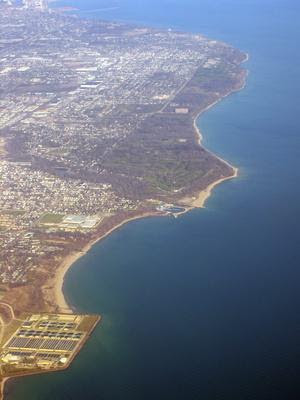

As Gov. Rick Snyder and Gov. Scott Walker are eating
flapjacks at tomorrow’s breakfast event on Mackinac Island, will Snyder flip
the conversation from politics to Great Lakes water diversion?
Snyder and Walker are the featured guests at the Saturday morning
session of the Michigan Republican conference
at Mackinac’s Grand Hotel. Walker is there to promote his presidential
candidacy. Snyder should be there to promote the Great Lakes.
 |
| Walker |
located west of Milwaukee. Snyder, a key leader on Great Lakes issues and a
staunch opponent of diverting water, should take
advantage of their breakfast conversation.The Waukesha
water diversion plan, involving millions of gallons per day, is viewed as contrary to the 2008
Great Lakes Compact approved by the eight Great Lakes states — Wisconsin, Illinois,
Indiana, Michigan, Minnesota, New York, Ohio and Pennsylvania — and the pertinent
Canadian provinces of Ontario and Quebec.
Because Waukesha is located outside of the Great Lakes
Basin, the controversy is viewed as a test case that could create a slippery
slope, with future diversions incrementally transporting water further and
further from the Great Lakes shores.
The proposal has been under review by the Wisconsin
Department of Natural Resources and concerns that the DNR will grant final approval
are growing among the opposition — lawmakers from Wisconsin and other Great Lakes states, along with
scientists, attorneys, community activists and environmentalists.
 |
| Snyder |
to the Wisconsin Gazette, an alternative newspaper, the greatest fear is that a dangerous precedent would be set
that could gradually destroy the compact as thirsty jurisdictions outside what
is known as the Great Lakes-St. Lawrence River Basin are willing to pay big
bucks for a piece of the largest freshwater body in the world.“What happens in Waukesha
doesn’t stay in Waukesha,” Marc Smith, policy director for the nonprofit
National Wildlife Federation, told the Gazette. “People from all across the
Great Lakes region are concerned that Waukesha’s application does not meet the
requirements of the Great Lakes Compact.”
Here’s a piece I wrote
about the diversion issue in July:
Wisconsin Gov. Scott Walker into the Republican presidential mix came off
without a hitch, notable in that the governor has managed to dodge questions
about his administration’s controversial plan to divert water from the Great
Lakes.Regional opposition to the diversion
of Great Lakes water to parched states such as California and Arizona has been
staunch and bipartisan for many years. In Michigan, the Great Lakes State,
the idea of selling portions of our greatest natural resource to Western states
invokes angry invectives from people of all political stripes.
The Wisconsin plan is certainly not
that dramatic. But it sets a disturbing precedent by allowing the city of
Waukesha, located inland, west of Milwaukee, to siphon millions of gallons of
Lake Michigan water on a daily basis for the town’s drinking water needs. The
amount of freshwater is relatively small, but it proposes allowing Waukesha to bypass
a 2008 agreement among Great Lakes states and Canadian provinces that prevents
the withdrawal of drinking water from any of the five Great Lakes by
communities that are not located on the shores of one of those lakes.
(In southeast Michigan, many communities located far from the St. Clair River, Lake St. Clair and the Detroit River were “grandfathered” into the process as their water sources existed long before the precedent-setting compact.)
Michigan Gov. Rick Snyder, an
outspoken opponent of any weakening of this Great Lakes Compact, may have
something to say about Walker’s Department of Natural Resources approving the
Waukesha diversion. More importantly, Walker’s strategy
for winning the presidency relies on him carrying the states of the Upper
Midwest, which have turned decidedly Democratic over the past 40 years of
presidential elections. In fact, Walker’s ability to win gubernatorial elections
in 2010 and again in 2014 in the face of President Obama’s two victories in
Wisconsin is among the governor’s biggest selling points.
diversion – or remaining mum about it for as long as possible – could hurt
Walker’s overall campaign plan, which has put the governor as a favorite to win
the GOP nomination.George Weeks, the longtime sage of
the Michigan political scene for The Detroit News, wrote this weekend about the
issue for his hometown newspaper, the Traverse City Record-Eagle:
governors on Great Lakes issues. It remains to be seen how he’ll respond if
Walker supports the city of Waukesha’s plan to divert 10.1 million gallons of
water a day from the Great Lakes.
“Citing a … news report that a
Wisconsin state agency has ‘a positive draft review of the city’s plan,’
Traverse City-based GOP activist and columnist Dennis Lennox said approval by
Walker ‘won’t help’ his presidential ambitions.”
When Walker speaks at the Michigan
GOP’s Mackinac Island conference in September – he was added to the list of
speakers earlier today — he better be ready to address this issue.
While some estimates indicate that
Waukesha only plans to circumvent the Great Lakes Compact by diverting
one-millionth of 1 percent of all Great Lakes water per day, the city
reportedly is in this predicament due to a subpar job of managing its drinking
water resources over many decades.
from Lake Michigan for municipal drinking water because the underground
aquifers that it tapped in the past are now partially contaminated with deadly
radium. And the southeast Wisconsin cities, combined with nearby Chicago, have
recklessly drained deep water wells for so long that they are nearly tapped
dry.The Milwaukee Journal Sentinel,
reporting on last month’s approval by the Wisconsin DNR of the water diversion
plan after five years of debate, pointed out that Waukesha is under a court order to provide radium-free drinking water
for its residents by 2018.
The Great Lakes Compact, designed to
protect the ecosystem of the largest freshwater body in the world, requires
that any water removed from the lakes must be returned in equal amounts.
Wisconsin’s answer is to allow Waukesha to return treated water from its sewage
treatment plant to Lake Michigan via a tributary known as the Foot River.Waukesha is not located on the Great
Lakes’ shore and, in fact, borders the Mississippi River watershed to the west.
The obvious concern among
environmentalists, conservationists, fishing groups and duck hunters is that a
Waukesha exception could open the flood gates for the drought-stricken
Southwest, which could cite the precedent that allows the shipment of Great
Lakes Water outside of the Great Lakes Basin.
record
Circle of Blue, a Traverse City-based
nonprofit, pro-environment group comprised of journalists and scientists,
recently wrote this about the Waukesha water diversion plan:
and early 20th centuries when this southeast Wisconsin town was known
throughout the Great Lakes Basin for its ample supplies of pure water. The
aquifers underlying the forests and meadows served up water of such taste and
compelling clarity that local spas marketed the health restoring qualities to
city dwellers in nearby Milwaukee and Chicago.
“A century later Waukesha is a much
bigger city and its water supplies are again attracting considerable attention
from its Great Lakes neighbors.
“After decades of suburban and
industrial growth, Waukesha’s deep groundwater aquifers are contaminated and
becoming exhausted. Almost a year ago, in October 2013, the city of nearly
71,000 residents formally proposed to fix its groundwater water supply problem
by tapping surface water from Lake Michigan provided by the water treatment
plant in Oak Creek, another Milwaukee suburb, 31 miles to the east.
is ready to buy and have transported in a pipeline is 10.1 million gallons a
day, or 1 millionth of 1 percent of the total supply of water in the Great
Lakes, according to city figures. But that seemingly trivial withdrawal has
stirred a legal, environmental, and potential diplomatic tempest in the Great
Lakes Basin. The reason: In seeking water from Lake Michigan, Waukesha’s
proposal has become the first formal test of the water diversion rules under
the 2008 Great Lakes-St. Lawrence River Basin Water Resources Compact.”


Quite literally, this episode could open the floodgates to decimate the Great Lakes hlas the entire nation looks to the lakes as a source of water supply. Ultimately, the question that begs itself is whether or not the entire nation has a right to access the Great Lakes as a water source. No pun intended, but the accord may not hold water when it has to stand up against famine and drought and the esse.ntial need to quench the thirst of the people.