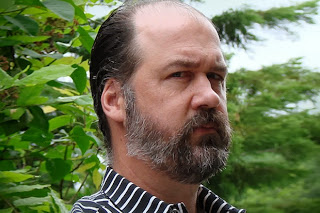

Krist Novoselic, the former bass player for Nirvana, is now
chairman of the board at FairVote,
a national organization focused on fundamental structural reform of American
elections. Seriously.
He has written a piece for Salon.com that makes a good
case for ranked voting – a system in which primary voters don’t vote solely for
their favorite candidate, they rank the candidates. Those rankings,
cumulatively, then eliminate the need for a run-off election – something that
doesn’t exist in Michigan but is common across the nation.
cities (including Ferndale), has proven to be cheaper and some say it reduces the
rancor in campaigns.
Here’s taste of Novoselic’s argument:
“Ranked choice
voting accomplishes the goals of runoff elections in a single
election. A candidate wins when reaching a threshold of votes (generally 50
percent). Rather than requiring voters to come back to the polls to either vote
for their first choice candidates again or vote for a second or later choice
who made the runoff, RCV simply asks voters to indicate both their first-choice
and their second and later choices on the same ballot.
“Used for nearly all elections in nations like Australia and Ireland — and
for mayoral elections in London — RCV has a history of extensive use in the
United States, where it was invented in 1870. With the rise of optical voting
equipment, RCV has become an increasingly popular election reform. Voters in
more than a dozen cities have approved ranked choice voting, typically by
landslide margins, for elections for citywide offices, including Memphis,
Minneapolis, St. Paul, Berkeley, Oakland, San Francisco, Portland (Maine),
Sarasota, Santa Fe, Ferndale (Michigan), and Takoma Park (Maryland).
“Arkansas, Louisiana, and South Carolina use ranked choice voting for
military and overseas voters to guarantee their ability to participate in their
runoff elections. Recently, a federal court order declared that Alabama must
use ranked choice ballots for overseas voters to ensure that they can
participate fully in the upcoming congressional district one special election
Republican primary runoffs.
“Voters have to get used to understanding the results of a close RCV
election, but exit
surveys show they like to rank candidates. And there’s no doubt that RCV
has a powerful impact. Mike Brennan, the mayor of Portland (ME) is a veteran
politician who had run many times before winning Portland’s first RCV election
in 2011. A recent
interview he gave is fascinating for his insights about how RCV
changed his campaign. Mayor Brennan reached out to far more voters, cut back on
negative attacks and turnout ultimately soared. Of the 18 offices elected by
RCV in Oakland (CA), 16 had more votes than their predecessor.”