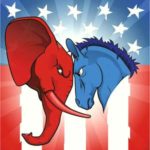
As the deficit-reduction supercommittee on Capitol Hill prepares to throw in the towel, marking yet another congressional failure due to hyper-partisanship and gridlock, Democrats and Republicans are getting lambasted from all sides, as well they should.
This spectacular failure prompted David Gergen, always a voice of reason in Washington, to write a column with this headline: “Have they gone nuts in Washington?”
While the finger-pointing has begun in earnest among the politicians, Gergen reminds our “representatives” how the legislative system is supposed to work.
Here’s a portion of his column, posted on CNN earlier today:
“…Contentious disagreements have characterized our politics since the dawn of the republic, and in almost all crises of the past, political leaders have worked out compromises. As Thomas Jefferson put it in 1790, ‘In general I think it necessary to give as well as take in a government like ours.’ George Washington agreed and pushed continually for what he called ‘a spirit of accommodation.’
“Our ‘leaders’ of today, however, have tossed aside the wisdom of the Founders. The supercommittee is now hours away from abject failure on what should have been relatively easy work. Some tell us not to worry: A breakdown will automatically trigger ‘sequestration’ — automatic cuts in defense and domestic programs starting in January 2013. But there are already efforts within Congress to void the sequestration process.
“A related concern is how financial markets will react. Some economists tell us not to worry about that, either: They say the markets have long assumed failure and have baked that into their investment decisions. But who knows for sure? (As of noon, the Dow was down about 300 points.) Who can tell how a volatile mixture of political failure in Europe and in the U.S. will play out in coming weeks? The truth is nobody knows for sure.
“That’s why this failure of the supercommittee represents a reckless, irresponsible gamble by our ‘leaders’ in Washington. It’s difficult to remember a Congress that has put the nation so much at risk in the service of ideology and to hold onto office. Partisans on both sides are grievously failing the country.”
You can read the entire column here.
Over at The Daily Beast, Patricia Murphy takes a decidedly more cynical view of this whole mess.
Murphy doesn’t mention that the 12-member supercommittee included no members of the Senate’s “Gang of Six” budget cutters or the Bowles-Simpson Commission of 2010. But she does point out that the dynamics in Washington do not mesh with a system that elevates anyone to the level of “super.”
Here’s a portion of what she wrote:
“The factors working against the supercommittee’s success were always exponentially stronger than the factors working in its favor.
“The idea that 12 members of the House and Senate, each hand-picked by their party’s leadership, could rise above partisanship where Washington has not, was hard to imagine from the start. Equally impossible to believe was a scenario with Republicans and Democrats agreeing to increase taxes, a tried-and-true book-balancing tactic that has now morphed into a philosophical gut-check issue for the bases of both parties.
“Add to that the House and Senate committee chairmen who became more and more miffed over losing their power to pick future spending cuts; rank-and-file members more and more worried about losing their elections over a tax increase; a president who does not want to engage with Congress; and a Republican caucus more and more convinced that it will control Capitol Hill in 2013 — and the recipe for disaster was complete before the committee even began to meet.
“The result, aides say, was intransigence on both sides — particularly among Republicans over the future of the Bush tax cuts and among Democrats over cutbacks in entitlement spending — that never gave way to bona fide negotiations.”