Michigan was ranked last among the 50 states in government transparency and ethics by the Center for Public Integrity in 2015 and today the state took a big step backwards in trying to shore up its tattered reputation.
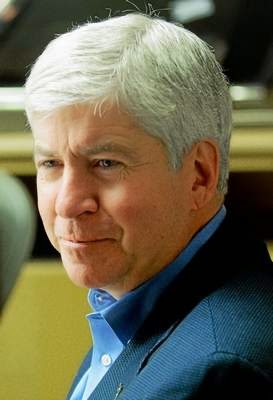
Gov. Rick Snyder signed a two-bill package that will allow a flood of ‘dark money’ – cash that is not tied to any donors – for election campaigns. The end result could be unlimited campaign contributions doled out by corporations, unions and wealthy individuals.
According to the Michigan Campaign Finance Network, supporters have argued that the bill codifies into state law the Supreme Court’s controversial Citizens United court decision of 2010. But the bill goes further, specifically allowing state candidates to solicit unlimited contributions to supposedly “independent” Super PACs that support their campaigns.
So, while individual donors have been limited to a $1,000 contribution to a state House campaign, for example, the candidate could ask the same donor or a corporate entity to give a much larger check to a Super PAC that is working to get the candidate elected. Because Super PACs can accept contributions from corporate funds, the original sources of their money are notoriously hard to trace.

The state House and Senate had approved the legislation largely along partisan lines, with Republican lawmakers pushing it to the finish line after a 2-year effort.
In signing the bill, Snyder insisted that, as long as superPACs do not specifically ask people to vote for a certain candidate – if they stick to so-called “issue advocacy” advertising – then they comply with the Michigan Campaign Finance Act (MCFA). Critics say issue advocacy ads have become a farce because they can savage Candidate A, while tacitly benefiting Candidate B, but the law assumes that the ads are not intended to help Candidate B’s campaign.
“The Supreme Court of the United States ruled on this issue more than seven years ago, and still there has been confusion about how this decision affects Michigan law,” Snyder said. “Under the bills signed into law today, the Department of State finally has clear statutory authority to regulate independent expenditure committees, to mandate registration and reporting of contributions and expenditures, and to investigate and punish entities violating those regulations.”
The bills, he continued, provide clear guidelines for filing and regulating campaign contributors and authorizes penalties for violations and late filings. Transparency is increased, Snyder said, through the requirement of accurate and appropriate reporting of both contributions and expenditures. Neither bill addresses funding of indirect issue advocacy, also known as “dark money”. The MCFA does not regulate such activities.
Recent Posts:
 Michigan avoids being Foxconned – Snyder bailed out…
- GOP Rep’s bill calls for elimination of state Senate
- Michigan companies can’t fill jobs because too…
- Warren ranked the most ‘white trash’ city in Michigan
- The recession recovery: Michigan No. 1 while 35…
- Islamophobic SH candidate calls on Michigan Tea…
- Michigan counties face a heavy hurt under…
- Michigan Obamacare rate increases could average 28 percent