

A report by the Ontario utility seeking to build a nuclear waste burial site on Lake Huron claims that pondering other locations is not necessary because the public is not concerned about the prospect of radioactive materials contaminating the drinking water.
As first reported by the Associated Press, the Ontario Power Generation report, completed at the request of Canada’s federal environment minister, asserts that the public doesn’t really care about the proposal for a deep geologic repository — or DGR — even though more than 100 Great Lakes communities in both Canada and the United States have denounced the plan.
“There is little interest among the general public regarding the DGR project,” the report said. “Ontarians are not looking for information on nuclear-waste disposal in large volumes. This topic is not a popular one nor is it generating large volumes of curiosity.”
The OPG conclusions made public this week reinvigorated the clamor over the proposed waste dump as the utility insisted its sprawling Bruce Power Generation Station near the Lake Huron shoreline is a better choice than other Ontario locations due to billions of dollars in additional cost, difficult logistics and the added years needed to create an alternative underground disposal vault. The provincial power company also claimed that overall health and environmental risks could be worse if the site were located away from the Great Lakes, in central or western Ontario.
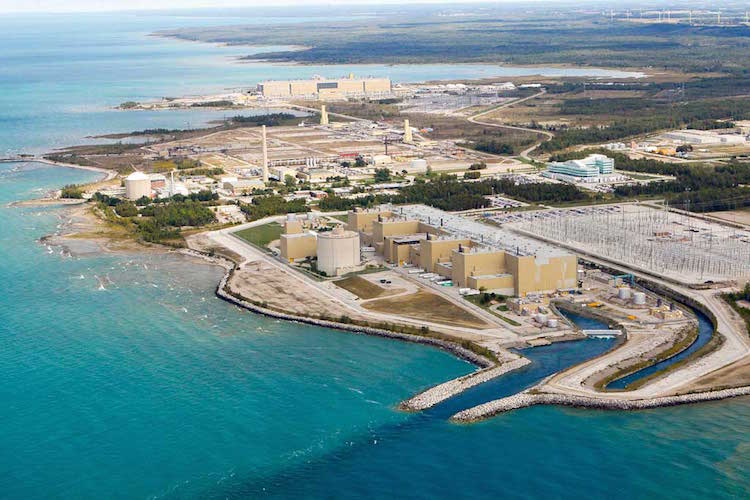
The preferred location is across Lake Huron, east of the tip of Michigan’s Thumb Area, in Kincardine, Ont. The disposal area would be located less than a mile from the lake, on the property of Bruce Power, which is the world’s largest nuclear power complex, with eight reactors.
Opposition was widespread
Some 186 jurisdictions representing 22 million people have passed resolutions opposing the DGR near Kincardine, and a petition opposing the plan has gathered 150,000 signatures. If a geological shift or some type of man-made accident occurred, waste containing dangerous levels of radiation could contaminate Great Lakes drinking water for up to 40 million people.

McKenna
In Michigan, environmental groups that have consistently battled the nuclear waste bunker include the St. Clair Channelkeepers and Save Lake St. Clair (SLSC). Some environmentalists had assumed the battle essentially was won earlier this year when the Canadian Minister of the Environment, Catherine McKenna, told OPG to search for other locations. Mike Gutow of Macomb County, founder of SLSC, predicted that the OPG report will generate far more opposition in the future than the Kincardine plan sparked in the past.
“Does the Ontario Power Generation want to start a war? Few topics create more cause for alarm than potentially contaminating our drinking water with nuclear waste,” said Gutow, who lives on Lake St. Clair in St. Clair Shores.
“Face it … This was done because love of money became greater than the protection of human health. Are we to apologize to the future generations of our land long after we are gone? No matter what it claims, the power company cannot guarantee safe burial for 100,000 years.”
Upstream from drinking water intakes
Michigan Congressman Dan Kildee, D-Flint, whose district has suffered has suffered from lead-contaminated water for three years, expressed exasperation at the recommendation to stick with the location upstream from numerous drinking water intakes. Democratic Sen. Debbie Stabenow, also of Michigan, pointed out that a radioactive leak could devastate the Great Lakes boating and fishing industry, which generates about $1 billion a year in economic activity. Canadian critics agree.
“OPG has looked at this from the point of view that this will not leak. We have to look at this from the perspective that this will leak,” said Beverly Fernandez, head of an activist group in Ontario called Stop the Great Lakes Nuclear Dump.
“Putting a nuclear waste repository (at the Bruce site) is more than risky. It is knowing disregard for the health of millions of people.”
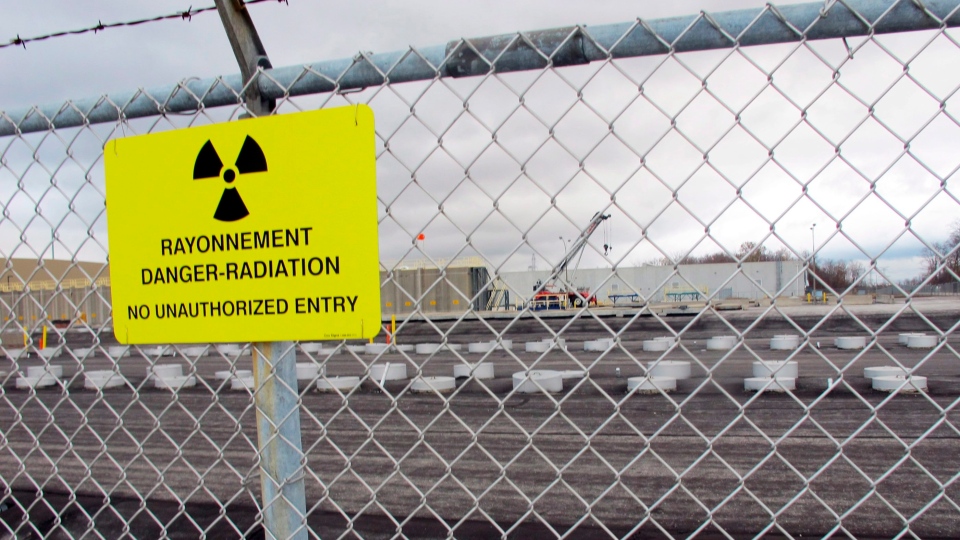
The proposal calls for burying low- and intermediate-level waste such as clothing, mops and discarded machinery — some of which could remain dangerously toxic for thousands of years — about 2,200 feet underground. Waste from other Ontario nuclear facilities is also transferred to the Bruce Power site, where temporary storage currently occurs above ground.
According to AP, the proposed burial bunker would be encased in a limestone formation that the utility says has remained stable for 450 million years. The storage chamber would be much deeper than Lake Huron and the government-owned utility says there is virtually no chance of radioactive pollution reaching the lake.
Power company offers new arguments in favor
The disposed material would not include fuel rods from nuclear power plants. But it would eventually amount to 152,000 cubic yards of waste. Critics say the cancer-causing material would present a potential health risk for 100,000 years.
In May 2015, an environmental review panel compiled by the Canadian government, which heard testimony from numerous scientists, endorsed the project. But the Ministry of the Environment instructed OPG to engage in additional study, including potential alternative locations. Based on the report released this week, the federal government could approve the Lake Huron site in the fall.
 The London (Ont.) Free Press reported that the OPG study offered several new arguments in favor of sticking with the Bruce Power location.
Those include: a more than doubling of the overall cost by moving the project, including a $3.5 billion added expenditure at the alternative area in central Ontario; a delay in the current waste-burying plan from a 2026 start to as late as 2055; trucking the hazardous material as far as 1,200 miles, with approximately 23,000 trips in the long-term at a cost of up to $1.4 billion, which would expose workers and motorists to potential exposure to radiation; and establishing a new “industrial footprint” in rural Ontario that would damage wildlife habitat and present the release of new greenhouse gases.
“Deferring costs to future generations, when a safe, cost-effective option already exists, is not necessarily in the best interests of society,” the report stated.
While the study does not identify specific sites, it found that vast stretches of the province, including much of central and western Ontario, would be geologically suitable for a waste bunker. However, while the town of Kincardine has approved the burial bunker at Bruce Power, a move to a new site would require locating a willing and supportive host community, as well as the consent of indigenous peoples in the area.
Essentially, the report continues OPG’s “trust us” mentality. The World Nuclear News reported that the updated analysis “showed no potential for likely adverse cumulative effects, and also showed cumulative effects as a result of malfunctions, accidents, and malevolent acts … would be unlikely.”
OPG spokesman Kevin Powers was more blunt: “The science says that our proposed location for the deep geologic repository is the safest possible solution for the storage of low- and intermediate-level nuclear waste. From an environmental perspective, there is no increased environmental safety for the lake or the people by moving it from the proposed (Bruce) site.”
Opponents say relying on a limestone shaft for centuries of protection would be unprecedented and they demand that the issue be treated as a matter of international jurisdiction because it affects the safety of shared waters.
But the OPG report insists that, even in the unlikely event of a radioactive waste leak from the repository, the contamination probably would not spread any further than the Hudson Bay in Ontario.




No waste is to go into our waterways. Contain waste far away from animals and water supplies, including underground water sources. Keep away from known fault lines as well. Seek ways to neutralize waste naturally.
This might be the most outrageous plan I’ve ever seen…. A nuclear dumping ground next to a Great Lake…. Just plain ignorant.
Ontario Power claims it would cost to much to find another dump site? Just like the City of Flint couldn’t afford to pay for water from Detroit! This is TERRIFYING! Lead poisoning from bad plumbing can be fixed in months. A Nuclear waste spill will last centuries. This dump can not be allowed!
No, NO, NO! What about this makes sense to anyone? Nuclear waste and our fresh water supply do not belong together in any way.
http://www.stopthegreatlakesnucleardump.com
“The country between the two lakes is well situated and the soil is fertile. The banks of the strait are vast meadows and the prospect is terminated with some hills covered with vine yards. Trees bear good fruit. Groves and forests are so well disposed that one would think Nature alone could not make, without the help of art, so charming a prospect. That country is stocked with stags, wild goats, and bear, which are good for food and not so fierce as in other countries. Turkey-cocks and swans are also common. The forests are chiefly made up of walnut trees, chestnut trees, plum trees and pear trees loaded with their own fruits and vines. There is also abundant timber fit for building; so those that shall be so happy as to inhabit that noble country, cannot but remember with gratitude those who have discover the way by venturing to sail up0on an unknown lake for 100 leagues.” -Father Hennepin, sailing with La Salle in the Detroit region, 1679, published by Reuben Thwaites, England, 1698.
As a former superintendent in a Water Filtration Plant along the St. Clair River, I am firm in my belief that this proposal of a nuclear waste dump along the shores of beautiful Lake Huron, is a invited disastor against all living things, (plants, animals, and the human race), who rely upon the wealth of the finest fresh water source in the world. It is inevitable that an accident will occur. It may not be within our lifetime, or maybe even our childrens lifetime, but it WILL happen. Remember the “BLOB”‘that surfaced back in the 70’s or 80’s? This stemmed from a decision by our governments to allow deep well injection of the hazardous chemical Perchloroethelyne. This process was deemed to be entirely “safe”, and would never impact our water supply. Well, how well did that work out??. How about Mercury in our water supply of the St.Clair river??? These were additions placed in our water supply with the governments’ approval, and their practice of looking the other way, especially in international issues such as this proposal is. Chemical Valley has been a MAJOR factor in our pollution, but was endorsed by our governments ,(Canadian and American alike). This nuclear dump site proposal not only has the potential to devastate our waterways, and human lives here, but throughout the entire countries of the United States as well as Canada. Americans and Canadians, WAKE UP!!!!!DO NOT LET THIS HAPPEN!!!!. With current pollution laws (both national and international), there are abatement processes in place to reduce or remove problematic pollutants. This CANNOT happen with a nuclear waste accident. Radioactive waste residuals will be present for hundreds (if not thousands) of years, destroying life as we know it today. This proposal is politically motivated to save the power company multi millions of dollars. But millions of dollars saved on behalf of business can never be rectified in the terms of loss of human life and irreversible environmental devastation, one of which we cannot imagine.
I am, as most Michiganders, appalled that anyone think that this would not be an area of major concern. We definitely do not want one of the largest fresh water lakes in the world contaminated by radioactive waste. All I can say is “What are you thinking?” I am spreading the word.
No! I don’t want nuclear waste near any bodies of water, or ground water either. There is little that is more important to survival than clean drinking water. Just ask the people of Flint, MI.
Canada is a big country, dump in the middle where. No one lives. So wrong, it makes me sick. It’s all about money!
looks to me the public truely cares! I don’t want this to happen in any water!
Please inform us of a Name and Address of the Law Firm that will be handling “medical reimbursement” for all health problems resulting from this DUMP!