Michigan has a long way to go to reach its goal of becoming a Top Ten state in education, but a new higher ed report card released this morning shows that the state’s 15 public universities are performing well despite a dramatic loss in financial support from the Michigan Legislature.
According to data compiled by the nonprofit group Business Leaders for Michigan (BLM), the state’s universities have improved graduation and student retention rates, improved student/staff ratios, and increased the number of degrees awarded, particularly in the “critical skills” areas.
The good news when comparing this year to 2015:
- Nine of 15 higher ed institutions continued to increase their enrollments.
- 11 of 15 have 6-yeargraduation rates that increased during the past year, and seven have graduation rates that are higher than the average of their “peers” (apples-to-apples comparisons).
- 11 of 15 institutions reduced their dropout rates and grew their student retention ratesduring the past year, and 10 schools have retention rates that are equal to or better than their peer average.
- 13 of 15 awarded more critical skills degreesthan their peer average, and all of the schools have increased their total number of critical skills degrees awarded.
- Similarly, 13 of 15 Michigan institutions have increased thetotal number of degrees awarded, and 10 exceed the degree production of their peers.
- All 15 Michigan public universities have increased the number and percentage of students receiving Pell grants, which means higher education affordability and accessare improving.
- Research expenditures are up at 10 of the 15 institutions.
“These results are particularly extraordinary when we consider the economic environment in which these institutions are operating,” said Doug Rothwell, the CEO of BLM. “Without exception, state appropriations for each of Michigan’s public universities dropped during the same time period they were making such hefty contributions to our state’s future prosperity. College costs are rising and, even though we have started reinvesting in our public universities over the last five years, state support is still behind our competitors.”
Michigan ranks 36th among all states in public funding to higher ed. Another alarming statistic: Michigan ranks 8th worst in the amount of student debt that saddles college graduates.
“That our public higher education institutions are achieving as well as they are speaks volumes about the innovative strategies and leadership capacity they share,” Rothwell said. “As a state, we simply must do better to prepare the workforce of tomorrow.”
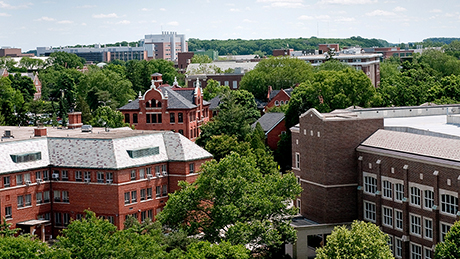
Photo: Michigan State University
Recent Posts:
 Michigan companies can’t fill jobs because too…
- Warren ranked the most ‘white trash’ city in Michigan
- Michigan avoids being Foxconned – Snyder bailed out…
- The recession recovery: Michigan No. 1 while 35…
- Islamophobic SH candidate calls on Michigan Tea…
- Michigan counties face a heavy hurt under…
- Michigan Obamacare rate increases could average 28 percent
- Website says 80% of Michigan’s best elementary…