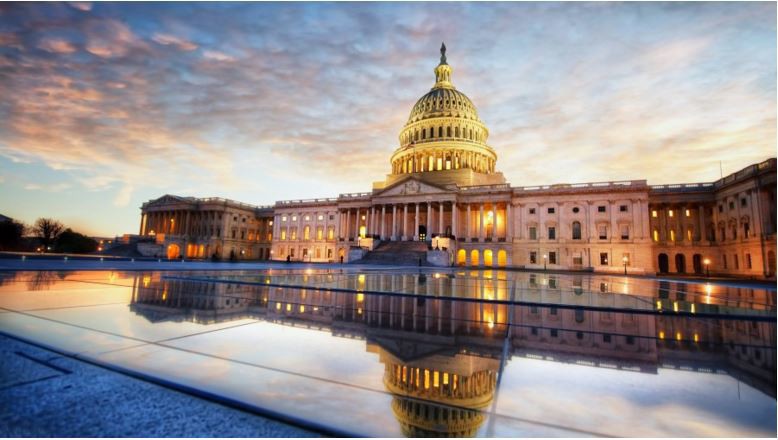
Sen. John Ensign’s announcement Monday that he will not seek re-election marks a milestone on Capitol Hill, as the number of Senate retirements in the first two months of the 111th Congress is now more than we’ve seen in any Congress in the past century.
According to The Washington Post, eight of the 33 senators up for reelection — nearly one-fourth of the entire class — have already said they will not seek another term. And even if no other senator opts to retire, that will be one of the biggest classes of retirees in history.
The only times over the course of the past 100 years that we’ve seen more retirements were 2010 (10 retirements), 1996 (13) and 1978 (9). And we’ve still got a few potential retirees left.
The Post’s Aaron Blake sums things up this way: “It all leads to that question: What gives? Doesn’t anyone want to be a senator anymore?”
One reason for all the early retirements is that, more than ever, the campaign committees are pushing for their members to decide on re-election early in the cycle. This gives their party plenty of time to find a replacement candidate and get that candidate off to a strong start and to raise lots of campaign cash.
The other reason, according to Blake, is that massive retirements generally come on the heels of a big shift in power. The biggest year for retirements — 1996 — came right after the Republican Revolution in 1994. And there was also a big shift before the 2010 retirements, as the GOP lost eight seats in 2008 and almost immediately saw five of its members opt to step down.
Republicans wound up holding on to all five of those seats — something Democrats hope to be able to replicate in 2012.
Ensign, a Nevada Republican, is in the middle of a nasty scandal, while Sen. Daniel Akaka, D-Hawaii, is in his 80s and Sens. Kent Conrad, D-N.D., and Joe Lieberman, I-Conn., faced tough paths to re-election.
But other members seem to be stepping aside for no reason besides not wanting to be in the Senate for another six years.
This has been the case with Sens. Kay Bailey Hutchison, R-Tex., Jon Kyl, R-Ariz., Jeff Bingaman, D-N.M., and Jim Webb, D-Va., who are all retiring at relatively young ages. (Webb also faced a potentially tough race.)
Sure, all four of them are in their 60s, but none of them rank among the 30 oldest senators.
What it means is that the next Congress will feature an even fresher-faced Senate, Blake reports. Already, there are 16 brand new senators and more than two-fifths of the Senate has served less than one term.
Along these same lines, MSNBC’s Chuck Todd recently noted that, as the GOP presidential field takes shape, it appears that 2012 will mark the first election since the early 1900s when no sitting senator sought the Republican or Democratic nomination. In recent presidential election cycles, it seemed like the party on the outs presented a field that looked like a Senate lineup. So, again, what’s up?
It appears that those in the staid Senate have had their fill of Washington’s hyper-partisanship and nasty rhetoric.