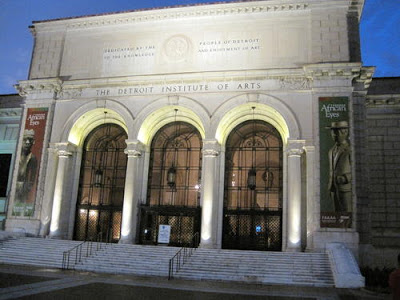

To say that top executives at the Detroit Institute of
Arts are politically tone deaf is to insult bumbling politicians everywhere.
Less than a year after creating a firestorm by accepting huge
pay raises, DIA officials are thumbing their nose at taxpayers once again by
generating a $625,000 compensation package for executives Annemarie Erickson
and Robert Bowen, plus Graham Beal, the former director who no longer works at
the museum.
Under a plan for fiscal years 2014-15, suburban leaders
have learned, the now-departed Beal will receive a $285,000 retirement
severance and forgiveness of the loan on his 6,000 square foot Detroit home.
is a bit over the top, as taxpayers in Macomb, Oakland and Wayne counties will only
pay about $49,000 of the cost. DIA officials plan to use private donor funds
for the rest.
County Arts Authority and explained that he wanted to follow the rules of
public-private DIA partnership “to the letter.”
What that essentially means, from the perspective of
Gargaro’s gargantuan ego, is: “We’re going to inform you of our plans, but you
will have no say.”
are now in a different league. They are operating with taxpayer subsidies and they
are now under the scrutiny of public officials and their constituencies.
Still, that doesn’t mean they can no longer call all the
shots, if they choose to. And they do.
from the tri-county millage approved by voters in 2012. Yet, even under an
agreement worked out with the counties last year, when the first round of post-millage
raises and bonuses were denounced, the arts institute can still circumvent any
attempt to block the largesse for their execs.
Gargaro told The Detroit News that his presentations to
county authorities on the new compensation levels are merely for purposes of “education and information.”
“If (the counties) object, my option is to use donor
funds,” Gargaro said. “There is no basis to object.”
museum when Detroit Emergency Manager Kevyn Orr was contemplating a glorified garage
sale for the artwork to raise much-needed cash during the city’s bankruptcy
process.
The DIA crew is completely unequipped to deal with the
real world of transparency and political acumen. Compare that to SMART, the suburban
bus system led by the savvy political veteran John Hertel.
announced this week that they have purchased another 80 buses in keeping with
their promise to taxpayers that the tri-county millage increase approved by
voters last year will be used primarily to replace a fleet of outdated buses, most
with 500,000 to 700,000 miles of service.
“We are making great strides to replace our aging fleet
as quickly as possible,” said Hertel, the SMART general manager who has held a
number of elective and administrative public sector positions.
“We are keeping the promise we made during the
millage. Not only will there be new buses on the road soon, but our
riders will get to experience a much improved ride and better service.
They deserve it, given their support during the millage and their understanding
of the importance of the bus service for the region.”
small buses for its curb-to-curb services. The “autogas” Connector buses represent
one of the five largest propane-powered bus fleets in the nation. Besides running
on a clean-burning, domestically produced fuel, these vehicles are cheap to
operate, last a long time and require less maintenance costs.
out a few basics on how to run a multi-million dollar organization for the
folks at the DIA.