
 |
| The center of Oakland University’s campus, including the newly constructed bell tower. |
This is an excerpt from a story I wrote for Dome Magazine, plus a sidebar that was omitted from the initial publication due to space reasons.
As the Legislature ponders cracking open the
secretive world of Michigan universities’ governing boards, officials at
Oakland University pursue a campus building boom priced at more than $200
million, including a potentially radical change in student housing, while
operating largely behind closed doors.
A bill pending in the state House would require
Michigan’s 15 public university and college boards to comply with the Open
Meetings Act, which requires transparency in government at the local level. The
university presidents are pushing back, arguing that some spending and policy
matters cannot be practically discussed in public.
But those matters entail
big issues: Choosing a university president or other top administrators,
spending tens of millions of dollars on new buildings and campus capital
projects, and raising student tuition rates.
 |
| Capital projects, particularly building construction, entail the most expensive decisions made by university boards. |
As is the case at most Michigan colleges and
universities, the Oakland University Board of Trustees consists of eight
gubernatorial appointees with considerable political and corporate connections.
These board members are not required to reveal earnings or financial holdings
that could present conflicts of interest.
The OU trustees recently oversaw the completion of six construction projects on the Rochester
Hills campus at a combined cost of approximately $200 million, and they are
eyeing two more buildings that could approach another $200 million.
Daniel Hurley, CEO of the Michigan Association
of State Universities (formerly the Presidents’ Council), argues that, “blunt
and forceful opinions” should be debated privately by college trustees,
followed by public explanations of how a final decision was reached. Hurley
said he was not familiar with the issues at OU but he assured that transparency
will prevail.
“If one were to contact the university and ask
them to account for the process, I’m sure they would elaborate on … the
decision-making process,” he said.
However, OU officials remain tight-lipped
about the fast-growing university’s newest initiative, a 750-bed student
housing facility and, specifically, about consideration given for this
dormitory to be created through a public-private partnership. That approach
would turn over operations of a newly constructed dorm on OU property to a
private company for 30 years. A private contractor would construct the
six-story building and the university would then lease it to a second private
entity.
meetings to the public comes after the Oakland faculty and students had their
confidence in the institution shaken by questionable actions taken by OU
officials:
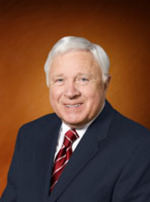 |
| Baskin |
faced professional misconduct sanctions for having sex with a client before
winning her a lucrative divorce settlement
with her husband, a prominent construction contractor. The OU campus was
not made aware of the allegations until several months later.
prompted glowing praise from the board and administration for his “dedicated
service and wise counsel.” A month later, Baskin, a high-profile attorney from
Birmingham, received a reprimand from the state Attorney Discipline Board and
was ordered to pay $2,500 in fees and costs.
 |
| Russi |
announcement came on the same day that Russi’s wife, Beckie Francis, was fired by the athletic
director as the women’s basketball coach.
events and it was later learned that Russi would receive $230,000 in deferred
compensation, plus other benefits. The OU trustees unanimously approved the
financial package without comment. The board chair at the time, Michael Kramer,
hired a law firm without the trustees’ approval to investigate Francis and the
basketball program, but the results of that probe were never made public until a
court order forced disclosure.
 |
| Schlussel |
students and faculty, board Chair Mark Schlussel, an attorney, is fighting in
court long-held claims that he engaged in financial improprieties. A former
business partner claimed that Schlussel refused to pay his $250,000 share for a
company they formed that quickly went belly up in Arizona.
Schlussel allegedly dodged his debts by funneling vast amounts of
money into a largely dormant consulting firm, with ownership in his wife’s name.
A court-ordered creditor’s exam in 2010 found that Schlussel’s adjusted
gross income over a 5-year period was a combined $2.5 million. The appeals
court remanded the case back to Oakland County Circuit Court for a final
determination and a trial has been set for December.
Recent Posts:
 Michigan companies can’t fill jobs because too…
- Warren ranked the most ‘white trash’ city in Michigan
- Michigan avoids being Foxconned – Snyder bailed out…
- The recession recovery: Michigan No. 1 while 35…
- Islamophobic SH candidate calls on Michigan Tea…
- Michigan counties face a heavy hurt under…
- Michigan Obamacare rate increases could average 28 percent
- Website says 80% of Michigan’s best elementary…