Over at The Washington Post, Ezra Klein argues that oral arguments before the Supreme Court are overrated. In the high-profile case that will decide the fate of health care reform, what reason is there to believe that, over the past two years, the various justices had not reached a firm conclusion on the constitutionality of the law?
 |
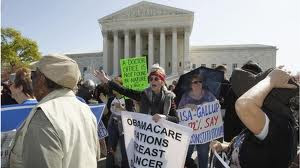
| (BBC photo) |
That’s the question Klein raises in asserting that very few Supreme Court cases are decided based on oral arguments. The briefs filed – in this case, thousands of pages – have a much greater impact on the justices, according to some experts.
Here’s Klein:
“Why would a few hours of theatrical argument be key to their decision-making process? Prior to these arguments, the Court received dozens of briefs laying out the possible arguments for and against every provision at issue in this case. Here’s one, for instance, in which a Who’s Who of health-care economists and scholars try to persuade the Court that “the decision to forgo insurance is not ‘inactivity.’
“Frankly, every single signatory to that letter is in a better position to assess whether the mandate is or is not necessary to the regulation of a national market than the lawyers currently making arguments before the court. And that is, of course, not the only brief the Supreme Court has in its possession. You can read the others — which include submissions from Blue Cross and Blue Shield of Massachusetts, the American Cancer Association, the Cato Institute, Senator Harry Reid, Speaker John Boehner, 104 health law professors, and many more. You can be assured that the Justice’s clerks have already read these briefs, and the Justices have likely read the best of them.
“You can either take that as evidence that they’ve thus been exposed to more than enough reasoned argument, from more than enough different directions, to either make up their minds or fortify whichever positions they had already intended to take. Either way, it seems unlikely today’s oral arguments will dislodge the justice’s conclusions. Indeed, it would seem faintly ridiculous, and possibly even irresponsible, for the justices to permit one lawyer having a particularly bad or good day before the bench to flip such a consequential case.”
You can read more here. here.
And here.