The media’s view that independent voters essentially do not exist, despite their standing as the largest voting bloc in the nation, continues to come under scrutiny.
The biased views reflected upon independent voters goes beyond the media to university pundits and pollsters, according to studies newly released by Arizona State University (ASU) and the University of Southern California (USC).
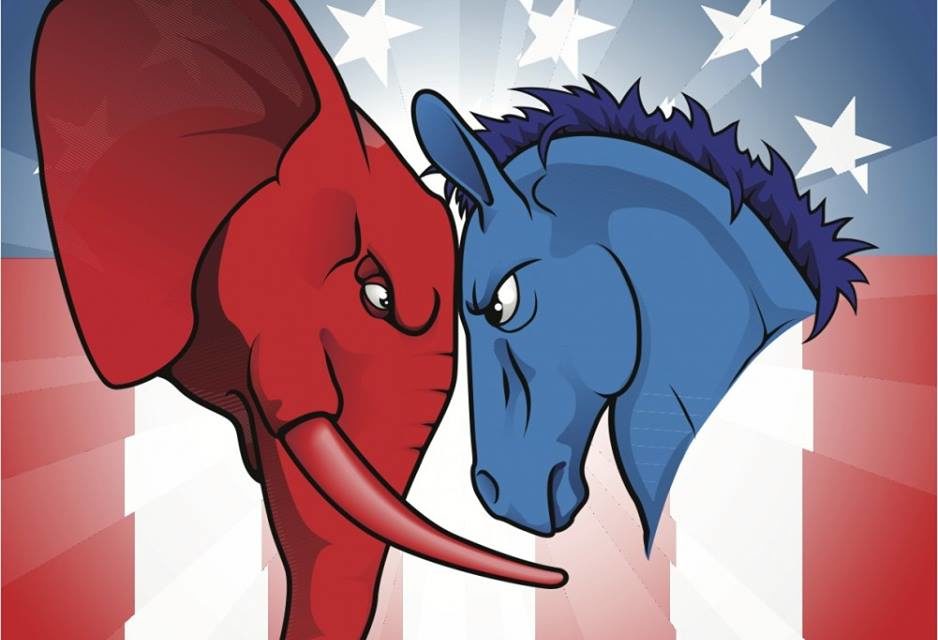
“Political academia, pollsters, consultants, and the media have kept the national political discussion locked in 1950s Red vs. Blue politics,” according to the Independent Voters Network (IVN).
A prime example of media miscalculations emerged in recent days in response to a Pew Research study that found the polarization between Democrats and Republicans sits at unprecedented levels.
Among those misinterpreting these numbers was Chris Cillizza, normally a savvy journalist, who concluded that the “sensible center” that dominated American politics in decades past no longer exists.
But the polling numbers reflect something entirely different. They indicate that self-identified Republicans and Democrats have fully separated into disciples of the left and right. Many have become fringe voters reflexively engaged in tribal instincts.
Polling by Gallup and Pew Research has consistently shown that independents represent the largest voting bloc in the U.S., much larger than either Democrats or Republicans, as their numbers have hovered around 40 percent since 2010.
Perhaps it’s no surprise that support among voters for the emergence of a third major political party has hit new heights.
Most independents are moderates, centrists and pragmatists who lean liberal on some issues, conservative on others. Overall, they mostly seek pragmatic compromises on much of the national agenda rather than the pathetic partisan gridlock that has dominated Congress for a decade.
This unmistakable trend was revealed in research results by the ASU Morrison Institute for Public Policy and the USC Schwarzenegger Institute. Their study was titled, Gamechangers? Independent Voters May Rewrite the Political Playbook.
“That long-held duo control (of Republicans and Democrats) is becoming more tenuous … as more voters disassociate themselves with polarizing partisanship and constricting party lines by joining the independent movement — either by action, name or both,” said Joseph Garcia, a director of the Morrison Institute.