

 An unlikely coalition of Republicans, business executives, military officials, religious leaders and the former Michigan Speaker of the House who initially pushed for a ban on gay marriage have filed a brief in federal court supporting the March 21 ruling that struck down Michigan’s restrictions on same-sex couples’ right to marry.
According to a press release earlier today, the “friend of the court” brief was filed with the Sixth Circuit Court of Appeals in Cincinnati.
A total of 20 Michigan Republicans—both current and former office holders and party officials in Michigan—signed
the brief. Former state representative Daniel Acciavatti of Chesterfield Township was among the GOP signatories.
“As conservatives, moderates and libertarians we embrace the individual freedoms protected by our
Constitution,” said Rick Johnson, the former GOP speaker who paved the way for the gay marriage issue to make its way to the statewide ballot. “We embrace Ronald Reagan’s belief that the Republican Party must be a ‘big tent.’ We
believe in the importance of limited government, individual freedom and stable families. We believe that
these values are advanced by recognizing civil marriage rights for same-sex couples.”
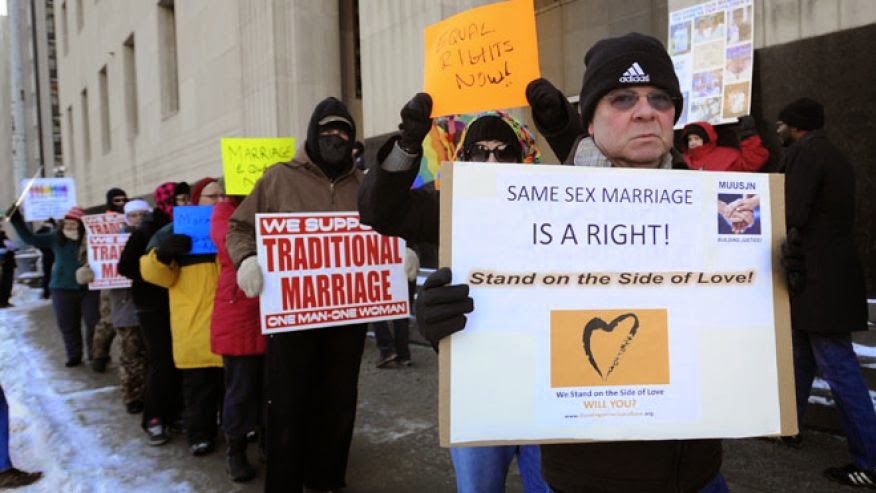
Another prominent conservative, Jennifer Gratz, who successfully led the 2006 drive to ban affirmative action in Michigan, also joined in the flurry of support for marriage rights.
for the rights of individuals to be treated equally by our government and I am
proud to join former Michigan Republican lawmakers in signing onto a brief
filed this week supporting Judge Friedman’s decision to overturn Michigan’s marriage
ban — a ban that discriminates against some based on their sexual orientation,” Gratz wrote in a message posted on Facebook.
instances in which judicial intervention is necessary to prevent overreaching
by the electorate. … When fundamental liberties are at stake, personal
choices and assessments … are not for the government to make, and courts must
step in to prevent any encroachment upon individual rights. … Religious
individuals and organizations should, and will, make their own decisions about
whether and how to participate in marriages between people of the same sex, and
that the government must not intervene in those decisions.”

can you link to the list of signers? or post it here?