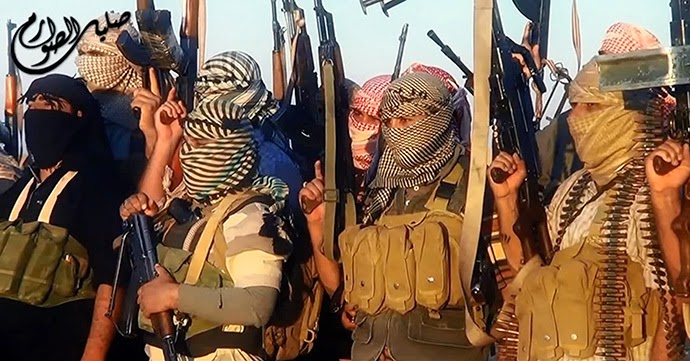
Sunnis battle with Shia in Syria and Iraq — a sectarian
fight – a centuries-old dispute between two branches of the Muslim religion.
fight – a centuries-old dispute between two branches of the Muslim religion.
And what is this divide all about?
Well, in simplest terms,
it is a conflict over whether or not the Prophet Muhammad, upon his death 1,400
years ago, decided that Ali, his cousin and son-in-law, should be his successor
in leading Islam.
it is a conflict over whether or not the Prophet Muhammad, upon his death 1,400
years ago, decided that Ali, his cousin and son-in-law, should be his successor
in leading Islam.
It would be a mistake to not recognize politics, geography
and old-fashioned revenge as key motivators in the ultra-violent Middle East
murkiness. But bitter sectarian, religious differences were a leading cause of
the ISIS incursion in Iraq, the bloody civil war in Syria, the five years of
insurgency attacks in Iraq during the U.S. occupation, the Iran-Iraq War and
the civil war of the 1980s in Lebanon.
and old-fashioned revenge as key motivators in the ultra-violent Middle East
murkiness. But bitter sectarian, religious differences were a leading cause of
the ISIS incursion in Iraq, the bloody civil war in Syria, the five years of
insurgency attacks in Iraq during the U.S. occupation, the Iran-Iraq War and
the civil war of the 1980s in Lebanon.
All of this killing is inspired by, and based upon,
religious beliefs — on faith in theological doctrines — not necessarily on
known facts and documented history. Yet the result is constant bloodshed
despite the fact that both sects agree on the basic religious tenets of Islam.
religious beliefs — on faith in theological doctrines — not necessarily on
known facts and documented history. Yet the result is constant bloodshed
despite the fact that both sects agree on the basic religious tenets of Islam.
As with the Christians of 17th Century Europe who
savaged each other in the Thirty Years War, differences over who should believe
what and who should follow who the in pursuit of living by God’s (or Allah’s)
word trumps rationality and reality.
savaged each other in the Thirty Years War, differences over who should believe
what and who should follow who the in pursuit of living by God’s (or Allah’s)
word trumps rationality and reality.
Relying upon The Washington Post, The Economist, NPR and
other sources, here is a summary I compiled on the Sunni vs. Shia divide:
other sources, here is a summary I compiled on the Sunni vs. Shia divide:
Sunnis comprise more than 80 percent of the world’s 1.6 billion
Muslims. Yet, two key players in the Arab world, Syria and Iraq, were dominated
by minority rule for decades. A Shiite sect led by Bashar al-Assad still rules
over the Sunni majority in Syria, and Saddam Hussein, a Sunni, kept the Shia majority
in Iraq under his thumb until the U.S invasion.
Muslims. Yet, two key players in the Arab world, Syria and Iraq, were dominated
by minority rule for decades. A Shiite sect led by Bashar al-Assad still rules
over the Sunni majority in Syria, and Saddam Hussein, a Sunni, kept the Shia majority
in Iraq under his thumb until the U.S invasion.
It seems to me that the ancient divide between the Sunni and
Shiite branches of Islam is largely about religious power and grievances over
who should hold that power. Both sects follow the Five Pillars of Islam,
including Ramadan, the month of fasting. Both read the Quran, though they
interpret it in some different ways.
Shiite branches of Islam is largely about religious power and grievances over
who should hold that power. Both sects follow the Five Pillars of Islam,
including Ramadan, the month of fasting. Both read the Quran, though they
interpret it in some different ways.
Yet, last year a report by the Pew
Research Center found that 40 percent of Sunnis do not consider Shia to be proper
Muslims.
Research Center found that 40 percent of Sunnis do not consider Shia to be proper
Muslims.
While Sunnis rely
heavily on the practices of the Prophet Muhammad and his teachings (the
“sunna”), the Shia see their ayatollahs as reflections of God on earth. This
has led Sunnis to accuse Shia of heresy, while Shia point out that Sunni
dogmatism, especially in the Gulf states, has led to extremist sects such as
the puritanical Wahhabis.
heavily on the practices of the Prophet Muhammad and his teachings (the
“sunna”), the Shia see their ayatollahs as reflections of God on earth. This
has led Sunnis to accuse Shia of heresy, while Shia point out that Sunni
dogmatism, especially in the Gulf states, has led to extremist sects such as
the puritanical Wahhabis.
The split dates back
to the death in 632 of Muhammad, Islam’s founder. Tribal Arabs who followed him were split over
who should inherit what was both a political and a religious office. The
majority, who would go on to become known as the Sunnis, backed Abu Bakr, a
friend of the Prophet and father of his wife, Aisha.
to the death in 632 of Muhammad, Islam’s founder. Tribal Arabs who followed him were split over
who should inherit what was both a political and a religious office. The
majority, who would go on to become known as the Sunnis, backed Abu Bakr, a
friend of the Prophet and father of his wife, Aisha.
Others thought
Muhammad’s kin the rightful successors. They claimed that Muhammad had anointed
Ali, the cousin and son-in-law, and they later became known as Shia.
Muhammad’s kin the rightful successors. They claimed that Muhammad had anointed
Ali, the cousin and son-in-law, and they later became known as Shia.
Abu Bakr’s backers won
out, and Islam was led by a series of caliphs — the title given to Muhammad’s
successors. Islam’s split was cemented when Ali’s son, Hussein, was killed in
680 in Karbala (modern Iraq) by the ruling Sunni caliph’s troops. Sunni rulers
continued to monopolize political power, while the Shia lived in the shadow of
the state, looking instead to their imams.
out, and Islam was led by a series of caliphs — the title given to Muhammad’s
successors. Islam’s split was cemented when Ali’s son, Hussein, was killed in
680 in Karbala (modern Iraq) by the ruling Sunni caliph’s troops. Sunni rulers
continued to monopolize political power, while the Shia lived in the shadow of
the state, looking instead to their imams.
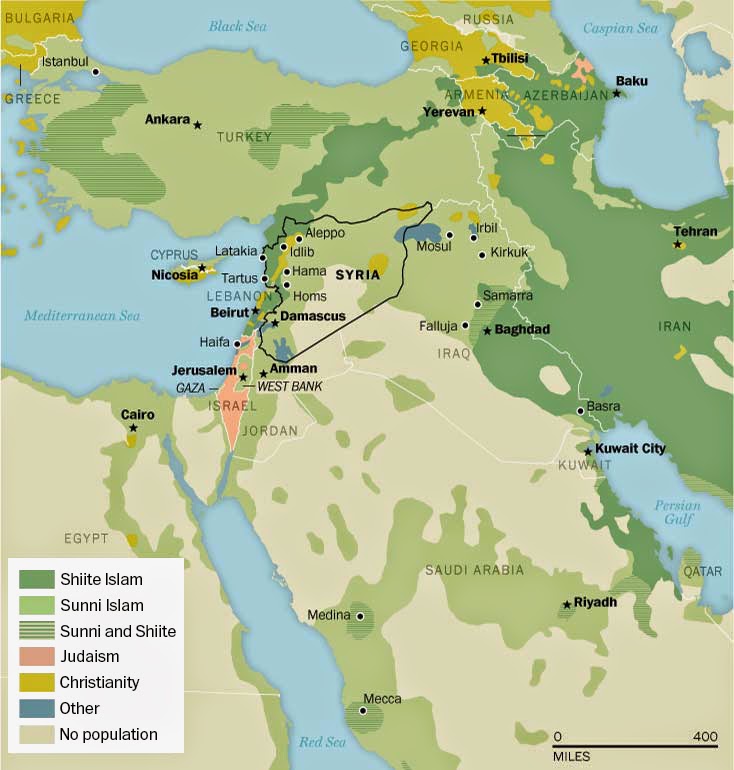 |
| This map from The Washington Post shows the Middle East divide between Sunnis and Shia. It’s also quite interesting from the standpoint of the massive open spaces in the Mideast with no population. |