
Beyond the partisan bickering that dominates our 2016
presidential campaign and the state of affairs on Capitol Hill, a disturbing
outlook has gained momentum among our young Millennials – especially on college
campuses — that embraces the concept of Political Correctness to cautionary
levels.
As university students insist that unpopular, bigoted
views about minorities should be banned – outright – conservatives have
understandably pounced on this trend as an example of intolerance on the political
left.
Millennials are far more likely than older generations to say the government should be able to censor people from saying offensive statements about minority
groups.
Overall, a majority of Americans say that people should
be able to say offensive things about minority groups publicly. However, nearly
twice as many Democrats say the government should be able to stop critical speech
against minorities (35%) compared with Republicans (18%). Pew reports that independents,
as is often the case, find themselves in the middle. One-third of all women say
the government should be able to curtail speech that is offensive to minorities
vs. 23% of men who say the same.

their late 20s and early 30s – were compared by Pew researchers in relation to
Gen Xers that emerged in the 1990s, Baby Boomers, and the “Greatest Generation”
associated with World War II – also known by pollsters as the “Silent
Generation.”
Pew reports that, “even though a larger share of
Millennials favor allowing offensive speech against minorities, the 40% who
oppose it is striking, given that only around a quarter of Gen Xers (27%) and
Baby Boomers (24%) and roughly one-in-ten Silents (12%) say the government
should be able to prevent such speech.”
From a purely political standpoint, many Millennials may
want to consider the way in which they have boxed in their views.
and Ted Cruz latch onto the hot-button issue of PC to play to their audiences.
But, in too many cases, they use PC to defend themselves against their highly
inaccurate statements about policy issues. To great effect.
Hipster Millennials are pushing the envelope due to a
lack of historical perspective. Just 30 years ago, many cultural touchstones –
TV, music, video – included bigoted phrases and dialog that would be considered
highly offensive today.
I am not suggesting that we, as a nation, should not be
on edge regarding stereotypical, hateful language within the fabric of our
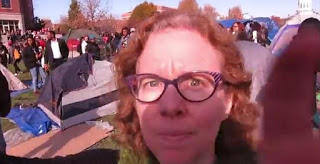
society. Yet, what is happening on college campuses in Missouri and elsewhere
amounts to a shocking new definition of free speech.
At one time, not too long ago, the American way was this:
“I may not agree with anything you say, but I defend you’re right to say it.”
Under our Constitution, that is an absolute. It is not
mitigated by the subject matter, or the particular college campus that chooses to
impose un-American limitations.
cases of the past that upheld the right of neo-Nazis to march in Skokie, Ill.,
a town with a substantial Jewish population.
Or the Supreme Court decision in in 1989 that declared American flag
burning as protected free speech.
contrast with American Millennials, those ages 18 to 34 in Germany and Spain
are more likely to say people should be able to say things offensive to
minorities compared with those ages 35 and older. On the other hand, in the United
Kingdom, the younger generation follows the lead of American Millennials by
being less open to this form of freedom of speech and more willing to allow
government restrictions.