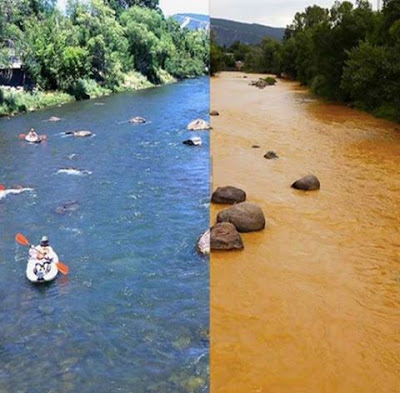
 |
| Colorado’s Anamis River, before and after |
The spill of 3 million gallons of toxic heavy metal
sludge into the Anamis River in Colorado, the result of an Environmental
Protection Agency cleanup that went horribly wrong, has largely been ignored by
environmental activists and liberal groups that typically express outrage at
such a calamity.
But this tragic spill that turned the river into an ugly
mustard hue was not the fault of a wealthy corporation. It was the result of
the foul up by an EPA cleanup crew at the abandoned Gold King Mine near the
town of Durango. So, this is a story that doesn’t fit the agenda of MSNBC or the Daily Kos.
dedicated to environmental protection certainly doesn’t match the size of this
spill.
Water samples tested by the EPA shortly after the spill,
which stretched for dozens of miles, found lead levels that were 12,000 times
higher than normal. The wastewater also
included one sample with mercury levels nearly 10 times higher than the EPA
acceptable levels. Samples of beryllium and cadmium were 33 times higher, and
one of the arsenic levels was more than 800 times higher.
Exposure to high levels of these metals can cause an
array of health problems from cancer to kidney disease to developmental
problems in children.
department of environmental medicine at New York University School of Medicine
told CNN. “These levels are shocking.”
To be clear, those guilty of creating this travesty were
not EPA employees. This was the handiwork of one of the top EPA contractors, Missouri-based
Environmental Restoration.
But that fact raises two additional issues beyond the
obvious concern about the long term health of the river and the short term
impact on the nearby towns in Colorado, New Mexico and Utah.
spill for days afterward?
of the contractor, found that the mine cleanup was financed by the EPA
Superfund.
According to WSJ, Environmental Restoration is one of the
largest EPA emergency cleanup contractors. It is the main provider for the
EPA’s emergency cleanup and rapid response needs in the region that covers
Colorado and several other parts of the country. It worked on the cleanup for
some of the highest-profile disasters in recent history, including the
aftermath of Hurricane Katrina, the Sept. 11, 2001, terrorist attack’s Ground
Zero cleanup, and the Deepwater Horizon Gulf of Mexico spill remediation,
according to the company’s website.
an anomaly, or does it point to something more?
government contracts since October 2007, according to a WSJ review of federal
data. About $364 million of that funding came from the EPA, including $37
million for work done in Colorado.
How is that this company’s work crew misused heavy
equipment to such an extent that it triggered a breach in the abandoned Gold
King Mine, letting out wastewater that had built up inside it? And how much of
the blame goes to the EPA team on site that was overseeing the project?
questions to be asked. If anybody is listening.