

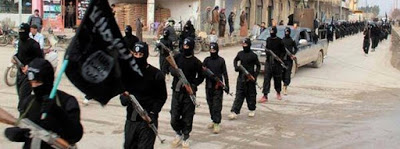
ISIS; cooperation with Russia inevitable; Balkan model can lead to success;
U.S. had ISIS leader and let him go; Iraq War a huge mistake that blew apart
the Middle East.

Spiegel, the premier German news magazine with a hefty influence across Europe, secured a blockbuster interview with retired
U.S. Army Lt. Gen. Michael Flynn, who served as our highest-ranking military
intelligence officer in recent years.
intelligence in the Obama administration and, from 2004 to 2007, in the Bush
administration was stationed in Afghanistan and Iraq as commander of the U.S.
special forces.
In a Der Spiegel Q&A posted online yesterday that has
quietly gained traction all of today, Flynn reveals several telling
observations about the U.S. military presence in the Middle East over the past
14 years since 9/11.
Ground troops a must
must in the battle with ISIS; cooperation with Russia is inevitable in this
anti-terrorism task; the Balkan model, when the U.S. successfully ended
genocide by the Serbians, can lead to success in the current situation; the U.S.
had the ISIS leader in custody years ago and foolishly let him go; and the Iraq
War a huge mistake that blew apart the Middle East, creating much of today’s ISIS-led
chaos.

Here
is Flynn commenting on the bloody ISIS attempt to establish a permanent caliphate in Iraq and Syria:
sad fact is that we have to put troops on the ground. We won’t succeed against
this enemy with air strikes alone. But a military solution is not the end all,
be all. The overall strategy must be to take away Islamic State’s territory,
then bring security and stability to facilitate the return of the refugees.
This won’t be possible quickly. First, we need to hunt down and eliminate the
complete leadership of IS, break apart their networks, stop their financing
operations and stay until a sense of normality has been established. It’s
certainly not a question of months — it will take years.
current war?
Flynn:
“We
can learn some lessons from the Balkans. Strategically, I envision a breakup of
the Middle East crisis area into sectors in the way we did back then, with
certain nations taking responsibility for these sectors. In addition, we would
need a coalition military command structure and, on a political level, the
United Nations must be involved. The United States could take one sector,
Russia as well and the Europeans another one. The Arabs must be involved in
that sort of military operation, as well, and must be part of every sector.
With this model, you would have opportunities — Russia, for example, must use
its influence on Iran to have Tehran back out of Syria and other proxy efforts
in the region.”
Russian cooperation needed
fully with the Russians?
Flynn:
“We
have to work constructively with Russia. Whether we like it or not, Russia made
a decision to be there (in Syria) and to act militarily. They are there, and
this has dramatically changed the dynamic. So you can’t say Russia is bad, they
have to go home. It’s not going to happen. Get real. Look at what happened in
the past few days: The president of France asked the U.S. for help militarily
(after the Paris attacks). That’s really weird to me, as an American. We should
have been there first and offered support. Now he is flying to Moscow and asking
Putin for help.
Online: In February 2004, you already had Abu Bakr al-Baghdadi in your hands —
he was imprisoned in in a military camp, but got cleared later as harmless by a
U.S. military commission. How could that fatal mistake happen?
Flynn:
were too dumb. We didn’t understand who we had there at that moment. When 9/11
occurred, all the emotions took over, and our response was, ‘Where did those
bastards come from? Let’s go kill them. Let’s go get them.’ Instead of asking
why they attacked us, we asked where they came from. Then we strategically
marched in the wrong direction.
No easy answers
leader will present false hopes:
Spiegel
Online: So killing Abu Bakr al-Baghdadi wouldn’t change much?
Flynn:
“Not
at all. He could be dead today, you haven’t seen him lately. I would have much
preferred to have captured bin Laden and Zarqawi because as soon as you kill them,
you are actually doing them and their movement a favor by making them martyrs.
there are major lessons to be
learned about focusing on territory rather than enemy personnel.
Referring to
the Iraq War’s impact on the current state of affairs, Flynn said:
“It was
huge error. As brutal as Saddam Hussein was, it was a mistake to just eliminate
him. The same is true for Moammar Gadhafi and for Libya, which is now a failed
state. The historic lesson is that it was a strategic failure to go into Iraq.
History will not be, and should not be, kind with that decision.”


شات مزز الصوتي
شات مزز
مزز
موقع سايت اب
سايت اب
موقع سايت
سعودي توب
دردشةسعودي توب
شات سعودي توب الصوتي
شات روقان
شات روقان الصوتي
دردشةروقان كام
سوق سعودي الكتروني
سوق السعودي
اسواق السعوديه الالكتروني
عرب كوم
سوق عرب كوم
اسواق عرب كوم
الربح من الانترنت
اعلانات الربح من الانترنت
العمل من خلال الانترنت
شات الرياض الصوتي
شات الرياض
دردشةالرياض كام
شات ستايل الصوتي
شات ستايل كام
شات ستايل
دردشة ستايل
اخبار اليوم العربي
اليوم العربي
اخبار
الووردبريس
مدونة
مدونة
سوق اي حاجه
اي حاجه
سوق
خمسات نصاب
موقع خمسات
نصاب