 |
| AP / Seth Perlman |
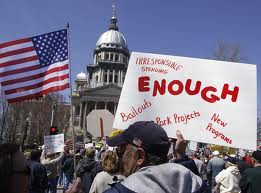
The Romeo Area Tea Party is drawing attention to a new Heritage Foundation study that indicates dependence on government is the highest in U.S. history.
Here’s how Phil Dyer, the RATP communications director, summed it up:
“It is a sad state of affairs here in the US of A. The Occupy crowd would have us believe that the most important issue of the day is the haves vs. the have nots. I agree, we do need to be concerned about the wealth gap, but I would argue that an even more important issue is, the dependent vs. (the) independent.
“It is a very dangerous thing to be able to vote yourself benefits from the government. It’s an even more problematic issue when the quantity of people voting with that goal in mind exceed the number who do not ‘need’ the benefits. This is where democracy can go a bit haywire. Of course, we are supposed to be a republic, if we can keep it. Statistically (and culturally), it appears like we are at the tipping point. It’s just another issue among many that makes this time in our history so significant and the next election, so important.”
Of course, part of the reason for so much federal spending on “safety net” programs is due to the struggling economy. Also, Heritage’s summary seems to downplay the huge expense associated with health care. Medicare and Medicaid represent two huge pieces of the budget, and I would assume (though it’s not clear) that they included the Veterans Administration, the second-largest federal department, in their statistics. It’s also worth noting that the dependence they document includes Social Security, job training programs and farm subsidies.
Another caution: The stats certainly do not indicate that all those who take advantage of a particular federal program are entirely dependent on Uncle Sam. In addition, most recipients receive assistance on a temporary or short-term basis. What’s more, population increases and inflation alone (particularly in the health care sector) would make many of these numbers the highest ever, even if we had avoided a recession.
For example, Heritage says the number of Americans who receive some form of federal assistance has “exploded” from 21.7 million in the early 1960s to 67.3 million today. At the same time, the summary below contains one major error that understates the changes over time. The proportion of Americans receiving government aid under John F. Kennedy was actually 11.7 percent, and the figure now under Barack Obama is 21.8 percent.
Finally, I would add (again) that the reason why nearly half of the nation’s workers pay no taxes is partially due to the generous credits and exemptions put into the Bush tax cut plans. The child tax credit and the write-offs for college tuition costs are especially lucrative for a family with a modest income.
Nonetheless, the figures overall certainly bolster the tea party claim that half of the healthy, eligible workforce is paying for the other half. In other words, an economy hampered by free-loaders.
Here’s a portion of what Heritage reported:
“When John F. Kennedy was president, just over a quarter of federal spending went to fund programs paying for some 21.7 million Americans to be dependent on Uncle Sam. But as high as that spending and dependence on the federal government was then, it has exploded today, with one in five Americans — more than 67.3 million — depending on Washington for assistance.
The Heritage Foundation’s 2012 Index of Dependence on Government shows an alarming trend under the Obama Administration of a level of dependence on our government that has never been seen before. Today, a full 70 percent of the federal government’s budget goes to pay for housing, food, income, student aid, or other assistance, with recipients ranging from college students to retirees to welfare beneficiaries. Heritage’s Patrick Tyrrell writes that other findings from the study show:
· Government dependency jumped 8.1 percent in the past year, with the most assistance going toward housing, health and welfare, and retirement.
- The federal government spent more taxpayer dollars than ever before in 2011 to subsidize Americans. The average individual who relies on Washington could receive benefits valued at $32,748, more than the nation’s average disposable personal income ($32,446).
- At the same time, nearly half of the U.S. population (49.5 percent) does not pay any federal income taxes.
- In the next 25 years, more than 77 million baby boomers will retire. They will begin collecting checks from Social Security, drawing benefits from Medicare, and relying on Medicaid for long-term care.
- As of now, 70 percent of the federal government’s budget goes to individual assistance programs, up dramatically in just the past few years. However, research shows that private, community, and charitable aid helps individuals rise from their difficulties with better success than federal government handouts. Plus, local and private aid is often more effectively distributed.
You can read the entire report here.