Tea Party Republicans in Congress are trying to prevent a lame-duck session after the November elections, a move designed to block a “Christmas tree bill” – legislation that would fund the entire federal government but also have attached several special provisions favored by the White House or congressional leadership.
The congressional Freedom Caucus, with the support of a coalition led by the Koch brothers and consisting of 30 conservative groups, argue that the issue at stake is accountability. Lawmakers who have lost their re-election should not have a role in such big decisions, they say.
According to The Hill, those hoping to kill the lame duck want to pass a continuing resolution sometime this month that would keep the government running until early next year. That would end plans for an intense set of negotiations surrounding the omnibus spending bill that is expected to face approval in December, just before the clock runs out on the current Congress.
“History shows that end-of-year legislative packages are routinely rushed through Congress and to the president’s desk under the threat of a government shutdown — too fast for lawmakers and the taxpayers footing the bill to determine what is in them,” the coalition said in a letter to Congress. “These important decisions should be made by lawmakers who are accountable to voters.”
Some liberal lawmakers are joining with the Freedom Caucus because they believe that the controversial free trade pact with Asian countries – the Trans-Pacific Partnership backed by President Obama – will be attached to the spending bill. Critics say those supporting the Freedom Caucus proposal want to get out of town early and avoid tackling lingering issues on Congress’ plate.
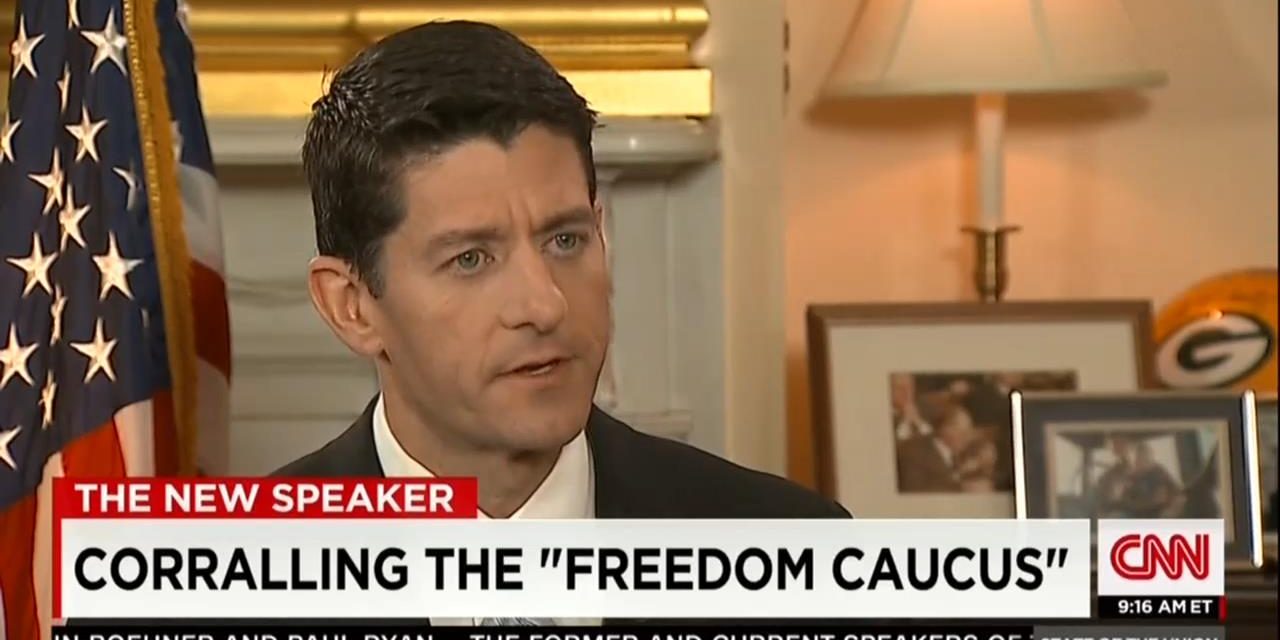
The first call for cancellation of the lame duck came from conservatives in the spring. House Speaker Paul Ryan has expressed no interest. While a push to forego the lame-duck session sounds like hardball politics, The Hill reports that it would be far from unusual in a historical context:
Congress typically held lame-duck sessions before the Constitution’s 20th Amendment, which was ratified in 1933, changed each new session’s starting date to January 3 from March 4. Lame-duck sessions were subsequently unusual for many decades to follow, according to a Congressional Research Service report.
Lawmakers convened frequently for lame-duck sessions in the years around the time of World War II. From there, no such sessions occurred from 1956 to 1968 or from 1984 to 1992. There were only four lame-duck sessions between those gaps: 1970, 1974, 1980 and 1982.
Since 1998, however, there has been a lame-duck session after every election.
Perhaps not coincidentally, lawmakers have held more lame-duck sessions at a time of increasing political polarization and gridlock.