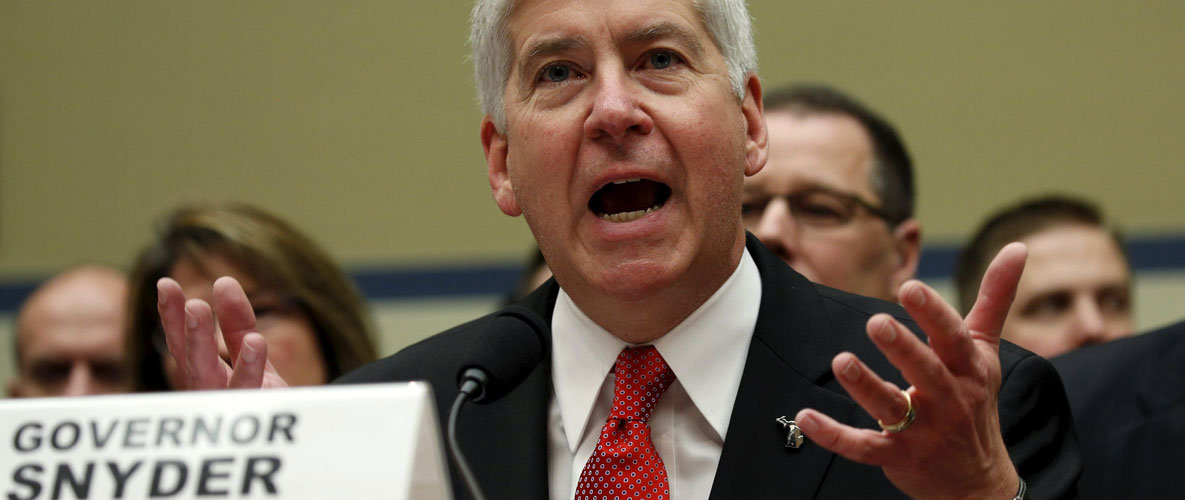
In letters to the Michigan congressional delegation sent this morning, Gov. Rick Snyder urged the representatives to oppose the Obamacare replacement plan that’s up for a House vote on Thursday.
The Republican governor said that the health care system proposed under the American Health Care Act (AHCA) would force the state to drop its Medicaid expansion, known as Healthy Michigan, which covers 655,000 people in Michigan. The switch would eventually cost the state $800 million.
“In its current form, the American Health Care Act (AHCA) shifts significant financial risk and cost from the federal government to states without providing sufficient flexibility to manage this additional responsibility. The proposed legislation reduces federal resources that our state relies on to assist 2.4 million Michiganders enrolled in traditional Medicaid and the Healthy Michigan Plan, our state’s innovative Medicaid expansion program,” Snyder wrote.
“While reforming the nation’s health care system is vital, it is imperative that gains in health coverage and access to care are maintained. These ideas are not mutually exclusive.”
Using a sales pitch similar to the arguments made by advocates of Obamacare, the governor tailored each letter to the state’s 14 House members by emphasizing the number of people in the lawmaker’s district who would lose Medicaid coverage.
Overall, in nine of the 14 districts at least 40,000 people would lose their coverage provided under the Healthy Michigan plan. In letters to Sens. Debbie Stabenow and Gary Peters, Snyder said that 655,000 adults and children statewide would become uninsured.
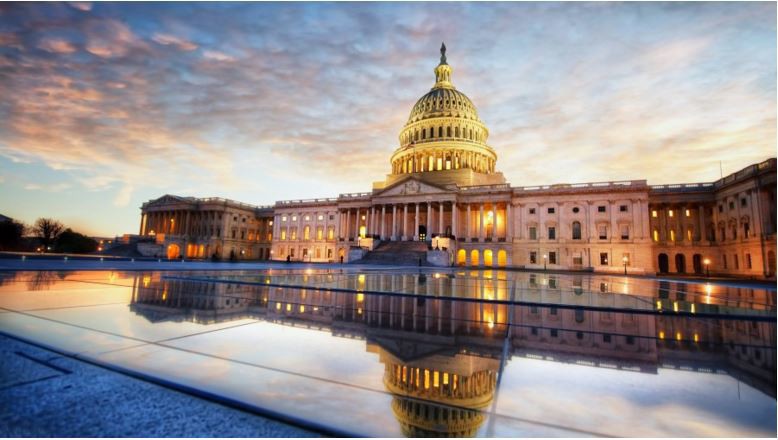
With a close vote expected in the House and more than a dozen GOP members expected to defect, President Trump held a closed-door meeting on Capitol this morning with the Republicans to sway votes in favor of the AHCA, a plan that he has embraced.
The governor criticized the AHCA, also known as Trumpcare, for discouraging states from adopting “innovative approaches to improving quality and value” to their Medicaid expansion insurance. In Michigan, he noted, the system tailored for the state has resulted in significant reductions in people receiving uncompensated care at hospitals, use of emergency rooms as a routine source for health care, and individuals taking advantage of preventive care.
Snyder said the AHCA should give states more flexibility to deal with the Medicaid cutbacks that the legislation proposes. Medicaid reform, he added, should be approached in a deliberative manner to “ensure that state flexibility and innovation are valued, Michigan (health care) providers remain strong, and our most vulnerable citizens do not fall through the cracks.”