Campaign 2012 seems to be the year when the non-endorsement is more important than the endorsement.
Newt Gingrich, when he was in the thick of it, faced constant criticism on the campaign trail because virtually none of the Republicans who served with him as House speaker had endorsed his presidential candidacy.
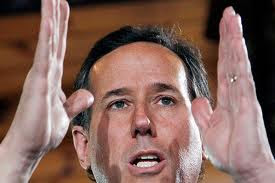
Rick Santorum has faced the same nagging issue: Endorsements from his former congressional colleagues – at least outside the state of Pennsylvania – are nearly nonexistent. Some pundits say Santorum was not well-liked during his 16 years in the House and Senate. Others suggest that fellow lawmakers simply have never viewed the former senator as presidential timber.
 |
| (AP Photo/Elise Amendola) |
In any case, it’s apparent that by 2006 Santorum had a damaged reputation in Pennsylvania politics, so much so that the Mitt Romney campaign is eager to share some of the headlines from Keystone State newspapers in the days before the ’06 election, which Santorum lost badly.
At the time, Santorum was facing criticism over whether he still lived in Pennsylvania or was a permanent resident of northern Virginia, where he now lives.
Here’s a sample:
Pittsburgh Post-Gazette editorial headline: “Santorum exemplifies the worst of Washington” (10/22/06)
Post-Gazette: “The 12-year incumbent is the sort of calculating politician who has made the 109th Congress the out-of-touch and ethics-challenged institution that has added to the store of public cynicism.
“… This self-described fighter has a black belt in hypocrisy. The issue of his non-residence in Pennsylvania is rooted in his slamming of then-Rep. Doug Walgren 16 years ago for moving to Washington, D.C. The hypocrisy got worse when Mr. Santorum, the alleged champion of taxpayers, stuck the public for the bill to educate his children in a cyber school when his residence in Penn Hills is just a legal fiction.” (10/22/06)
Philadelphia Inquirer: “(Santorum) bears responsibility for mixing the toxic elixir that poisoned the Republican-led Congress with lobbying scandals. Santorum led a relentless, heavy-handed effort to install only Republicans in top lobbying jobs.” (10/22/06)
Allentown Morning Call: “Stated in the most basic way, Mr. Santorum has isolated himself from the broad civic consciousness of ordinary Pennsylvanians.” (10/29/06)
It’s worth noting that one 2011-12 story largely ignored by the national media throughout the early stages of the presidential campaign was that state polls consistently showed that Santorum was not Pennsylvania’s favorite son. In fact, he never cracked the 15-point mark in any home state poll until his nationwide surge earlier this month.
I wonder, if the news coverage in late November and early December had focused on the fact that Santorum was trailing Gingrich in Pennsylvania polls by two-to-one and three-to-one margins, would he have been relegated to asterisk status like Jon Huntsman?
Meanwhile, the Romney camp is giddily peddling a Santorum quote from the 2008 presidential contest, after the former senator had endorsed Romney and just before the Super Tuesday primaries:
“In a few short days, Republicans from across this country will decide more than their party’s nominee. They will decide the very future of our party and the conservative coalition that Ronald Reagan built. Conservatives can no longer afford to stand on the sidelines in this election, and governor Romney is the candidate who will stand up for the conservative principles that we hold dear. Governor Romney has a deep understanding of the important issues confronting our country today, and he is the clear conservative candidate that can go into the general election with a united Republican party.”
–Sen. Rick Santorum (2/1/08)
In response to that quote, the former senator has said that Romney has proven to be a big disappointment since Santorum uttered those words. That, of course, makes no sense because the only changes in positions by Romney since then have moved the former governor further to the right. On some matters, such as immigration policy, he is more right-wing than his three GOP competitors.
In the end, this demonstrates how much the Republican Party has changed just in the past four years. Romney was clearly a more moderate candidate in ’08 than now, yet four years ago he was billed as the “conservative alternative” to John McCain. And his Massachusetts health care reforms, now considered his greatest impediment to the nomination, were barely mentioned in the ’08 primaries.