 |
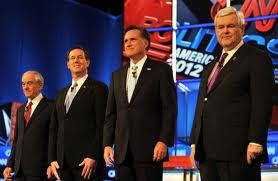
| (UPI photo) |
In the coming days, as the candidates frantically campaign across the country in 10 states, hoping to get their share of delegates on Super Tuesday, the Republican Party may lament their decision to follow the Democratic approach to primaries.
The Democrats have been moving away from winner-take-all contests for some time, and it is that proportional allocation of delegates that allowed Hillary Clinton to stay in the 2008 race all the way to June.
But in 2012, the Republicans have two leading candidates bashing each other and losing popularity and party leaders just want the race over with.
But the proportional delegate awards will keep this contest going far longer than is healthy for the party’s eventual nominee.
Michigan, by the way, has become a prime example of a system that provides a fairly small prize for emerging as a winner. Mitt Romney scored a very important win in his native state on Tuesday (or you could say he avoided a devastating defeat) but it appears that the state’s delegates will be split 15-15 among Romney and Santorum.
Here’s a portion of a CNN report on why Super Tuesday will not define the race and will not force any candidates to drop out:
“With 437 delegates on the table next Tuesday, and with most of them allocated according to each candidate’s share of the vote, all four of the GOP contenders are certain to boost their delegate counts, giving everyone in the field a rationale, however thin, to move forward.
“The Super Tuesday map features both bright spots and traps for every candidate — Romney is expected to coast to easy wins in Massachusetts and Virginia, for instance, but faces a tough slog in states like Ohio and Tennessee — meaning that no one is likely to emerge as an outright victor when the smoke clears.
“With none of the candidates boasting an across-the-board advantage, a handful of contested states will take on outsized importance.
“The day’s biggest prize is Ohio.
“Though the state has 10 fewer delegates than Georgia, Ohio carries enormous symbolic weight both as a general election bellwether and a Republican proving ground.
Ohio will test each candidate’s ability to connect with GOP voters of all stripes — from rural, small town conservatives to working class whites to wealthier moderates in the suburbs around Cincinnati and Cleveland.
“Romney trailed Santorum by double digits in Ohio prior to his win Tuesday night in neighboring Michigan, a state where Santorum had hoped his blue-collar pitch would resonate.”
You can read more here.
Recent Posts:
 Michigan companies can’t fill jobs because too…
- Could Trump-induced mess in Washington lead to a new…
- Obamacare in a ‘death spiral?’ GOP and Berniecrats…
- How low can the bar go in Detroit elections?
- Conservatives, liberals blast Enbridge for new…
- Islamophobic SH candidate calls on Michigan Tea…
- Trump team favors Kid Rock over solid GOP field for Senate
- Liberal purists cheer GOP moderates, hate Dem moderates