The highly controversial oil pipeline that runs through the Mackinac straits emerged in 2015 as a politically popular target as news emerged that the aging 63-year-old line, operated by a company with a shaky track record on oil spills, reportedly lacked sufficient inspections and upgrades to protect the Great Lakes.
In recent months, the massive Line 5 pipeline operated by Canadian-based Enbridge Inc. largely has faded into post-political oblivion in Michigan. But in recent days a Native American tribe in northern Wisconsin has quietly stepped up to potentially put an end to the pipeline.
Enbridge may be set for a bruising legal battle in the Badger State after the Bad River Indian Reservation, fearing leaks of thick crude oil, voted against renewing land use agreements for the pipeline, according to the Milwaukee Journal-Sentinel. The decision followed a new tact of opposing old-school energy infrastructure after activists in the Native American community successfully protested the Standing Rock Sioux’s fight against the Dakota Access line in North Dakota.
The Bad River tribal vote last week ratcheted up tensions with Enbridge after the oil supply giant has endured several years of questions about the safety of its pipelines in Michigan and across the Midwest.
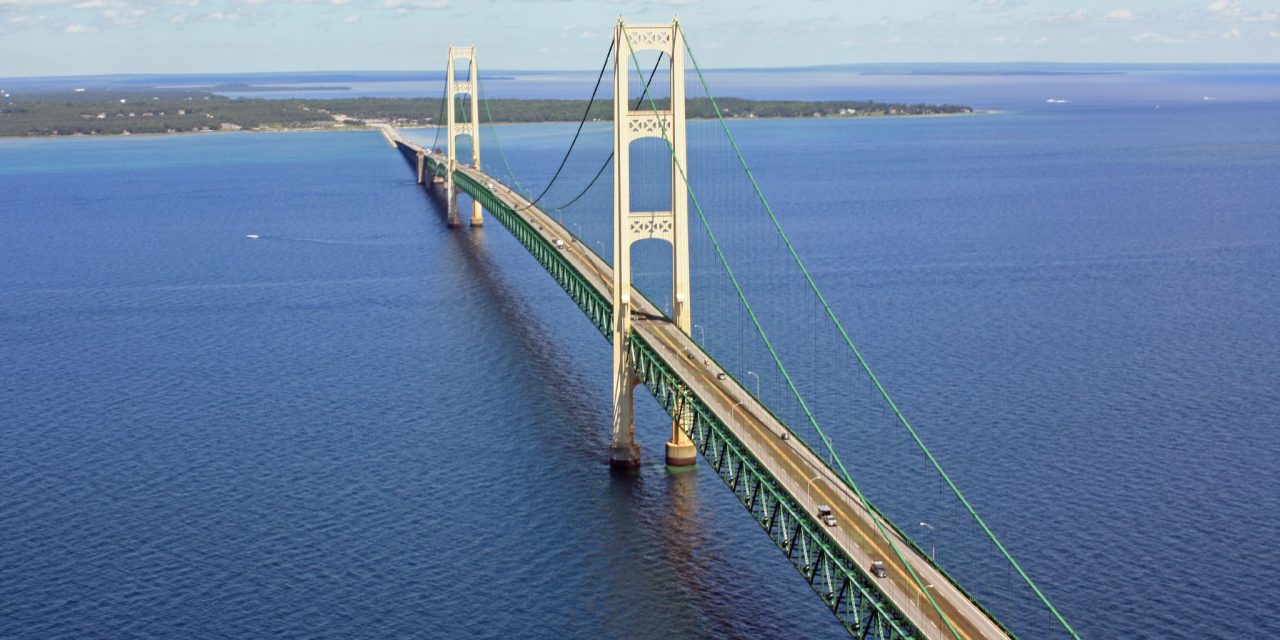
Critics point out that the dual-pipe Line 5 not only extends under water through the iconic Mackinac straits but it also reaches underground to the south through heavily populated Michigan areas such as Bay City, Saginaw and Flint. Before traversing the St. Clair River, which is upstream from numerous drinking water facilities, it crosses the suburban fringe of Lapeer, Macomb and St. Clair counties.
The reputation of Enbridge, based in Calgary, Alberta, took a big hit in 2010 when the spill of an Enbridge pipeline leaked 20,000 barrels of crude into the Kalamazoo River in western Michigan from the company’s Line 6B, becoming the largest onshore oil spill in U.S. history. The company eventually agreed to a court settlement of more than $170 million and spent $1.2 billion on the cleanup.
But Line 5 represents a much more devastating potential environmental disaster. A 2015 estimate suggested that a Line 5 pipe break where Lake Michigan flows into Lake Huron could contaminate up to 700 miles of U.S. and Canadian shoreline downstream with crude oil.
Starting in 2015, Michigan created a task force to examine Line 5, Gov. Rick Snyder established a state Pipeline Safety Advisory Board, and two independent reports to examine the reliability of Line 5 and alternatives to the pipeline were ordered. A report produced by the Michigan Petroleum Pipeline task force criticized Enbridge for lack of disclosure related to its inspections of the pipeline.
The state Department of Environmental Quality says the lines are reliable and haven’t leaked since their installation in 1953. Enbridge insists it would be extremely expensive and disruptive to ship petroleum from the tar sands areas of central Canada to the refineries of Sarnia, Ont. – a heavily industrialized waterfront area known as “Chemical Valley” — without Line 5.
As for the future of the 540,000 barrel-per-day pipeline, legal experts told Reuters that if negotiations fail, Enbridge is unlikely to convince state or federal authorities to force the Native American band to allow the line to operate – through property condemnation — if it is on tribal lands:
“There’s not much you can do because tribes are sovereign; you cannot exercise the power to condemn,” said James Freeman, a partner with law firm Zabel Freeman in Houston.
Pipeline companies and public utilities can usually take advantage of eminent domain laws that grant them the right to build projects on land that is not theirs for the greater public good. They also reach easement agreements, allowing the pipeline company the legal right to use property owned by another party for a special purpose.
Much may depend on whether the tracts in question are on tribal land or on land allotted to individual tribe members, in which case condemnation might be viable, said Jim Bowe, a partner with King & Spalding law firm in Washington, D.C.
“Enbridge has got a real challenge here,” Bowe added. “If it’s out of easements, the pipeline is a trespasser.” Bowe said the Bad River Band could file a lawsuit to try to have Line 5 removed or seek an injunction to force the pipeline to stop operating. Dylan Jennings, a Bad River tribal council member, said the tribe was developing a plan of action with its legal staff and would go to court if necessary.
“We are not convinced that a 64-year-old pipeline is structurally sound enough to last even another few years and we are not prepared to leave that behind for another generation,” Jennings said. “No amount of compensation or negotiation will change our minds.”