

This was supposed to be “infrastructure week” for the Trump administration, with the president outlining his plan to close the staggering $3 trillion gap in improvements and upgrades needed on the nation’s roads, bridges, sewers and waterways.
Yet, five days later, it appears that Donald Trump offered nothing new or substantive and it seems that governors and local officials summoned to the White House “summit” on Thursday, including Michigan’s representative, Macomb County Public Works Commissioner Candice Miller, may have been pawns in a presidential dog-and-pony show.
Vice President Pence declared at that White House confab that it was a “banner week for infrastructure,” without emphasizing potholes or crumbling bridges. Trump followed suit with similarly bombastic comments, claiming that funding was not the roadblock to improved infrastructure, it was eliminating most of the federal permits, especially for environmental protection, to improve or expand highways.
“We’re doing a great job with respect to infrastructure all over, and we’re very proud of it,” the president said. “It’s going to take off like a rocket ship — moving very quickly. Together, we’re going to rebuild America.”

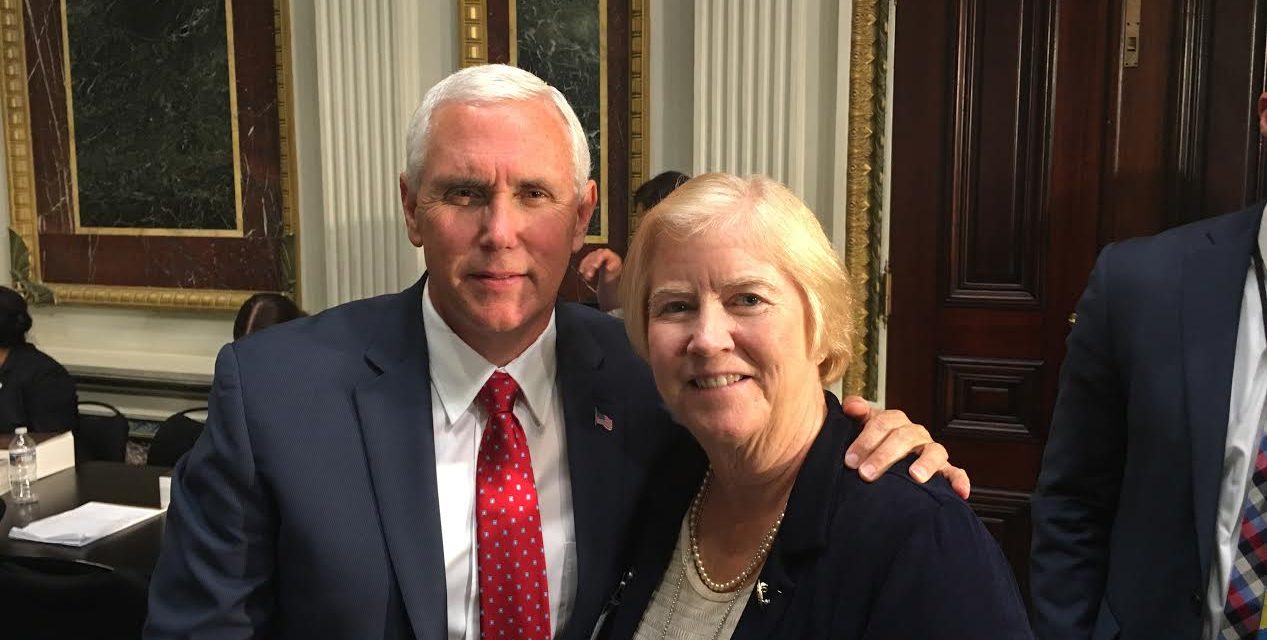
Miller, second from right, listens as Trump, far left, speaks at the White House on Thursday.
Miller, a Harrison Township Republican, uncharacteristically put out no statements or press releases indicating what had been accomplished at this White House “workshop.”
Yet, members of Congress, Democrats and Republicans, and a wide array of reports by media outlets, still seem less than impressed with the Trump plan to supposedly boost nationwide infrastructure spending by $1 trillion – even after a week-long, erratic PR attempt by the president to make the sale.
The nebulous proposal still relies on possibly $200 million in federal funding over 10 years, followed by the spark of $800 million in private sector construction that will somehow generate a revenue payback to companies through tax credits and toll roads and such.
Essentially, the Trump plan is reportedly still stuck in embryonic form, always a few weeks away from a final structure to be considered on Capitol Hill. Infrastructure had represented one area where the White House could make a deal with congressional Democrats. But those days have passed.
Democrats fear that enticing corporations to build the most-profitable infrastructure, based on a substantial payback, wouldn’t coincide with tackling the most-needed infrastructure.
In addition, Budget Director Mick Mulvaney’s insistence on trimming the $20 billion-a-year investment in infrastructure projects has emerged as a key factor. And the Trump budget’s simultaneous cuts in the federal Highway Trust Fund offered little assurance to the states that the president was serious about any influx of funding.
The week began with Trump engaging in various Monday morning political feuds on Twitter even as he was supposed to stay focused on infrastructure issues. The Hill reported that the week-long plan quickly went “off the rails” as one aspect, privatizing the nation’s air traffic controllers, somehow became a key focus, even if it has faced staunch opposition on Capitol Hill for many years. By Wednesday, that idea received a brutal reception in Congress from both sides of the aisle, with rural Republicans excoriating the plan.
Earlier that same day, in a speech in Cincinnati, Trump veered off script at several points while trying to promote improvements to the inland waterways and Midwestern ports.
As the week went on, Trump’s promise to streamline the federal approval process for building roads, bridges, pipelines and tunnels, proved to be nothing more than a duplication of the new permitting council created by former President Obama and approved by Congress in 2015.
In his last chance to make an impact, during a press briefing today, Trump dramatically flipped through thick binders of what he said were unnecessary and burdensome environmental reviews for highway projects. He said they could be replaced by “a few simple pages.”
Meanwhile, Wall Street remained skeptical about this public-private, win-win approach to infrastructure improvements. Prices for infrastructure stocks such as Caterpillar and U.S. Steel barely moved at all. And despite the president’s promises, management at top infrastructure companies hadn’t trumpeted new guidance to investors urging them to get on board.
On Capitol Hill, lawmakers fear that the president’s focus on infrastructure may be sliding into the sea.
“I think the president could be more focused and disciplined about staying on his agenda,” Sen. Tom Cotton (R-Ark.) said.
“This isn’t news, but there’s something wrong with this guy. … This is a president who is completely out of control,” said Democratic Rep. Dan Kildee of Flint, who has been a major advocate for upgrading the country’s water infrastructure. “He’s the president of the United States. He’s not some guy with a blog.”





Miller may have been “used” as the Fraser Sinkhole fiasco at Christmas received national media attention.