
Columnist Nicholas Kristof, an unabashed liberal, writes this week about the 50th anniversary of the controversial report to the president about the origins of poverty by Pat Moynihan, himself a liberal but one who was pragmatic enough to stand by the facts.
Kristof, in his Op-Ed piece for the New York Times, notes that the 1965 Moynihan report to Lyndon Johnson did not deny the effects of inner city life and racial tensions on poverty. But the future senator from New York also did not gloss over the devastation wrought by broken families.
Here is a bit of Kristof’s commentary:
“Daniel Patrick Moynihan, at the time a federal official, wrote a famous report in March 1965 on family breakdown among African-Americans. He argued presciently and powerfully that the rise of single-parent households would make poverty more intractable.
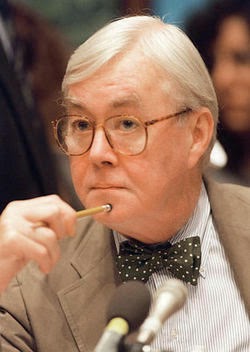 |
| Moynihan |
But Moynihan’s observations became accepted social science three decades later.
“… Growing up with just one biological parent reduces the chance that a child will graduate from high school by 40 percent, according to an essay by Sara McLanahan of Princeton and Christopher Jencks of Harvard. They point to the likely mechanism: ‘A father’s absence increases antisocial behavior, such as aggression, rule-breaking, delinquency and illegal drug use.’ These effects are greater on boys than on girls.