

The Enbridge oil pipeline in the Mackinac Straits has generated continuing concerns about a potential oil spill since it first came under intense scrutiny last year.
That spotlight will shine a little brighter in the coming weeks as state officials choose a contractor to evaluate the risks and potential alternatives to Line 5, including replacement of the dual 63-year-old pipes that run side by side. Today marks the deadline for companies to submit study proposals to the Michigan Pipeline Safety Advisory Board.
A recent estimate suggested that a Line 5 pipe break could contaminate up to 700 miles of U.S. and Canadian shoreline on Lake Huron with crude oil.
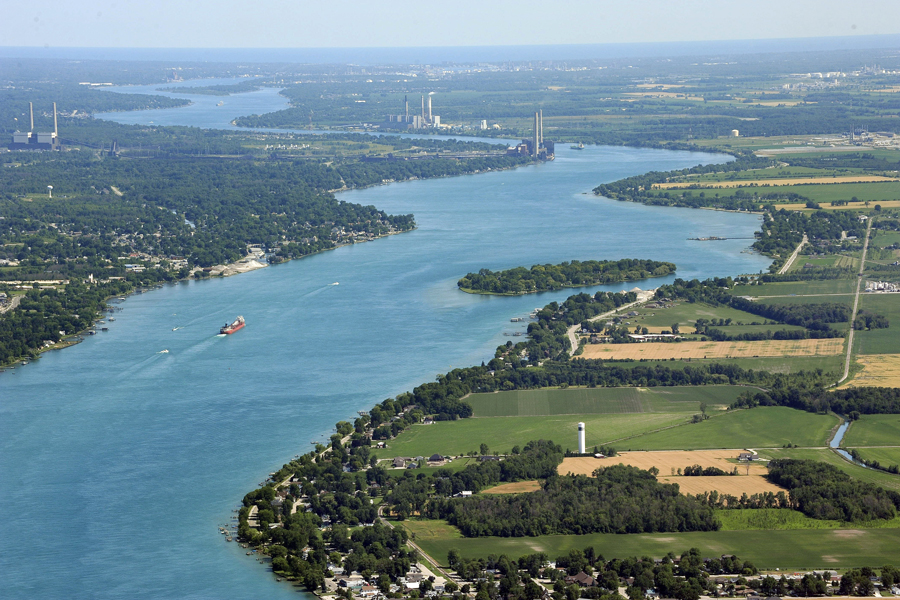
At the same time, the potential environmental dangers represented by the 24 pipelines running under the St. Clair River have received comparatively little attention.
Deadline is Thursday
The deadline for public comment is Thursday for a plan by Plains LPG Services to formally certify ownership of six pipelines under the St. Clair River, including two that are 98 years old. The U.S. State Department is accepting comments here on the proposed federal permit for Plains LPG.
Plains has said that the two lines have never been used for crude oil. The company also indicated that it has no intention of running crude through any of its six lines under the St. Clair River, which are located near Marysville in St. Clair County.
But environmentalists are suspicious because Plains had said several years ago that its plans included the prospect of transporting “liquid hydrocarbons” (petroleum products) through some of those lines. A pipe break would be disastrous because of the fast current through the river. An oil spill could make its way through the St. Clair Flats into Lake St. Clair before the company and the authorities could engage in effective cleanup or containment efforts.
The St. Clair Flats serve as one of the largest freshwater deltas in the world. From there, the water flows through Lake St. Clair, a very shallow lake, that is highly valued for drinking water, fisheries, boating and recreation. The lake water then flows through the Detroit River to Lake Erie.
Along the way are 14 intakes for drinking water plants, including two major inlets for the Detroit regional water system, that provide tap water for nearly 3 million people.
24 pipelines carrying hazardous material
Michigan Congresswomen Candice Miller and Debbie Dingell teamed up last month to successfully convince the State Department to extend the public comment period because environmental activists discovered — after the fact — that the initial March 15 deadline had passed with very little notification by the feds.
According to The (Port Huron) Times Herald, an estimated 24 pipelines carrying oil, natural gas, propane and industrial chemicals are located under the St. Clair River. That includes the same Line 5 in the Mackinac Straits. The Michigan Public Service Commission reports that 14 companies operate pipelines in St. Clair County that transport natural gas or hazardous liquids.
The Michigan League of Conservation Voters has created an online petition drive urging the State Department to reject the permit.
The LCV petition reads in part:
We believe that approval of the permit change requested by Plains LPG is not in the national interest and would seriously jeopardize the security of drinking water for nearly forty percent of Michigan residents.
Traditional spill response techniques are ineffective at cleaning up heavy crude oil in fresh water. This was evidenced clearly during the cleanup process following the rupture of Enbridge’s Line 6B near Marshall, Michigan in 2010.
The U.S. Coast Guard recently acknowledged that it lacks the capacity to effectively respond to spills of heavy crude oil in the Great Lakes because current methods are inadequate to recover submerged oil.
Another environmental group, Ecojustice Canada, has obtained a list that shows 29 pipeline crossing from the U.S. to Canada in the St. Clair and Detrit rivers combined. That list, complied by Canada’s National Energy Board, includes the names of major players in the energy industry such as Enbridge, Sunoco, Union Gas and TransCanada Pipelines.

It is time to stop putting out beautiful natural resources at risk. Please reconsider the work you are looking to perform on the St. Clar River pipelines and look to safer alternative ways to transport oils between the US and Canada.
you,re messing with our playground,our greatest resource!
Mackinac oil pipeline overshadows concerns about St. Clair River lines
The impact on our health and the planet’s by oil spills from inadequate pipelines is immeasurable. Why do these battles have to be fought locality by locality again and again? Many state governments, such as Wisconsin and Texas have responded to local governments’ attempts to protect their own environments by passing legislation blocking local governments’ authority to enact save environmental standards. On the federal level, congress has sponsored and passed legislation to erode the clean air and water act, at the behest, no doubt, of the polluting corporations. Oil spills, concentrated animal feeding organizations, coal fired power plants, mining and other activities with the potential to destroy our clean water and air adversely affect all of us with poor health and death.