The New Yorker has uncovered an interview Mitt Romney gave to the Salt Lake Tribune in Feburary 1999, just after he took the job turning around the 2002 Winter Olympics. He discussed his political future.
Here’s an excerpt:
I’m not a powder puff…. By that I mean that it’s not that I
would never consider laying off workers or closing down a plant to save a
company. Unfortunately in the business world I know, the world of
troubled companies, many businesses can get better with medicine. But
many others require painful, wrenching surgery. I have been involved
with companies that concluded they had to close a plant in order to
survive. And that’s an awful, awful thing to have happen. And it’s death
for a politician to be associated with that.
What at first seemed like it might be a distraction in a campaign that
should be about big issues now may take on a life of its own.
was his role in outsourcing jobs to China
and India.
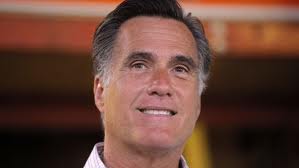
to run for governor of Massachusetts in 2002
was in question because he was living in Utah
at the time, running the Winter Olympics. Romney and his attorney presented
evidence to a quasi-judicial panel to show that he still had ties to Massachusetts and still played a
role at Bain Capital, his private equity firm, at a time when Bain outsourcing
became commonplace.
maintained that he played no role in Bain’s outsourcing of jobs and plant
closings in the 1999-2002 period.
the campaign, for a few reasons: the subject is a loss of American jobs; the
entire episode might represent Romney’s biggest flip-flop; and it seems to show
Romney altering the truth in whatever way furthers his political career.
February of 1999 to accept the Olympic assignment,” Romney testified before the
state Ballot Law Commission on June 17, 2002, “I left on the basis of a leave
of absence, indicating that I, by virtue of that title, would return at the end
of the Olympics to my employment at Bain Capital, but subsequently decided not
to do so and entered into a departure agreement with my former partners.”
of social trips and business trips that brought [him] back to Massachusetts, board meetings” while he was
running the Olympics. He added that he remained on the boards of several
companies, including the Lifelike Co., in which Bain Capital held a stake until
2001.
Romney’s work in the private sector continued unbroken while he ran the
Olympics.
restoring confidence in the Olympic Games, closing that disastrous (Olympics) deficit
and staging one of the most successful Olympic Games ever to occur on U.S.
soil,” said Peter L. Ebb from Ropes & Gray.
in the public eye, what happened to his private and public ties to the Commonwealth of Massachusetts? And the answer is they
continued unabated just as they had.”
became a “part-timer” at Bain while working on the Olympics. He denies it all.
In television interviews on Friday, he said this: “I had no role whatsoever in
the management of Bain Capital after February of 1999.’’
Romney as a key player at Bain while in his absentee role from 1999-2002. According to the Globe,
financial disclosure forms Romney filed in Massachusetts indicate he earned at least
$100,000 as a Bain “executive” in 2001 and 2002, separate from investment
earnings.
fight over the timing of Romney’s departure from Bain seemed unlikely. This was
a complicated issue, one of those inside-baseball battles that would have no
effect on the November election, according to many pundits.
elaborate homes and the car elevator for his garage and the Swiss bank account
and the Bermuda company and other offshored
funds in Luxemburg and other overseas locations.
that all voters can understand: tax returns. Romney in 2012 has reluctantly
released a full tax return covering just one year, yet he gave the 2008 McCain
campaign 23 years of tax returns when he wanted to be the vice presidential
candidate.
Republican political strategists, they are worrisome.
string of events will make them perceive the candidate as the slick businessman
who entered politics because the unseemly salesmanship of campaigning was the
main attraction.