

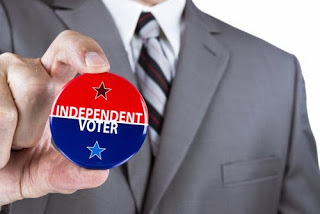

One of the least-known facts about the
current state of American politics is this: Independent voters now outnumber
Democrats and Republicans.
A recent Pew Research poll reaffirmed this
trend, with 39 percent of those polled identifying as independents compared to
32 percent who call themselves Democrats and 23 percent who stick with the
Republicans.
Yet, pollsters and the media tend to
dismiss independents as simply voters who lean Republican or Democratic but
like the sound of saying, “Hey, I’m an independent,” rather than expressing
loyalty to a party.
Yes, the 2012 and 2014 elections saw massive increases in
straight-ticket voting, which jibes with other indicators that the electorate is
more polarized than ever. And independent candidates, in part due to hurdles
placed in state laws, have not fared as well as some expected.
preference” in record numbers.
For the 2014 midterm election, 23.1 percent of California’s registered voters chose
to register themselves as “No Party Preference.” Similar patterns are being
seen across the nation. In at least 8 states, registered independents outnumber
voters registered with the traditional parties, according to IVN.
of these concepts — that there is no such thing as a “real” independent and the
growing number of registered independents — be true at the same time?
After all, in most states, registered
independents cannot participate in the two-party primary process that narrows
the field to nominees for the general election. Choosing an independent status
comes with a price.
(It should be noted that, in addition to
redistricting reform, two primary goals of activist Independents is to
eliminate the closed primary and do away with straight-ticket voting.)
information this way:
What’s missing is the refusal of the major media outlets
to accept what it means to be an independent. This is the dialog we should be
having:
ranging from conservative to liberal
beholden to a party’s platform, agenda, cronyism, and/or endorsements.
not an ideology.
that there is no one perfect party, ideology, or platform.
political ilks of the politicians.

Good post, thank you for quoting me. This is a good run-down of what IVN has been trying to get people to realize–that being an independent has nothing to do with moderate, just that you don't want to be beholden to a party.