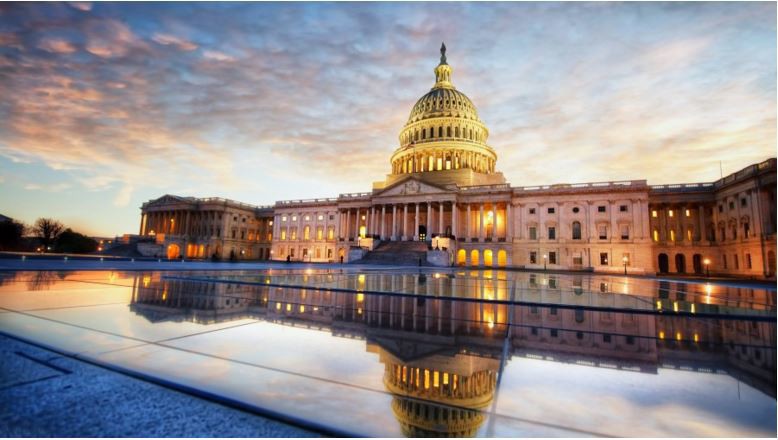
Several news organizations have posted their best reporting to explain how the budget deal was crafted in Washington and what happens next.
Here are some of the highlights:
Under the heading “How It Went Down,” John Bresnahan and Jake Sherman of Politico offer this up-close look at the Republicans’ closed-door actions: “They gathered in HC-5 (at the Capitol) all week talking — sometimes complaining loudly — about where the party was headed in the budget crisis. Many said Speaker John Boehner didn’t share enough information.
“Others were peeved he wasn’t pushing for deep enough cuts. Some were ready for a government shutdown. … Halfway through a closed-door meeting (last night), an aide approached Boehner, slipped him a piece a paper, which he read and quickly pocketed. He then stepped to the podium … ‘We have a deal,’ the Ohio Republican said around 10:30 p.m.
“Boehner had something more — a defining moment in his speakership and a chance to set aside questions about his ability to manage an unwieldy caucus of conservatives, at least for now. The 61-year-old, swept into the speaker’s chair during last November’s GOP landslide, faced down two Democrats — Barack Obama and Senate Majority Leader Harry Reid — and also answered doubts from the conservative movement about whether he was a true believer.”
At the Daily Beast, they offer the White House perspective: “While Speaker John Boehner and Democrats squabbled over relatively meaningless cuts, the president sat back and played referee. The White House escaped most of the blame. Once the spotlight shifted from the political gamesmanship to the human impact of a shutdown — soldiers in Iraq and Afghanistan not getting checks, passport offices closed, national parks off limits — everyone knew an angry public would start pointing fingers. But blame-shifting is a high art in Washington; now both sides can argue about who brought the country back from the brink.”
At No Labels, the leaders of the moderate, non-partisan movement in American politics, co-founders Mark McKinnon and David Walker issued this statement:
“On behalf of our more than 80,000 citizen-leaders, No Labels applauds President Obama and congressional leadership for working across the aisle to reach a bipartisan solution to fund the federal government for the remainder of the year. Despite the many weeks it took to reach consensus, our nation’s leaders deserve credit for finally choosing progress over politics.
“Avoiding a government shutdown,” Walker added, “was the right thing to do for our economy and for the American people. Since its beginning, No Labels has been out in front on the need for ‘everyone at the table, everything on the table’ to solve our country’s financial challenges. Tens of thousands of our members have contacted Congress, urging them to change the tone of these contentious debates and find a way to work together to address this issue.”
Another No Labels founder, David Walker, former U.S. Comptroller General, said: “While last night’s milestone is a good first step, the real test will be whether both sides can continue to work together to find real solutions to the serious fiscal challenges facing our nation.”
Along those same lines, ABC News’ “The Note” offered a cautionary final look at Friday night’s theatrics: “The bottom line — It was messy. It was unnecessarily dramatic. But, it ended without monuments being shuttered or troops waiting for a paycheck. And, in the end, everyone gets to claim victory. Democrats get to say that they cut spending while also protecting women’s reproductive rights. Republicans can crow that they forced President Obama and Sen. Harry Reid to make deeper cuts than Democrats wanted to make.
“Welcome to the ‘new normal’ of bipartisanship.”
In a little tongue-in-cheek sidebar, The Note added this: “After the deal was struck, government staffers, congressional aides — and journalists too — all seemed to breathe a collective sigh of relief that everyone would still be able to communicate via Blackberry. Phew.”
Then there was this footnote from ABC’s Dan Arnall under the heading “The Battle Yet To Come.” Arnell reported: “In the next month, the Congress will have to pass an increase to the Federal Debt Limit — which currently stands at $14.294 trillion — or risk defaulting on interest payments on the nation’s debt.
“Imagine the congressional wrangling over a vote which would expand the federal government’s borrowing authority by an additional trillion dollars (the nine most recent increases since 1997 have averaged $977 billion in new borrowing authority).
“The treasury says that Congress must act by May 16 to insure the continued functioning of the government — with some financial high-wire acts, that could be pushed a few weeks into June. Without it, administration officials and private sector economists say, the U.S. government and private sector economy would face a catastrophe.
“Imagine the world’s biggest debtor — Uncle Sam — missing a few payments on his credit cards. Is anyone going to want to lend him money at a reasonable rate moving forward? Probably not.”