
Centers for Disease Control reported
last week that more than 90 percent of Americans — actually 90.8 percent — have
health insurance.
That marks the first time that a major survey had ever
found that the uninsured rate in America has hit single digits.
which the CDC and the Census Bureau have been conducting for more than 50
years. As Forbes explains it, the questions have sometimes changed, but until
this year, the answers haven’t: More than 10 percent of respondents, and
sometimes as many as 18 percent of Americans, have reported in the past that
they were uninsured.
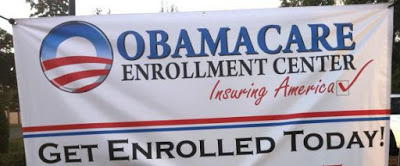
The gains are attributed to the Affordable Care Act’s
push for coverage expansion through the healthcare exchanges that were launched
two years ago. Nearly 16 million fewer Americans were uninsured in
early 2015 compared to 2013.
time on the job for American workers, according to three newly
published studies that challenge one of the main arguments
raised by critics of the Affordable Care Act.
One provision of Obamacare, which requires businesses
with more than 50 employees to offer health insurance to those
working at least 30 hours a week, has been labeled a “job killer” by key
Republicans.
they hire and schedule their workers in response to the law, according to
The Washington Post.
“The data, to date, basically say that that hasn’t
happened, at least on aggregate basis — that there really hasn’t been nearly
the change that some people were expecting,” said Chris Ryan, a vice
president at the payroll-management firm ADP.
Analysts at ADP studied the payrolls of the firms’
clients — about 75,000 U.S. companies. They expected that as employers
prepared for the mandate to take effect last year, they would adjust their
employees’ schedules to 30 hours a week or less. Yet ADP found no overall
change.
Ryan explained to the Post that qualified workers have
more options as the economy improves, and they’re getting pickier. As a result,
the priority for employers is attracting the best possible workforce. Hiring
and retaining good employees means giving them what they want — often, health
insurance and full-time work.
“There is much more competition for people,”
Ryan said. “That becomes far more important than the cost of health
benefits.”
who receive their health care in the small-group market will see an average
cost increase in November of just 1 percent.
The numbers indicate that, at least in Michigan, the
repeated predictions of price spikes by Obamacare critics are not happening.
Financial Services that the average approved rate changes on a premium-weighted
basis increased by 6.5 percent for the individual market and 1 percent for the
small group market.
“Many states are reporting rate increases well in excess
of 10 percent which is significantly higher than the rate of health care
inflation,” said DIFS Director Patrick McPharlin. “We are
pleased that Michigan consumers are seeing more modest increases.”
of each company’s rate change request. This examination included review of
public comments received throughout June 2015 following the posting of the rate
change requests. In advance of the traditional enrollment period
that begins Nov. 1, credentialed actuaries evaluated the rates, consistent with
rate review requirements, to ensure compliance with state and federal laws.
“Ensuring rates are adequate but not excessive is critical
to make sure consumers not only receive health insurance coverage at a
reasonable price, but can count on the coverage they purchase,” McPharlin said
in a news release. “Michigan has a stable and competitive health insurance
market with a range of options and premiums for consumers and businesses.”