

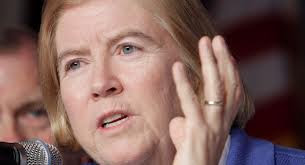

Congresswoman Candice Miller has a track record from her
eight years as Michigan secretary of state of attempting to make voting easier
and the process more open. But this afternoon she released a statement saying
she has essentially changed her position on the Voting Rights Act and supports
the Supreme Court’s controversial ruling announced today that struck down a key
portion of the landmark 1965 law.
eight years as Michigan secretary of state of attempting to make voting easier
and the process more open. But this afternoon she released a statement saying
she has essentially changed her position on the Voting Rights Act and supports
the Supreme Court’s controversial ruling announced today that struck down a key
portion of the landmark 1965 law.
Miller was one of hundreds of Republicans who voted for
the 2006 reauthorization of the VRA, which was credited with substantially
reducing voter discrimination in the South. After months of congressional
hearings, the law was renewed in ’06 by a combined House and Senate vote of 488-33.
President George Bush signed the bipartisan reauthorization into law.
the 2006 reauthorization of the VRA, which was credited with substantially
reducing voter discrimination in the South. After months of congressional
hearings, the law was renewed in ’06 by a combined House and Senate vote of 488-33.
President George Bush signed the bipartisan reauthorization into law.
Here’s what Miller said earlier today:
“Having served eight years as
Michigan’s Secretary of State, I understand the importance of access and
fairness at the polls. I believe that our democracy works best when our
citizens – regardless of race or color – participate in our electoral process,
which is why I voted to reauthorize the Voting Rights Act in 2006.
Michigan’s Secretary of State, I understand the importance of access and
fairness at the polls. I believe that our democracy works best when our
citizens – regardless of race or color – participate in our electoral process,
which is why I voted to reauthorize the Voting Rights Act in 2006.
“Today, however, the Supreme Court
ruled that the formula that determines which jurisdictions the preclearance
requirements apply to, while valid when enacted, is unconstitutional in light
of current conditions. While I have supported this provision of the Voting
Rights Act in the past, I respect the Court’s decision and am heartened that
the Court has left the rest of this landmark civil rights legislation intact.”
ruled that the formula that determines which jurisdictions the preclearance
requirements apply to, while valid when enacted, is unconstitutional in light
of current conditions. While I have supported this provision of the Voting
Rights Act in the past, I respect the Court’s decision and am heartened that
the Court has left the rest of this landmark civil rights legislation intact.”
An
obscure fact associated with the VRA is that its federal oversight applies to
two Michigan communities – Clyde and Buena Vista townships. Section 4 of the
Voting Rights Act of 1965 established the formula that determines what
jurisdictions are subject to the “preclearance requirements” in Section 5 of
the law. That formula was struck down by the high court’s 5-4 decision
which said that portion of the law is outdated and unconstitutional.
obscure fact associated with the VRA is that its federal oversight applies to
two Michigan communities – Clyde and Buena Vista townships. Section 4 of the
Voting Rights Act of 1965 established the formula that determines what
jurisdictions are subject to the “preclearance requirements” in Section 5 of
the law. That formula was struck down by the high court’s 5-4 decision
which said that portion of the law is outdated and unconstitutional.
Impacted jurisdictions are required to seek
and receive clearance from the Department of Justice in advance of making any
changes, no matter how small, to election procedures.
and receive clearance from the Department of Justice in advance of making any
changes, no matter how small, to election procedures.
The Obama administration and civil rights groups had argued
that there is a continuing need for the provision and pointed to the Justice
Department’s efforts to block voter ID laws in South Carolina and Texas last
year, as well as a redistricting plan in Texas that a federal court found
discriminated against the state’s large and growing Hispanic population.
that there is a continuing need for the provision and pointed to the Justice
Department’s efforts to block voter ID laws in South Carolina and Texas last
year, as well as a redistricting plan in Texas that a federal court found
discriminated against the state’s large and growing Hispanic population.
Advance approval was put into the law to give
federal officials a potent tool to defeat persistent efforts to keep blacks
from voting.
federal officials a potent tool to defeat persistent efforts to keep blacks
from voting.
The provision was a huge success because it
shifted the legal burden and required governments that were covered to
demonstrate that their proposed changes would not discriminate. Congress
periodically has renewed it over the years. The most recent extension was
overwhelmingly approved by a Republican-led Congress and signed by President
George W. Bush.
shifted the legal burden and required governments that were covered to
demonstrate that their proposed changes would not discriminate. Congress
periodically has renewed it over the years. The most recent extension was
overwhelmingly approved by a Republican-led Congress and signed by President
George W. Bush.
The requirement currently applies to the states
of Alabama, Alaska, Arizona, Georgia, Louisiana, Mississippi, South Carolina,
Texas and Virginia. It also covers certain counties in California, Florida, New
York, North Carolina and South Dakota, and some local jurisdictions in
Michigan. Coverage has been triggered by past discrimination not only against
blacks, but also against American Indians, Asian-Americans, Alaska Natives and
Hispanics.
of Alabama, Alaska, Arizona, Georgia, Louisiana, Mississippi, South Carolina,
Texas and Virginia. It also covers certain counties in California, Florida, New
York, North Carolina and South Dakota, and some local jurisdictions in
Michigan. Coverage has been triggered by past discrimination not only against
blacks, but also against American Indians, Asian-Americans, Alaska Natives and
Hispanics.
Jocelyn Benson, dean of the Wayne
State University Law School, said her time spent in the Deep South as a college
student convinced her of the need for continuing federal oversight.
State University Law School, said her time spent in the Deep South as a college
student convinced her of the need for continuing federal oversight.
In a message on Facebook, Benson
said:
“The court’s decision was a striking act of
judicial activism that ignored a voluminous legislative record steeped in
examples of ongoing acts of voting discrimination in certain parts of our
country.”
said:
“The court’s decision was a striking act of
judicial activism that ignored a voluminous legislative record steeped in
examples of ongoing acts of voting discrimination in certain parts of our
country.”
Benson, the 2010 Democratic
candidate for Michigan secretary of state, added this:
“The five justices in the majority assumed that
because threats to our democracy do not come in the dramatic form of tear gas
and billy clubs, they are somehow less real. But democracy is threatened any
time an eligible voter is disenfranchised, every time a law is enacted on
specious grounds that extend the time required to register or to cast a ballot,
and any time gerrymandering results in districts that silence a community’s
voice.”
candidate for Michigan secretary of state, added this:
“The five justices in the majority assumed that
because threats to our democracy do not come in the dramatic form of tear gas
and billy clubs, they are somehow less real. But democracy is threatened any
time an eligible voter is disenfranchised, every time a law is enacted on
specious grounds that extend the time required to register or to cast a ballot,
and any time gerrymandering results in districts that silence a community’s
voice.”
The Washington Post has an excellent interactive map here that shows the impact of the high court decision.


Mr. Selweski, Candice Miller is the Ultimate say one thing & vote another. She is a proud member of the RINO / Neocons. Just a couple of examples: Voted YES, Budget Control ACT http://www.govtrack.us/congress/votes/112-2011/h690 in return the Sequester Cuts. Voted YES on TARP (Bailed out Banks), Voted YES on Stimulus Package (Inside of bill, IPAB or Death Panels). Voted to Repeal ObamaCare & yet Voted to Fund it for 2013 http://www.govtrack.us/congress/votes/113-2013/h62. Voted Yes on NDAA & had 2 opportunities to vote out Indefinite Detention section but voted to keep it in the bill. Voted YES, CISPA, FISA=PRISM and the Topper claims to be a Fiscal Conservative, (Quote: “I think that we need to make being fiscally conservative cool,” her Ranking as a Fiscal Conservative for her Congressional career 160th plus & she thinks that is COOL? This is just the Tip of the Iceberg.