David Frum, one of the few moderate Republican writers left in American politics, blasts the liberals and environmental groups who successfully pushed President Obama to delay the Keystone XL pipeline project.
The administration’s decision will allow TransCanada to submit a new application for approval to the State Department once it develops an alternate route for the oil pipeline that avoids the sensitive habitat of Nebraska’s Sandhills.
While I don’t trust the oil companies (given their track record) to place an adequate emphasis on environmental protection, I have to admit that Frum makes a decent case. He believes the stated ecological concerns are a political ploy.
Environmental activists fear that the pipeline could crack, spill, and poison local underground aquifers. At the same time, it would spoil a “virginal natural landscape.”
Frum offers a “reality check.”
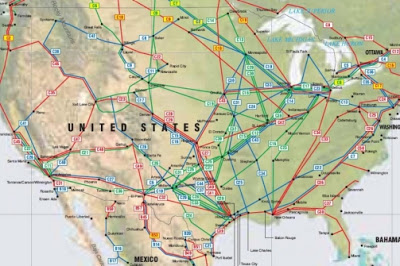
He provides this map of the existing of major oil pipelines in the United States:

Map of major oil pipelines in the US, theodora.com
And the U.S.map of natural gas pipelines is even busier, with a spider’s web of interconnections all across the nation.
“As you see,” Frum wrote, “Nebraska is already criss-crossed by pipelines — just as you would expect from a state so near the geographic center of the country.
“To look at these maps is to see instantly the speciousness of the stated objection to Keystone. The real motive is opposition to anything that might increase oil use in the United States –combined with a cowardly refusal by environmental groups to propose the one policy that might actually achieve that end: significant energy taxation.
“Environmental groups are caught in a big lie: they want people to believe that green technology will lower the cost of energy. That’s pretty self-evidently false. That original falsehood tangles environmentalists in a whole series of knock-on falsehoods, including the falsehood that they only object to Keystone because of the route—rather than the truth that they oppose all new sources of oil altogether.”
You can view the natural gas pipeline map here.