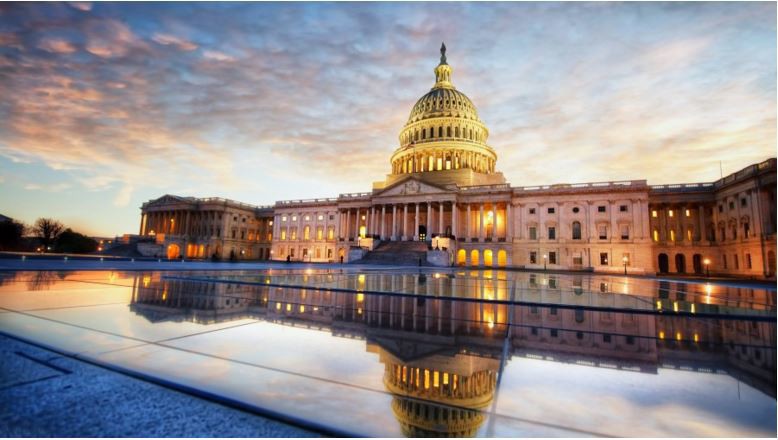
With Donald Trump and Bernie Sanders making a big splash in 2016 and Congress more divided and unproductive than ever, two centrist political groups are going on the offensive to force more bipartisan, pragmatic action from Democrats and Republicans on Capitol Hill.
The Centrist Project has revamped its website, which is heavy on substance, and stepped up its plan to create a nonpartisan centrist caucus in the polarized Senate that could sway the outcome of most legislation.
No Labels, which doesn’t embrace the centrist tag but promotes congressional pragmatism and problem-solving, has produced an agenda that it believes can establish a steadfast path for the next president and end gridlock in Congress.
Charlie Wheelan, a co-founder of The Centrist Project, wrote last week:
When I wrote the Centrist Manifesto in 2013, it was hard to believe politics could get worse. Boy, was I wrong.
The presidential election is the most dysfunctional we’ve had in our lifetimes. It should not be a surprise that the majority of voters are fed up by partisan extremists and a system that has pulled the parties so far left and right they agree on nothing. Our nation’s vast challenges are left unsolved. That’s not right. You know that – that’s why you have found us.
We, the sane, pragmatic majority in America must wrestle the steering wheel of the country away from the extremists. We need leaders not beholden to the broken parties who, like you, believe fiscal responsibility, economic opportunity, social tolerance and environmental stewardship should come first.
… We take the best ideas from both parties and ditch the rest. And, we have a tangible strategy for real change.
No Labels, though it faltered badly in impacting the 2012 presidential race, is much further along than The Centrist Project, with more than 1 million members and 80 adherents in the House and Senate.
In a guest column for Forbes magazine, No Labels co-chairs John Huntsman, former Republican governor of Utah, and Joe Lieberman, former Democratic senator from Connecticut, make their case for a new approach to Capitol Hill politics based on solutions that come from seeking common ground.
The No Labels Policy Playbook for America’s Next President, a blueprint for bipartisan problem solving, was released last Thursday. It carries forward the No Labels agenda – 60 ideas crafted through public polling and workshops with policy experts from across the political spectrum.
But Huntsman and Lieberman are not shy about asserting that Campaign 2016 has shamelessly avoided good politics and good policy:
The presidential campaign has been long on conflict and short on serious policy proposals. But a candidate who got behind a thoughtful, bipartisan policy agenda could get a lot done in the White House.
In just six months America will elect a new president, and our nation isn’t even close to having a debate that meets the gravity of this moment. Of the many serious questions going unanswered by our candidates, the most important one is, “How?”
How would you, as president, bring our country together around a common vision for where we need to go and how we get there?
Without a good answer to this question — and we have yet to hear one — candidates are selling little more than a fantasy, a wish list of things they would do if they were king or queen for a day. But America doesn’t do monarchy, and we can’t afford any more wishful thinking. What we need from our aspiring political leaders is recognition of … stark realities.
Huntsman and Lieberman, who both made unsuccessful runs for the presidency as centrist candidates, lay out a long-term agenda: create 25 million new jobs over the next 10 years; secure Social Security and Medicare for the next 75 years; balance the federal budget by 2030; and make America energy-secure by 2024.
At the same time, the group offers up a couple of pressing realities. One is that neither party will have full control of Washington in the near future. The second is that America’s “unearned dividend” as the safe repository of trillions of dollars in foreign investment due to the 2008-09 Great Recession will soon come to an end.
No Labels’ agenda features several popular proposals, based on their polling, that are a decided mix of liberalism and conservatism.
Those political tenets include: mandatory retraining for the long-term jobless; a 15-year “sunset” on all federal regulations, forcing Congress to renew them; a federal gas tax hike to pay for infrastructure improvements to roads and bridges; a 1 percentage point boost in the federal payroll tax and an increase in income eligibility for the tax in order to shore up Social Security; and a reduction in the corporate tax from 35 percent to 25 percent in exchange for the elimination of many business tax loopholes and credits.
Each of those policy changes scored between 60 and 80 percent public support in the No Labels surveys.
Huntsman and Lieberman reach this conclusion:
“Of course, just because a policy agenda polls well doesn’t mean that the toughest fights — about how much or whom to tax or about the proper role of government — will suddenly be resolved. But our research shows that America is not as hopelessly divided as cynics and ideologues might have us believe. In fact, there are many credible ideas that address voters’ most significant concerns and appeal to a broad swath of Democrats, Republicans, and independents.
“The ideas in our playbook are designed to jump-start a long-overdue debate on the issues that really matter. It’s on us, the American people, to demand that debate.”