

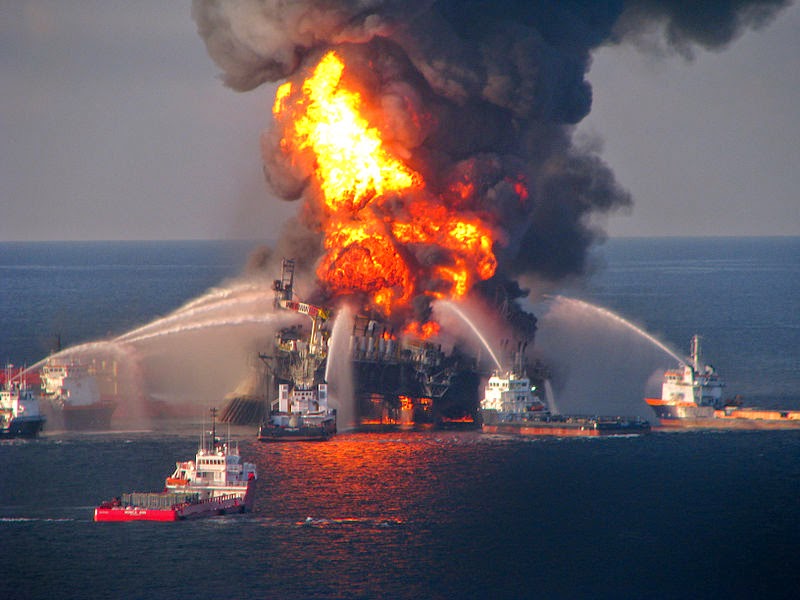
On this Earth Day, the look-backs at the BP Deepwater
Horizon disaster — the fourth anniversary of the nation’s largest oil spill
in history was Sunday – are well worth a read, and the folks at The Washington Post’s “Wonkblog”
have put together a nice compilation of the best press coverage.
Horizon disaster — the fourth anniversary of the nation’s largest oil spill
in history was Sunday – are well worth a read, and the folks at The Washington Post’s “Wonkblog”
have put together a nice compilation of the best press coverage.
For example, BP says ‘active
cleanup’ in the Gulf is complete, but try telling that to the Coast Guard. “The Coast Guard is crying foul at BP’s statement this week
that active cleanup efforts to remove oil along the Gulf Coast shorelines have
ended. While BP claims it has reached a ‘milestone’ in the cleanup process, the
Coast Guard says it’s ‘far from over.'” That’s according to the
reporting by Collin Eaton in
the Houston Chronicle.
cleanup’ in the Gulf is complete, but try telling that to the Coast Guard. “The Coast Guard is crying foul at BP’s statement this week
that active cleanup efforts to remove oil along the Gulf Coast shorelines have
ended. While BP claims it has reached a ‘milestone’ in the cleanup process, the
Coast Guard says it’s ‘far from over.'” That’s according to the
reporting by Collin Eaton in
the Houston Chronicle.
Then there’s this: Four
years after the 200-million-gallon spill, BP stands tall and proud as the Gulf
still recovering. “The state of the Gulf of Mexico four
years after the worst oil spill in U.S. history is as unclear as a marsh soaked
with petrochemicals. The state of BP, on the other hand, is powerful and proud, with
the British energy giant showing little tolerance for criticism over the
incident. A spate of reports and press releases…sketch a picture of a region
still awash in oil and tar, with fish and wildlife struggling to survive and
thousands of people suffering from both economic and physical or mental
distress. Those assessments stand in stark contrast to BP’s declaration last
week that ‘active cleanup’ is complete and ongoing restoration work ‘is helping
the Gulf return to its baseline condition’…An official accounting of the
spill’s impacts won’t come until at least next year …” That’s the assessment of Mike Magner in National Journal.
years after the 200-million-gallon spill, BP stands tall and proud as the Gulf
still recovering. “The state of the Gulf of Mexico four
years after the worst oil spill in U.S. history is as unclear as a marsh soaked
with petrochemicals. The state of BP, on the other hand, is powerful and proud, with
the British energy giant showing little tolerance for criticism over the
incident. A spate of reports and press releases…sketch a picture of a region
still awash in oil and tar, with fish and wildlife struggling to survive and
thousands of people suffering from both economic and physical or mental
distress. Those assessments stand in stark contrast to BP’s declaration last
week that ‘active cleanup’ is complete and ongoing restoration work ‘is helping
the Gulf return to its baseline condition’…An official accounting of the
spill’s impacts won’t come until at least next year …” That’s the assessment of Mike Magner in National Journal.
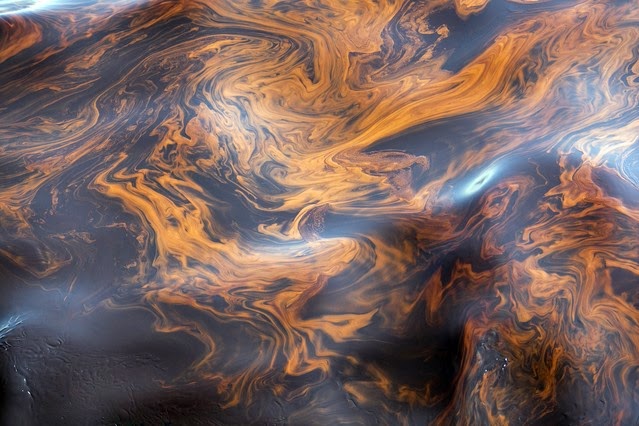
Worse yet, there’s this: The
lessons that should have been learned from the tragic spill have been lost. And
all the promises by the Obama administration to change the way prevention and
cleanup is handled in deep waters remain unkept.
lessons that should have been learned from the tragic spill have been lost. And
all the promises by the Obama administration to change the way prevention and
cleanup is handled in deep waters remain unkept.
Those are the conclusions
of S. Elizabeth Birnbaum, a consultant at SEB Strategies who and was director
of the Minerals Management Service at the time of the Deepwater Horizon blowout,
and Jacqueline Savitz, vice president for U.S. Oceans at Oceana, an
international conservation group.
of S. Elizabeth Birnbaum, a consultant at SEB Strategies who and was director
of the Minerals Management Service at the time of the Deepwater Horizon blowout,
and Jacqueline Savitz, vice president for U.S. Oceans at Oceana, an
international conservation group.
In a guest column for the New York Times warning that past mistakes will be repeated, they
wrote:
wrote:
“The harm to gulf wildlife has been long-lasting if not fully
understood. One recent study found that dolphins in the gulf region were
suffering from problems consistent with exposure to oil: lung damage and low
levels of adrenal hormones, which are important for responding to stress.
Another study found that bluefin and yellowfin tuna sustained heart damage,
which suggests likely harm to other fish as well. Another legacy has been the
oiling of marshes along the coast, which has exacerbated coastline erosion by
killing grasses that help keep the shoreline intact.
understood. One recent study found that dolphins in the gulf region were
suffering from problems consistent with exposure to oil: lung damage and low
levels of adrenal hormones, which are important for responding to stress.
Another study found that bluefin and yellowfin tuna sustained heart damage,
which suggests likely harm to other fish as well. Another legacy has been the
oiling of marshes along the coast, which has exacerbated coastline erosion by
killing grasses that help keep the shoreline intact.
“… We would never have imagined so little action would be taken
to prevent something like this from happening again. But, four years later, the
Obama administration still has not taken key steps recommended by its experts
and experts it commissioned to increase drilling safety. As a result, we are on
a course to repeat our mistakes. Making matters worse, the administration
proposes to expand offshore drilling in the Atlantic and allow seismic
activities harmful to ocean life in the search for new oil reserves.
to prevent something like this from happening again. But, four years later, the
Obama administration still has not taken key steps recommended by its experts
and experts it commissioned to increase drilling safety. As a result, we are on
a course to repeat our mistakes. Making matters worse, the administration
proposes to expand offshore drilling in the Atlantic and allow seismic
activities harmful to ocean life in the search for new oil reserves.
“Following the spill, the administration promised that it would
do what was necessary to make drilling as safe as possible. A presidential
commission recommended numerous measures to increase drilling safety. The Coast
Guard, the Department of the Interior and the National Academy of Engineering
subsequently identified more problems that contributed to the spill. Though
some recommendations have been acted upon, including restructuring the
regulatory agency that oversees drilling and increasing training and
certification for government drilling rig inspectors, threats remain.”
do what was necessary to make drilling as safe as possible. A presidential
commission recommended numerous measures to increase drilling safety. The Coast
Guard, the Department of the Interior and the National Academy of Engineering
subsequently identified more problems that contributed to the spill. Though
some recommendations have been acted upon, including restructuring the
regulatory agency that oversees drilling and increasing training and
certification for government drilling rig inspectors, threats remain.”

Here are some other tidbits (as provided by the
The Times-Picayune in New Orleans):
The Times-Picayune in New Orleans):
* Louisiana, Texas and Maryland private pension funds recently filed
Deepwater Horizon oil spill fraud suits against BP.
Deepwater Horizon oil spill fraud suits against BP.
* The cost of shrimp is high and last year’s oyster crop was low
but the federal government still hasn’t determined how much of an impact the
but the federal government still hasn’t determined how much of an impact the
* Crabs also were scarce last year. The spill took place where
tuna breed; what will become of future generations of the fish?
tuna breed; what will become of future generations of the fish?
* What it all boils down to, according to one premier seafood
chef, is uncertainty and ecological fragility.
chef, is uncertainty and ecological fragility.
Finally, some photos: Here is a grim though beautiful photographic
tribute to the Deepwater Horizon disaster offered by John Metcalfe in The Atlantic Cities.
tribute to the Deepwater Horizon disaster offered by John Metcalfe in The Atlantic Cities.





Knowing Derek personally, I have witnessed his hard work and his passion for the career path in politics he has chosen. Being a resident of Warren for over 30 years, my husband and I couldn't be happier for such a driven young man to be involved in the future direction of this city. We are honored to know Derek as well as the Miller family and thrilled to have his example of hard work and dedication here in Warren. Congratulations Derek! You are very deserving of all the success the future holds for you. We couldn't be any more proud. Sincerely, Mr & Mrs Giasone