This is a blog post written earlier today by Geoff Gariepy, a Sterling Heights Planning Commission member — and an occasional punching bag for the Islamophobic crowd in the city — following the City Council’s decision Tuesday to accept a new mosque. The agreement embraces a U.S. Department of Justice lawsuit settlement regarding the 2015 Planning Commission decision to reject the proposed Islamic house of worship. Under the pact, the mosque will be built — with some modifications.
As I write this, approximately 12 hours after City Council unanimously approved the settlement agreement with the American Islamic Community Center (AICC) and the Department of Justice (DOJ) in the dual lawsuits brought over the 2015 Planning Commission decision to deny the building of a mosque on 15 Mile Road, I find myself uneasy with some of the things that go with that settlement. I think it’s important to look at all of this in the light of day.
First and foremost, the Good: approving the settlement was absolutely, completely, and without reservation the right thing to do. Legally the city didn’t have a leg to stand on considering the very high bar the Religious Land Use and Institutionalized Persons Act (RLUIPA) law sets forth with regard to whether or not a municipality can place “burdens” on a religious group’s use of land. To quote the law directly, there must be a “compelling government interest” in placing these restrictions on a proposal. Whether or not the city’s interest in enforcing its setback requirements is “compelling” is an interesting question, and I fully expect that as a Planning Commissioner I am about to receive (settlement-mandated) training on what that term means under the RLUIPA law. In the DOJ Press Conference this morning, there were several mentions of how city officials were “educated” as to their responsibilities under the law, and I expect this education will soon be passed onto me in excruciating clarity.
Moreover, approving the settlement was the only decent thing to do: denying our fellow Americans their right to practice their religion is both immoral and hypocritical for a government that makes claim to respecting diversity and equality as ours does. Rectifying the wrong that denied the AICC group one of its basic rights under the Constitution (and, I believe, a basic human right) is paramount. That task casts a long shadow over virtually every other concern, and perhaps that alone should be enough to assuage my concerns over the settlement taken in its entirety. That it was possible to achieve the goal of relief for the AICC without a protracted legal battle in court is an unalloyed good in my view.

Gariepy
That being said, however, there are a few things that trouble me about the settlement, and I will set them forth here, hopefully in a way that will be taken as respectful by our friends at the AICC and the DOJ, and with a mind towards the idea that when you settle, you don’t get everything that you want. Here is the Bad:
I am really unclear on the RLUIPA treatment of the setback requirements and building height requirements in the zoning ordinance. A DOJ-published “Q & A” document states that:
So long as a municipality applies its codes uniformly and does not impose an unjustified substantial burden on religious exercise, it may apply traditional zoning concerns – such as regulations addressing traffic, hours of use, parking, maximum capacity, intensity of use, setbacks, frontage – to religious uses just as they are applied to any other land uses.
Now, the same document also states that when conflicts arise …
When there is a conflict between RLUIPA and the zoning code or how it is applied, RLUIPA, as a federal civil rights law, takes precedence and the zoning law must give way.
It seems to me that the quotes translate to “the zoning law applies until RLUIPA says it doesn’t,” which as a practical matter leaves someone like me in a quandary. Where that line gets drawn is very unclear to me. I’m afraid that, as a layman with regard to the application of civil rights law, I’m going to have to defer to the city attorney’s interpretation of this and hope that they manage to keep me out of trouble with the DOJ as I go about my business in my role as a Planning Commissioner.
The next thing that troubles me about the settlement is the seemingly implicit interpretation that the action the Planning Commission took in the Fall of 2015 was intended to cause harm to the AICC.
I don’t believe that the planning commissioners intended to cause harm to anyone or any group by voting 9-0 against the mosque proposal. Whether or not they actually did cause harm is a separate matter; I think it’s fair to say that the AICC was, in fact, harmed by the decision. My issue is the lack of intent. I suppose the lack of mens rea on the part of the city and the Planning Commission made the difference between a DOJ lawsuit and a DOJ prosecution, but as a layman with regard to the law this is pure speculation. Some attorney, somewhere, will probably set me straight on this, and I’m hoping it will be soon. What I do know, and I keep in mind as a planning commissioner, is that when we vote to turn a proposal down, we’re causing some form of harm to the applicant, usually financial. As a man of conscience this troubles me, but on the other hand I took an oath to uphold the law to the best of my ability, and in so doing I implicitly agreed to make decisions that would not always have all parties leave satisfied.
So if we accept the idea that sometimes in the course of doing business a Planning Commission inadvertently causes harm to those applicants whose proposals do not pass muster, is it fair to say that the harm caused to the AICC was not particularly exceptional in this regard? Is it simply the intersection of religious rights with ordinary land use that makes the difference between this being exceptional or not?
This may seem like a minor point to most, but as a planning commissioner this is a question I gotta know the answer to, and fast, before any other religious land use proposals arise on the docket. If we begin to treat all religious land use proposals with kid gloves then we may well find ourselves in dereliction of our duty to uphold the zoning law. On the other hand, if we uphold the zoning law without giving regard to religious land use rights, we’re going to proceed as we did in 2015 and get our hands smacked with another lawsuit. You can see the conundrum.
Another qualm I have with the settlement is that not all of the terms are public. Now I understand that occasionally a government may enter into an agreement, in the f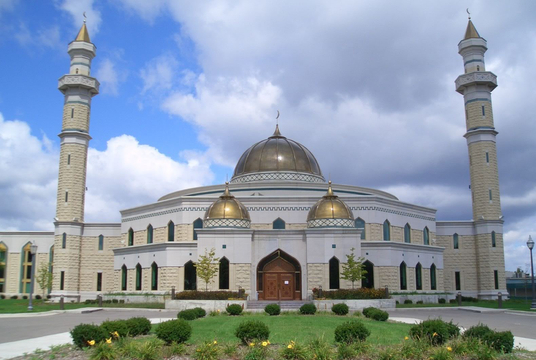 orm of a settlement or otherwise, in which a certain confidentiality may be required to protect all of the sometimes competing interests of the person or persons involved. For example, there is no need to put the proverbial finger on a particular individual as the proximate cause of this particular conflict when a group of individuals voted unanimously, with the tacit approval of city attorneys and planning officials, to vote something down. In fact, it makes me uncomfortable that statements made by a particular planning commissioner have been highlighted as one of the reasons why the DOJ decided to pursue this case in the manner it did, although I find those particular statements reprehensible, ill conceived, and ill advised. So on the one hand, you can understand why I say, yes, I can see why some of this settlement needs to remain confidential as long as the public doesn’t have some overriding need to know.
On the other hand, however, it would be best for us as planning commissioners to know, understand and appreciate all of the naked, dangly bits of this settlement deal so that we don’t stupidly make the same mistake(s) again the next time somebody wants to build a house of worship. Surely that is a compelling interest. Again, where do we draw the line?
And now for The Ugly promised to you in the title of this tome: the matter of how nothing has really been resolved between the AICC and the residents opposed to the building of a mosque for religious reasons.
I can’t tell you how disappointed I am that there are people in 2017 who are willing to stand up before God and country, and on television tell you that they hate all members of a particular religion, or that they consider them to be “terrorists.” This has to be one of the most perversely annoying, yet, on a certain level, understandable problems of our time. In a day and age where we are making huge inroads in the form of tolerance and acceptance toward those who do not meet a certain, rigidly defined social norm, it is hard to comprehend this attitude towards members of a (slightly different) religion with roots in the same god of Abraham. On the other hand, we have unfortunately been witness to the politicization of Islam in the United States over the past 16 years since 9/11. It is not hard to understand how it might be beyond a lot of people’s ability to separate radical Islam from the garden variety practice of that religion by a group like the AICC: in short, critical thinking skills are frequently at a premium among the general public, and with the contentious nature of our national politics, many among us tend to see things in terms of black and white.
All this is to say that we’re not out of the woods yet on this mosque thing, not by a long shot. With the legal hurdles of getting the thing approved by the city now cleared, it would seem that the AICC will move forward with getting engineering diagrams drawn up and materials selected, and eventually will select a contractor and break ground. And that is as it should be.
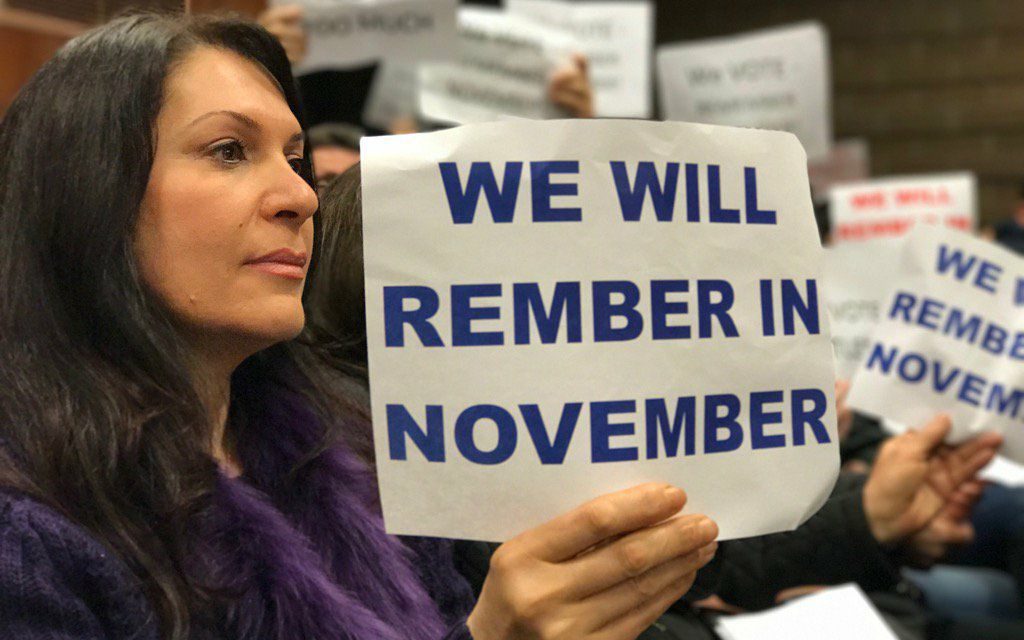
But the folks that stood in that parking lot two summers ago cheering and pulling on hijabs and who then waved signs last night emblazoned with the slogan “We will REMBER in November” are hardly convinced that this is all over with. Also, the very real (and I sincerely believe, evil) forces that will attempt to capitalize on this conflict during an election year are not about to pack up and go away without another word.
We’re gonna hear from Sanaa Elias and Jazmine Early again. Bet money on it. And they’re going to do their best to stir the pot and capitalize on any discontent they bring to the surface. Will there be angry demonstrations? I’d imagine so. Will there be acts of aggression inspired at least tangentially by their activities? Not hard to imagine. Are the police going to have to keep a close watch on the site of this mosque as it gets built to protect the AICC from its neighbors? Gee, I sure hope not, but I fear this will be the case.
I don’t know what to tell you to do about religious intolerance. As Councilman Skrzyniarz said last night, intolerance is a problem as old as civilization itself. It even predates traffic! What do you do when you have a large, angry group of people determined to oppress a religious group so they cannot practice their religion?
I am not a religious man myself, but if there is something to pray for in this situation, it is peace. It is tolerance. It is harmony. It is for the good of all of our fellow human beings and neighbors. And it is certainly worth praying for someone or something to lead us to a resolution of this conflict before anything really bad happens. Here’s hoping that whoever or whatever will lead us to this goal turns up fast.
Main Photo: Sterling Heights Local Politics Facebook page
An anti-mosque protester at Tuesday’s Sterling Heights City Council meeting holds aloft a sign that says voters will “rember” how council members voted when the fall city elections occur.