Here is my Sunday column…
As the November vote approaches, for many Americans this election is
all about too many people dependent on the government. For others, it’s
about government helping the struggling middle class.
Could they both be right?
After
all, the tea party loyalists who fear that we’re becoming a “nanny
state” nation certainly have some basic facts on their side. According
to Census Bureau figures, the portion of America’s overall income
derived from government has more than doubled over the past four
decades. And programs for the middle class are growing so fast that they
now exceed assistance to the poor.
At the same time, President
Obama’s supporters point out that the 47 percent who don’t pay federal
income taxes consist mostly of seniors, the disabled, veterans and the
working poor. Those people, and many more, are hurting, and so their
basic IRS deductions exempt them from paying any income taxes.
The big picture is revealing.
One
largely overlooked dynamic in the 2012 presidential contest is that,
amid all the talk about makers vs. takers and the 47 percent who are
“moochers,” it is the Red States and specifically the rural areas of the
United States that rely more upon government than the rest of the
nation.
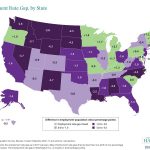
If you look at a U.S. map that details the 2008 or 2004
presidential election results, county by county, it’s stunning how much
of the nation’s geography is Republican red – virtually all of the rural
and semi-rural areas. But research shows that it is those Red counties
where government dependence is significantly higher than the Blue
counties and, in particular, the Blue metropolitan areas.
The latest study to highlight these differences has been produced by Michigan Future Inc.
New
data to be released later this month by Michigan Future shows that big
metropolitan areas lead rural America in generating private sector
employment earnings, while rural regions of the nation are more reliant
upon government “transfer payments” and government employment for a
large share of personal income.
The upcoming report uses data from
the U.S. Department of Commerce to distinguish private employment
earnings vs. earnings from public sector agencies. The public sector is
defined as local, state and federal government, public schools, and
public universities and colleges.
Transfer payments are defined as
Social Security, Medicare, Medicaid, food stamps, veterans’ benefits,
tuition support like Pell grants and subsidies for college loans, the
Earned Income Tax Credit, and farm subsidies.
Obviously, farm subsidies are a factor that exacerbates the differences in the urban vs. rural numbers.
The
results show that heavily populated regions lead the nation in personal
income as well as the share of that income coming from the private
sector, rather than government jobs or government assistance.
For
example, metropolitan areas with 3 million or more people (such as Metro
Detroit) produce average annual earnings of about $45,000 per person.
Overall, just 15 percent of all income consists of government payments.
In
comparison, rural counties with a population of less than 200,000
experience earnings that are nearly $14,000 less per person, per year.
And that populace collectively relies upon government checks for 27
percent of all income.
Several stereotypes are destroyed just by that one series of numbers.
“A
myth has grown in our nation of the ‘self-reliant small rural region’
compared to the ‘government-reliant big metro,’” said Lou Glazer,
co-author of the Michigan Future report. “This data suggests that is not
true, and that the economies of small town America are reliant in a
substantial way on dollars coming from governments, either through
government jobs or transfer payments.”
Regardless of the
geography, political conservatives are right to keep a vigilant eye on
long-term trends that show a disturbing growth rate in government at all
levels and in every corner of the country.
In Macomb County, our
dependence on government aid in 1969 was well below the national
average, at 3.8 percent of total income. That percentage doubled by 1979
and reached 11.4 percent of all income in 1999.
But it nearly doubled again over the next decade, reaching 20.3 percent in 2009, which was above the national average.
And
yet again, the curious aspect to the national numbers is that
conservative areas of the country receive more entitlements and
government aid than the liberal sections.
In the 2008 presidential
election, among the 100 counties with the highest dependence on federal
aid, Republican John McCain won two-thirds of them. What the map shows
is that the stereotypical link between inner city areas and government
“handouts” is an exaggeration, at a minimum.
The solidly Red
States of Kentucky, South Carolina, Georgia, Alabama and Mississippi
receive more income support, such as welfare and food stamps, than other
sections of the U.S.
Numbers that date back to when Michigan was
still struggling to fight off the nation’s Great Recession show that
transfer payments accounted for about 28 percent of total personal
income in Detroit, but in many rural counties up north, government
assistance provided more than 40 percent of income.
The “talent
factor” is a major driving force behind these disparities, with the
proportion of college graduates in urban areas far outstripping those
living in the countryside.
Glazer said that workers armed with
strong education credentials — a bachelor’s degree or more – are
gravitating toward “vibrant central cities (that) are increasingly
talent-magnets, and talent … drives prosperity.”
The educated earn more, pay more taxes and don’t need government assistance.
It appears that the smartest move by government would be to put more money into education access and quality – at all levels.
That
would not contribute to an “entitlement society.” That would be an
intelligent investment that would pay off for all of us — on every inch
of the map.