
Despite the sweltering heat and humidity in Washington, a bipartisan
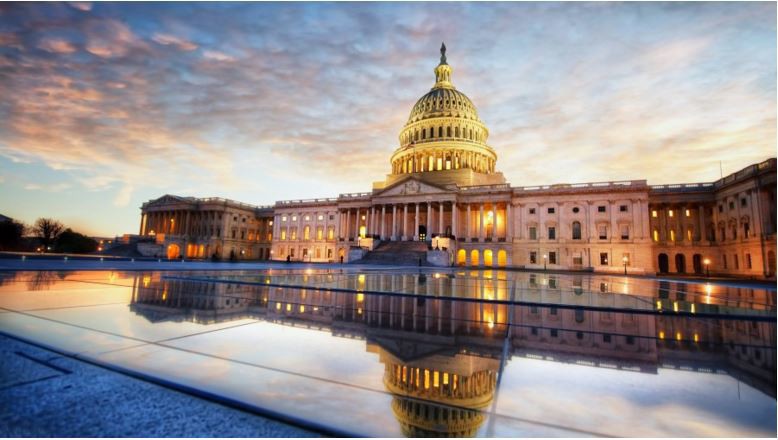
group of more than 70 members of Congress known as the “Problem Solvers” gathered
on a grassy area near the Capitol on Thursday to unveil a 9-point legislative agenda
and to declare that the days of partisan gridlock are numbered.
group of more than 70 members of Congress known as the “Problem Solvers” gathered
on a grassy area near the Capitol on Thursday to unveil a 9-point legislative agenda
and to declare that the days of partisan gridlock are numbered.
The rally was organized by No Labels, the staunchly
bipartisan/non-partisan group (as the name implies) that helped create the Problem Solvers
coalition.
bipartisan/non-partisan group (as the name implies) that helped create the Problem Solvers
coalition.
Congresswoman Janice Hahn, a California Democrat, said: “Today is a new day
that calls for new ideas, collaboration and real solutions for the American
people … No Labels presents a pathway
to breaking the partisan gridlock.”
that calls for new ideas, collaboration and real solutions for the American
people … No Labels presents a pathway
to breaking the partisan gridlock.”
The emcee for the event, centrist political commentator Michael
Smerconish of Sirius/XM satellite radio, was so impressed with the event that
he called it “a great day for America.”
Smerconish of Sirius/XM satellite radio, was so impressed with the event that
he called it “a great day for America.”
The nine-bill plan offers pragmatic approaches toward
cutting wasteful spending, making the federal bureaucracy work more
efficiently, and reshaping the budget in a more effective manner.
cutting wasteful spending, making the federal bureaucracy work more
efficiently, and reshaping the budget in a more effective manner.
For example, one proposal called “No adding, no padding” would end the
automatic inflation-adjusted increases granted to each federal department and agency on
an annual basis. Another initiative, “Stay in place, cut the waste,” would slash by
50 percent all federal agencies’ travel budgets and replace those trips with
video conferencing.
No Labels was launched in 2010 and gained little traction at
first. When they launched the Problem Solvers last year it began as a group of
about two dozen lawmakers. It now consists of 81 House and Senate members and
is nearly evenly split between Democrats and Republicans.
first. When they launched the Problem Solvers last year it began as a group of
about two dozen lawmakers. It now consists of 81 House and Senate members and
is nearly evenly split between Democrats and Republicans.
After critics initially accused No Labels of mushy politics
and labeled the group the “Kumbaya Caucus,” the group moved away from its
centrist image. Problem Solvers gained some staunchly partisan Republican and
Democratic lawmakers who are frustrated by the stagnation in a Congress that is
on pace to become the least productive in the nation’s history.
and labeled the group the “Kumbaya Caucus,” the group moved away from its
centrist image. Problem Solvers gained some staunchly partisan Republican and
Democratic lawmakers who are frustrated by the stagnation in a Congress that is
on pace to become the least productive in the nation’s history.
In January, No Labels announced its new co-chairs, West
Virginia Democratic Sen. Joe Manchin and former Republican Utah Gov. Jon
Huntsman,
Virginia Democratic Sen. Joe Manchin and former Republican Utah Gov. Jon
Huntsman,
Writing
in today’s New York Times, Jonathan Wiseman reported: “There do appear to
be new stirrings of cooperation — or at least the desire to cooperate. On
Thursday, the staunchly bipartisan group No Labels and 81 House and Senate
lawmakers — some of the most liberal and conservative — will roll out a slate
of specific legislative proposals with broad and surprising support across the
ideological spectrum. Thursday’s No Labels event could signify a real
change.”
in today’s New York Times, Jonathan Wiseman reported: “There do appear to
be new stirrings of cooperation — or at least the desire to cooperate. On
Thursday, the staunchly bipartisan group No Labels and 81 House and Senate
lawmakers — some of the most liberal and conservative — will roll out a slate
of specific legislative proposals with broad and surprising support across the
ideological spectrum. Thursday’s No Labels event could signify a real
change.”
UPDATE: Smerconish, who is a major media figure in the Philadelphia area, wrote a column over the weekend that further expounds on the significance of the Problem Solvers event.
To watch a short video about the Problem Solvers agenda, click here.