

Nearly overlooked in the latest 24-hour
news cycle was a court ruling on an issue that has miraculously united Ron Paul
and right-wing groups with ACLU-type ultraliberals.
news cycle was a court ruling on an issue that has miraculously united Ron Paul
and right-wing groups with ACLU-type ultraliberals.
U.S. District Judge Katherine Forrest struck down the NDAA detention
provisions, which have sparked a rallying cry among the Tea Partiers and those
on the far left wing. The provision in the 2012 National Defense Authorization
Act allows the federal government to detain indefinitely people who are deemed a threat to the nation
based on associations with enemy combatants — even U.S. citizens on American soil.
Under the new widespread powers, terror suspects can be held, without a
hearing or a trial, until the hostilities between the U.S. and terrorist groups
such as al-Qaida come to an end.
hearing or a trial, until the hostilities between the U.S. and terrorist groups
such as al-Qaida come to an end.

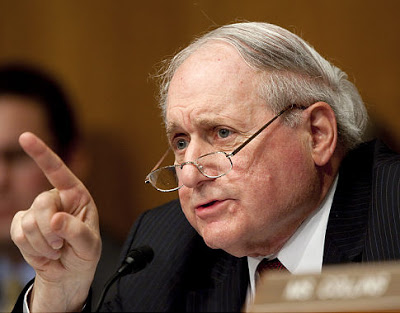
The court ruling was a setback for Michigan Sen. Carl Levin who, along with
fellow Senate Armed Services Committee member John McCain, pushed through the provision.
fellow Senate Armed Services Committee member John McCain, pushed through the provision.
Forrest, based in Manhattan, said in her decision that a single page of federal
law has created a “chilling impact on First Amendment rights.”
law has created a “chilling impact on First Amendment rights.”
According to
The Huffington Post, she cited testimony by journalists that they feared their
association with certain individuals overseas could result in their arrest
because a provision of the law subjects to indefinite detention anyone who
“substantially” or “directly” provides “support”
to forces such as al-Qaida or the Taliban.
The judge said the wording was too vague and too difficult for the public to
understand, which could have a chilling effect on free speech rights. She encouraged Congress to change it.
understand, which could have a chilling effect on free speech rights. She encouraged Congress to change it.
“An individual could run the risk of substantially supporting or
directly supporting an associated force without even being aware that he or she
was doing so,” the judge said.
directly supporting an associated force without even being aware that he or she
was doing so,” the judge said.
Though the detention rule was
opposed by the Pentagon and the FBI, Congress adopted the defense budget bill
that included the controversial language. President Obama signed the bill into
law in December while issuing a “signing statement” indicating that his administration had
no intention of using the new federal police powers.
Levin has made no statements about the court ruling.
But as recently as Tuesday, the Senate Armed Services Committee chairman
told The Hill newspaper that he wants to preserve the executive branch’s power
to place terror suspects in military detention if they’re captured in the
U.S., even if the Obama administration isn’t using that power.
told The Hill newspaper that he wants to preserve the executive branch’s power
to place terror suspects in military detention if they’re captured in the
U.S., even if the Obama administration isn’t using that power.
“They don’t have to exercise it, but I’m not so sure
that they want the authority removed to arrest or to capture, because we’re
talking about war here — somebody who’s declared war against the United States
— just because we capture them on U.S. soil,” Levin told The Hill.
that they want the authority removed to arrest or to capture, because we’re
talking about war here — somebody who’s declared war against the United States
— just because we capture them on U.S. soil,” Levin told The Hill.
“We can hold them on U.S. soil, but I don’t think we
want to eliminate the authority of the Executive Branch to hold someone who’s
declared war on the United States as an enemy combatant,” he added.
want to eliminate the authority of the Executive Branch to hold someone who’s
declared war on the United States as an enemy combatant,” he added.
In contrast, the judge called journalists’ fears reasonable, citing
testimony at a March hearing by Pulitzer Prize-winning journalist Christopher
Hedges of the New York Times. Hedges, who initiated the suit against the Obama
administration, has interviewed al-Qaida members, conversed with members of the
Taliban, and reported on 17 groups named on a list prepared by the State
Department of known terrorist organizations.
You can read more
here.
here.


"Miraculously united Ron Paul and right-wing groups with ACLU-type ultraliberals."
You mean people who actually are informed about what the government is trying to do to our Constitution and rights.