Let’s flash back to February 2012. At that time, the Nevada caucuses produced an unbelievable mess, with party officials unable to accurately count just 33,000 votes.
Flash forward to 2016 and we have a Nevada caucus that could have an incredible impact on the presidential race, with several Republican candidates vying to emerge as the anti-Trump, and Democrat Bernie Sanders on the verge of exploding the Hillary Clinton campaign.
One more thing: Though Nevada is a sparsely populated Western state, an outlier with almost all of its population in the Las Vegas area, Nevada has sided with the winning presidential candidate in every election since 1912 (aside from 1976), according to Politico.
So, it is somehow a bellwether political proving ground in presidential elections.
In an increasingly bizarre Campaign 2016 where momentum and expectations have emerged as a bigger factor than ever, supposedly inconsequential Nevada could play an outsized role in the presidential race – on both sides of the aisle – heading into Super Tuesday on March 1.
The obvious question: Why?
Going back to 2012, the many question marks about the presidential primary process have faded, yet the facts remain that state caucuses are largely run by untrained local party volunteers and should no longer receive recognition from the national parties as legitimate elections.
In the Nevada 2012 caucuses, it took two days just to count 33,000 votes, despite a 26 percent reduction in turnout from 2008. To put that into perspective, Macomb County (Mich.) is split into three state Senate districts and each of the losing Senate candidates in the 2014 election received more than 33,000 votes.
Four years ago, when problems became obvious on election night, the counters in Nevada put all ballots from disputed areas — about 200 precincts – into one “trouble box” for further review.
“It’s embarrassing. It’s embarrassing to the party. It’s embarrassing to the state,” Jon Ralston, a Nevada political pundit who has been covering politics in the state for more than two decades, said at the time.
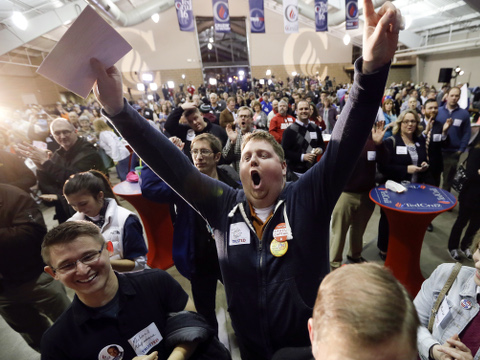
While most of the 2012 problems in Nevada were on the Republican side, we witnessed just a few weeks ago in Iowa how caucuses on the Democratic ticket can become a mess. The Feb. 1 Democratic caucuses in the Hawkeye State were so dysfunctional – with coin flips awarding delegates – that the state’s leading newspaper, the Des Moines Register, called for a full audit of state results. The “virtual tie” between Sanders and Clinton remains in doubt.
In Nevada, attempts to fix the embarrassment of four years ago never really got off the ground as the two parties could not even agree on a date for the 2016 caucuses.
The Democrats will caucus on Saturday; the Republicans (with just a 2-hour window to vote) will caucus on Tuesday.
Let’s hope that a rag-tag process resembling a student council election, staged in the gambling capital of the world, does not taint the choosing of the next president of the United States.