

Grover Norquist, an icon among anti-tax conservatives, once famously said that he wanted to shrink government down to “the size where we can drown it in the bathtub.”
We’re far from that fantasy – a sentiment that consistently draws laughs and applause from Republican audiences far and wide – but Michigan clearly has become a state where the Norquist “starve the beast” strategy has succeeded rather spectacularly.
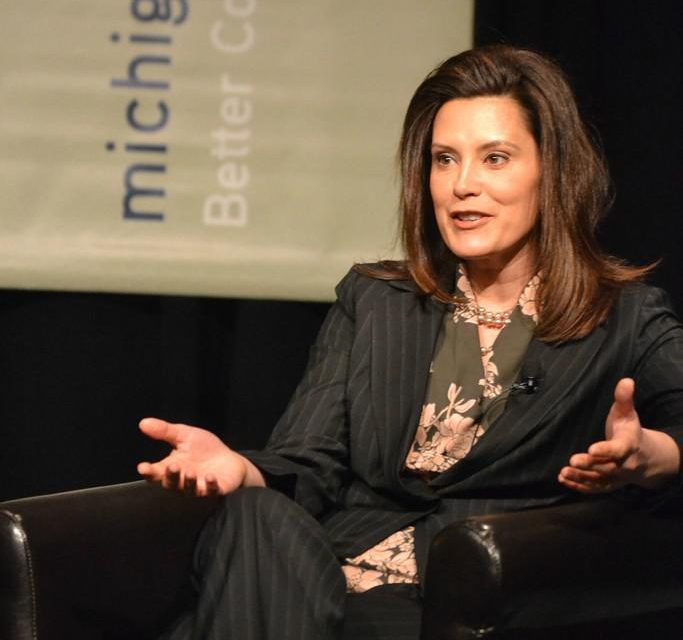
As a result, Gov. Gretchen Whitmer finds herself bound in a fiscal straight jacket as she tries to boost funding in priority areas while facing an absolute “no” on new taxes from the GOP-controlled Legislature.
The proposed budget that the governor introduced on Thursday for the 2021 fiscal year would increase funding for K-12 education, social services and environmental protection. But the $61.9 billion spending plan still falls woefully short of past budgets going back to former Republican Gov. John Engler.
Consider this: The state budget, when adjusted for inflation, stands at a level that is $5.5 billion below the amount in 2000. In other words, if the budget had simply kept pace with annual cost-of-living increases, the state would have an additional $5.5 billion to invest in roads, schools, universities, cities, healthcare, and sewer and water infrastructure.
In decades past, a yearly cost-of-living raise for Michigan workers was a starting point, a bare minimum. That same principle applied to state and local budgets.
After years of a struggling auto industry, an anemic Michigan economy and constant partisan battles in the Capitol, the resulting budget shrinkage represents a “mission accomplished” for Norquist’s disciples.
But the problem with that thinking is that in 2000 Engler was hailed by Republicans as the best governor the state had seen in decades. He was especially praised for slashing spending. Today, that same Engler budget from two decades ago – if it had just kept pace with inflation – would provide several billion dollars more in revenue for various highly valued programs.
Many House and Senate Republicans in Lansing surely favor even more budget downsizing in 2021. Others want to boost their favorite programs without an increase in taxes or other revenues, such as Whitmer’s upcoming $3.5 billion bond sale to finance improvements on major roads.
But this “free lunch” approach simply amounts to playing to the crowd. The proposed general fund budget, the state’s basic checking account, not including restricted federal funds, is at $11 billion. It would take a spending cut of at least $1 billion in the general fund to make a real fiscal impact. But no Republican will put forward a dramatic list of cuts that reaches 10 figures.
Whitmer created some of her own troubles in 2019 when she played chicken with the Legislature, introducing a series of budget cuts that were not popular, then was largely brushed aside after a 9-month struggle with lawmakers. The governor’s new budget would raise expenditures by 4 percent, a goal that is sure to face strong opposition in the Capitol.
The intense rightward shift in Michigan politics on tax-and-spend issues actually started to take hold 42 years ago.
In 1978, at the height of an anti-tax revolt, Michigan voters approved a state constitutional amendment placing numerous limits on the government’s taxing powers. That ballot proposal, known as the Headlee Amendment, still serves as an annual ceiling on overall tax revenues.
At the time, it was saluted as a staunchly conservative approach that would bring state taxes and spending in line over time. What happened went far beyond anything anticipated.
As of last year, the state is now $10.4 billion below the maximum revenue allowed by the amendment. According to the State Budget Office, that gap will reach almost $12 billion by next year.
If Lansing had simply stayed at the Headlee limit, a budget of $10 billion to $12 billion more – an unimaginable sum in the political atmosphere of 2020 – would be up for debate in the House and Senate.
The state budget certainly won’t be drowned in a bathtub anytime soon, but the current flow indicates that it may need a life jacket to stay above water.


Very enlightening. Good work!
good