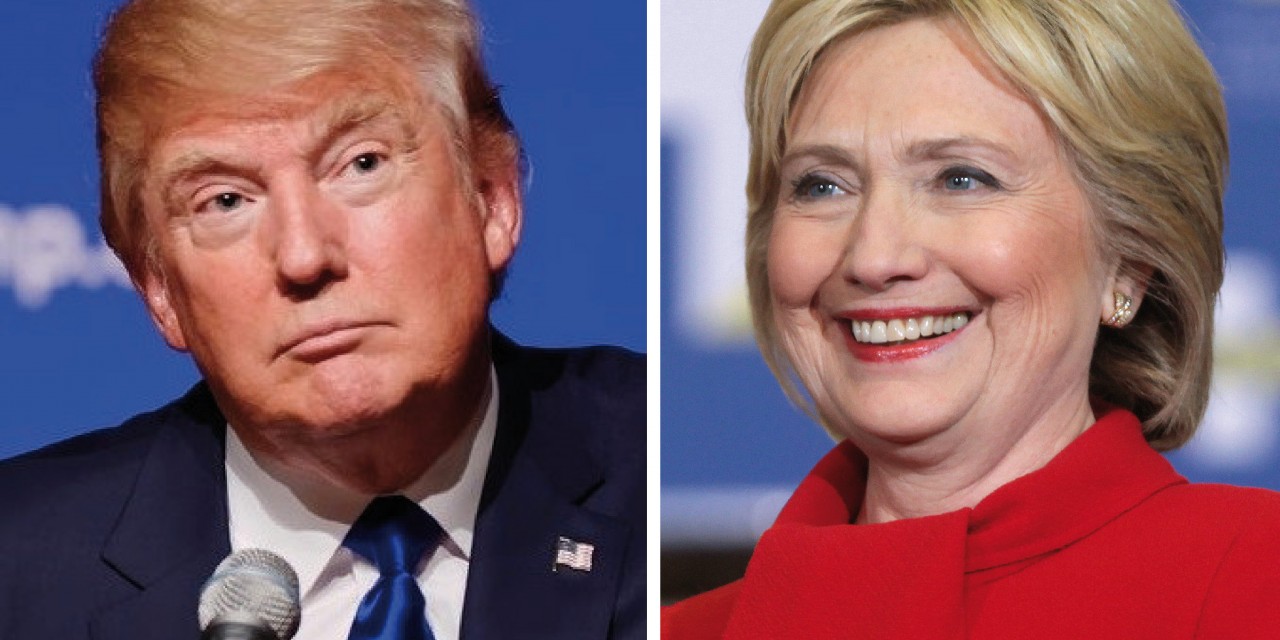
As today’s primary election results in five states should make a Donald Trump vs. Hillary Clinton matchup in the general election far more likely, it also becomes apparent that we may be headed for a November vote with unprecedented low turnout.
Pollster Peter Hart warns in a blog written today for the Wall Street Journal that, beyond all the weaknesses of Trump and Clinton with certain demographic groups, each is “loathed” by the all-important independent voters.
Hart, co-director of the WSJ/NBC polling, noted that these are the two most unpopular frontrunners in the last quarter century. And probably beyond.
Here’s Hart’s assessment:
The “feeling thermometer” scores for Mr. Trump and Mrs. Clinton in the current WSJ/NBC poll are frigid cold. Each candidate sets a record for negative feeling (Mr. Trump, 65% negative and 24% positive; Mrs. Clinton, 56% negative and 32% positive). Further, their scores with the key group of independents are minus 67% and 62%, respectively.
Looking back at the results of the last six presidential elections, the most negative April thermometer scores we have ever recorded with independents is a net minus-17 for Bill Clinton (in 1992). Scores for election losers Al Gore, Mitt Romney, and John Kerry were also net negative in double digits, but Mr. Trump and Mrs. Clinton’s numbers are unprecedented. Most important, the scores among independent voters recorded by candidates in April are pretty indicative of what we will see in November. If Mrs. Clinton and Mr. Trump are the nominees, we will likely have the first president ever elected with more voters holding negative views of their incoming president than positive feelings.
Which leads us to turnout. If, as Hart suspects, the winner would be the “least detested” of these two candidates, voters may stay home in droves. Independents with no particular loyalty to either party may be especially inclined to sit out the election. That, of course, could have a dramatic impact in down-ballot races for Congress, governors and state legislatures.
While the least participation in the recorded history of presidential election turnout was right about 49 percent (1920, 1924, 1996), the 2016 frontrunner’s horrendous approval ratings, followed by a period of post-convention disunity in both parties, and a final campaign stretch in the fall that could turn incredibly nasty, sets the stage for American democracy sinking to its deepest depths.
If our next president is elected when turnout dips into the low 40s or even worse, the winner can forget about a mandate or the first 100 days. The 45th president could spend months or even years trying to establish basic legitimacy.
Recent Posts:
 How low can the bar go in Detroit elections?
- Could Trump-induced mess in Washington lead to a new…
- Republicans could control Senate for many years to come
- Michigan Obamacare rate increases could average 28 percent
- Kid Rock, Clinton and the clowns who protest
- Trump team favors Kid Rock over solid GOP field for Senate