

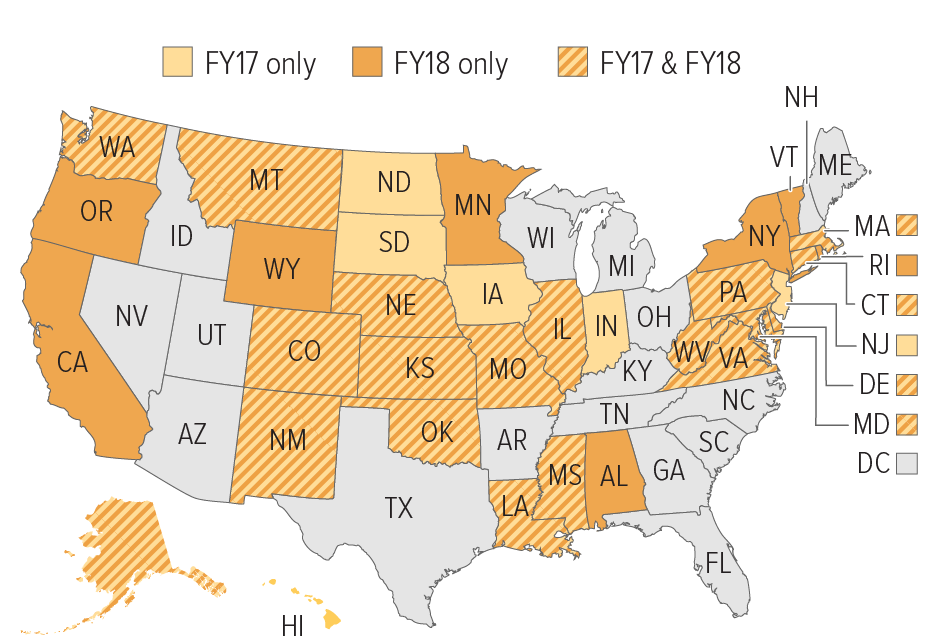
After posting several balanced budgets in a row without great difficulty, Michigan finds itself in an unusual spot as one of few states across the nation without fiscal shortfalls on the horizon.
Some 25 states face red ink in 2017 and 33 states overall will deal with revenue shortfalls over the next two years.
According to a report by the Washington-based Center for Budget and Policy Priorities, Michigan, Wisconsin and Ohio are the only states throughout the Upper Midwest that have no budget problems plaguing their 2017-18 planning.
The National Association of State Budget Officers reports that state finances by mid-year will be in their worst shape since the recessionary year of 2010.
Of course, Michigan is not without its issues. The Snyder administration has warned that the state faces long-term budget pressures, including $2.1 billion in previously approved tax and fee cuts dating back to the Granholm administration that will drain state coffers over the next three years.
The state also faces compliance with legislative promises to improve road funding, and the “rainy day” fund still isn’t where budget officials hoped it would be.
The CBPP warns that rampant tax cutting sparked the shortfalls in some states. The massive $1.8 billion business tax reduction enacted in Michigan in 2011 has created less-than-anticipated revenues for the past two years.
But many other states have resorted to proposed tax hikes, substantial spending cuts or tapping their rainy day funds. Additional uncertainty lies ahead due to the actions of the Trump administration and Congress.
Here’s how the CBPP assesses the situation:
Slowing revenues are just one element of uncertainty about how states will be able to meet their responsibilities. Federal grants to states — which make up approximately 31 percent of state budgets — are at risk of being cut based on proposals from President Trump and congressional Republicans, though at this stage in the federal budget process it is unclear how deep these cuts may be.
The prospect of changes to the federal tax system, as President Trump and congressional Republicans intend to propose, could also have major state revenue implications. Most state income taxes are based on federal definitions of income. Increases in certain deductions, such as allowing immediate expensing of the full cost of (business) investments, could result in state revenue losses.
The elimination of the federal estate tax could make it more difficult for states with estate taxes to retain them. On the other hand, broadening the base to make more income taxable to offset federal rate cuts could modestly increase state revenues.


Infrastructure needs will blow budget apart and should be a MAJOR red flag, not swept under the rug as a secondary concern.