The Asiana Airlines plane crash in San Francisco has
received wall-to-wall coverage on cable TV news channels – even knocking
the George Zimmerman murder trial to a second-tier location – while the train
derailment near the Maine border has been nearly blacked out from the airwaves.
received wall-to-wall coverage on cable TV news channels – even knocking
the George Zimmerman murder trial to a second-tier location – while the train
derailment near the Maine border has been nearly blacked out from the airwaves.
Does that make any sense? Is that good journalism?
The plane crash caused two deaths, possibly just one now
that it appears one victim was killed after being hit by a fire rescue vehicle
on the runway.
that it appears one victim was killed after being hit by a fire rescue vehicle
on the runway.
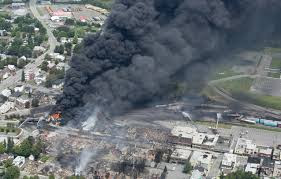
The train derailment in Lac-Megantic, Quebec, killed at least 13
people and 50 more are still missing, as it took firefighters two days to
extinguish all the flames. The explosion leveled the heart of the town, 30
buildings, and forced the evacuation of 1,000 people.
people and 50 more are still missing, as it took firefighters two days to
extinguish all the flames. The explosion leveled the heart of the town, 30
buildings, and forced the evacuation of 1,000 people.
Yet, the airline crash is front page news and the train
tragedy is relegated to the back pages.
tragedy is relegated to the back pages.
The larger story behind the Asiana tragedy is that air
travel has become extraordinarily safe and today’s planes and equipment,
particularly the Boeing 777 that was involved in this crash, have a spectacularly
successful track record. This was America’s first fatal commercial flight in 14
years. And it’s becoming increasingly clear that basic human error, on the part
of one or both Korean pilots, was the cause of this weekend’s accident.
travel has become extraordinarily safe and today’s planes and equipment,
particularly the Boeing 777 that was involved in this crash, have a spectacularly
successful track record. This was America’s first fatal commercial flight in 14
years. And it’s becoming increasingly clear that basic human error, on the part
of one or both Korean pilots, was the cause of this weekend’s accident.
The larger story behind the explosion of the runaway
train in Quebec is that these types of “oil trains” are becoming more and more
common as rail transport surpasses pipelines as the shipping means of choice.
train in Quebec is that these types of “oil trains” are becoming more and more
common as rail transport surpasses pipelines as the shipping means of choice.
In fact, since 2009 the number of train cars carrying
crude oil hauled by major railroads has jumped nearly 20-fold, to an estimated
200,000 last year, according to news reports.
crude oil hauled by major railroads has jumped nearly 20-fold, to an estimated
200,000 last year, according to news reports.
These trains travel through towns all across America, in
many cases carrying crude pumped from the massive Bakken oil reserves in North
Dakota and Montana to refineries far and wide.
many cases carrying crude pumped from the massive Bakken oil reserves in North
Dakota and Montana to refineries far and wide.
Safety experts say oil spills from trains are more
frequent than from pipelines, though they tend to be smaller.
frequent than from pipelines, though they tend to be smaller.
In the border town of Lac-Megantic, stunned and angry
residents are still wondering how a train carrying 72 tanker cars filled with
crude oil became a runaway fireball on rails speeding toward their town. Early
indications are that safety regulations failed in this case, leading to the
massive derailment that exploded five tanker cars.
residents are still wondering how a train carrying 72 tanker cars filled with
crude oil became a runaway fireball on rails speeding toward their town. Early
indications are that safety regulations failed in this case, leading to the
massive derailment that exploded five tanker cars.
The Associated Press talked with Frank LaFontaine, who
said he believes he lost three family members in the train crash, including his
son.
said he believes he lost three family members in the train crash, including his
son.
“We always wait until there’s a big accident to change
things,” he said. “Well, today we’ve had a big accident, it’s one of the
biggest ever in Canada.”
things,” he said. “Well, today we’ve had a big accident, it’s one of the
biggest ever in Canada.”
We wait until it’s too late.
And, in the media, we move on much too soon to the next
story.
story.