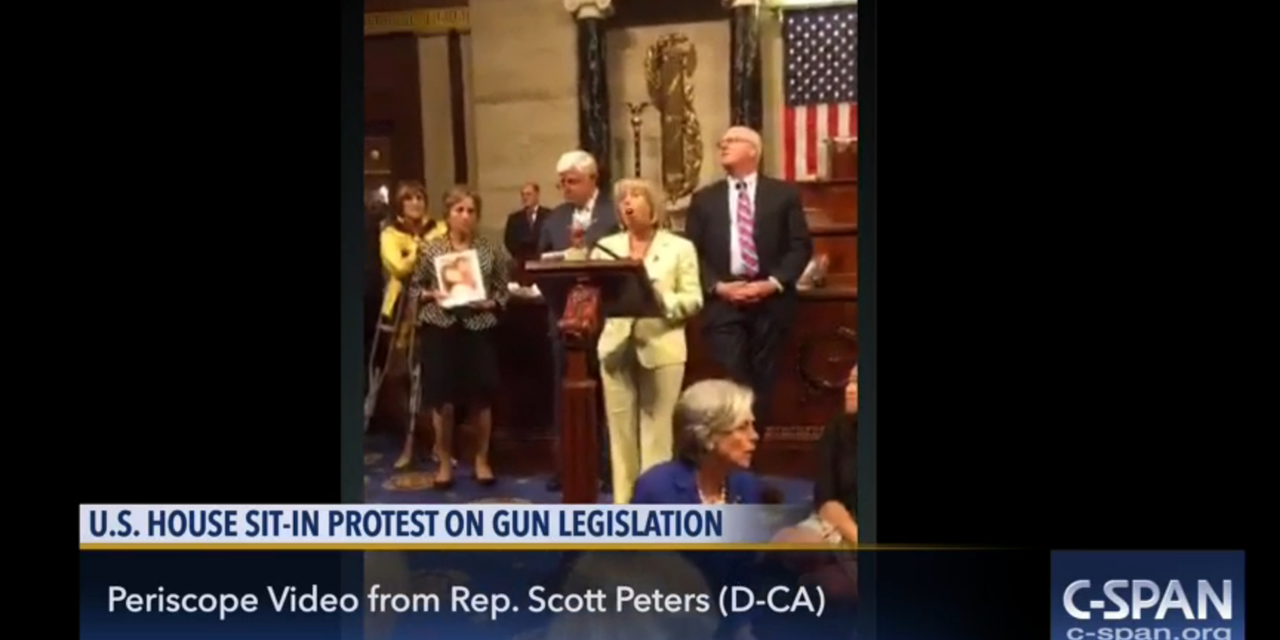
Coverage of the ongoing sit-in on the House floor by protesting Democrats was made possible by a technology that didn’t exist just a few years ago.
When the House Republican leadership shut off the C-SPAN cameras on Wednesday, the cable channel had a predicament — a revolt on the House floor without any way to broadcast the event to the nation. But C-SPAN quickly picked up live coverage of the sit-in through the smartphone of a congressman who was livestreaming from the floor using Periscope, an app that is owned by Twitter. Another House member began broadcasting the protest, which was designed to force a House vote on gun control measures, by using Facebook Live. All three cable networks picked up portions of the feed and C-SPAN has carried the sit-in via Periscope for the duration, yesterday and today.
According to Politico, the unprecedented event in the House – now heading toward the 24-hour mark — turned into a public relations bonanza for Periscope and Twitter. Executives even engaged in some online taunting of Facebook as they promoted their app’s livestream capabilities, including on-screen graphics similar to those used by the TV networks.
“Today is an example of what drives us. Twitter and Periscope take you where other cameras don’t – letting you experience breaking news through the eyes of those living it,” Periscope co-founder and CEO Kayvon Beykpour said in a statement.
Politico reports that both Twitter and Facebook have invested heavily in Capitol Hill, sending employees to the halls of Congress to train lawmakers on how to use their competing livestream features. Twitter featured the sit-in as a “Twitter Moment,” Periscope dedicated a channel to it, and Facebook featured livestreams of the sit-in in its trending box with a red “LIVE” button.
Politico’s Hadas Gold explains why all the fuss:
Twitter and Facebook are extremely eager — as is Google, owner of YouTube — to capitalize on the enormous interest in the 2016 campaign because it validates their claims that they are the “town hall” where modern American politics is playing out.
But good government and transparency aren’t the only motives — the social-media giants are in a battle to the death over their respective livestreaming platforms, seeing the technology as a way to compete with TV networks for eyeballs and advertising dollars. Facebook Live is such a priority for the company that it is paying around $50 million to media companies and celebrities to use the product, the Wall Street Journal reported this week.
In a dig at Facebook, Twitter spokesperson Nick Pacilio shared the Journal’s report on Wednesday, reminding followers “we’re not paying anyone to use Periscope.”