


At a time when secretive “dark money” contributors are
anonymously pouring piles of cash into political campaigns, the incumbent lawmakers in
Lansing and Washington are making it harder for voters to discern who is
influencing our election outcomes.
In the state capital, the Legislature passed an anti-transparency
amendment on Wednesday, essentially its last day of session for 2015, that
would allow PACs and superPACs to wait until nearly six months after an
election to report where their millions of dollars were spent.
special interest groups to report their campaign finances in the February after
an election was extended to a springtime deadline, according to the bill
language, long after the reports could shed meaningful light on the prior
November vote.
For example, the February 2015
PAC and superPAC reports contained the first disclosure of more than $3 million
of independent expenditures that supported or opposed candidates in Michigan’s November
2014 state elections.
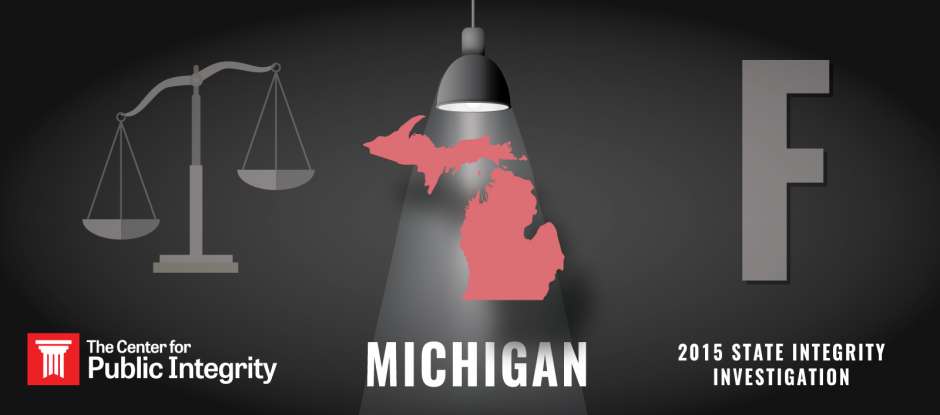
has labeled Michigan the “dark money capital of the U.S.,” said the actions on
Wednesday by the House and Senate were shameful.
“This legislation
perversely delays the citizens’ right to knowledge of who is spending millions
of dollars to influence the outcome of Michigan election campaigns,” said Robinson,
founder and director of the Michigan Campaign Finance Network.
“Instead of delaying
reporting, legislators should be acting to make records of massive independent
expenditures available to the public before Election Day, so citizens can
consider campaign messages with full knowledge of who is paying for them.”
Nonprofits maintain shadowy campaign cash
Meanwhile, in the nation’s capital, congressional leaders
squashed a move toward greater transparency that would expose where nonprofit
groups spend their millions during presidential and congressional campaigns. The
new spending bill up for approval in the House and Senate blocks attempt by the
IRS to require more disclosure from 501(c)(4) organizations which have become
key players on the national political stage.
According to the Wall Street Journal, the
move blocks a multiyear effort by the Obama administration and advocates of
reducing the influence of money in politics. Unlike PACs, nonprofits are not required to disclose their donors.
Since 2013, the administration has been
seeking to rein in the influence of such
groups in elections by creating rules to restrict their spending on
campaign-related activities.
benefit the “social welfare” of society, though they were allowed to spend a
portion of their funds on civic engagement projects, such as get-out-the-vote
efforts.
Critics say the rules have been thoroughly circumvented
in recent years as nonprofits have poured huge sums of secretive money into
campaigns in a highly partisan manner.
Charities turn into bigtime election players
situation:
“Recent elections have seen an
explosion in spending by nonprofit groups, such as the conservative heavyweight
Crossroads GPS. The 2016 election is unusual in the volume of nonprofits that
are spending millions to benefit specific candidates in the primary. Florida
Sen.Marco Rubio has thus far been the
biggest beneficiary of such a group; a nonprofit has spent at least $8 million on TV ads
highlighting his stances on various issues.”
Lisa Gilbert, a spokeswoman for the
watchdog group Public Citizen said this: “If the (provision) that halts the IRS
rulemaking for a year is in the final passed bill, Congress will be ignoring
the clear need to deal with bad actors gaming the tax code to avoid disclosure
as well as the necessity of clearer definitions of political activity to avoid
another ‘scandal.’”
especially bitter response from campaign reformers seeking greater transparency
because of the manner in which the reporting requirements were abruptly changed.
The measure that strengthens secrecy in the election process was rushed through
in a manner that essentially kept it secret from the public.
Secretive approach adopted in secretive manner
As Robinson explains it, the
version of Senate Bill 571 that passed in the final hours of voting was a 53-page
substitute hastily introduced as a replacement for a prior 12-page bill. The
substitute, which would eliminate February campaign finance reports, was not
subject to a public hearing.
“Senate Bill 571 is so
overtly hostile to timely disclosure in state elections,” Robinson said, “that
Gov. Snyder should not have to deliberate for long to recognize that the bill
is deserving of a veto.”
The votes in the
Senate on a flurry of election-related bills Wednesday night took place in an
unusual setting, with the chamber on lockdown by order of Senate Majority
Leader Arlan Meekhof.
substituted was reminiscent of the shadowy approach to SB 638, which would
allow for state-level super PACs. He chastised the Republican majority.
“Why
are you so willing to cave at the corporate demands? Why are you so determined
to give dark money official footholds in our state?”

Thanks for getting this information out to MI residents!